

Full Yogic Breathing, also called the Three-Part Breath (Dirgha Prāṇāyāma), is a fundamental breathing technique in yoga where the inhalation and exhalation are consciously expanded to involve three regions of the torso:
1. Abdomen (diaphragmatic breathing)
2. Ribcage (thoracic breathing)
3. Chest/collarbone (clavicular breathing)
The breath flows smoothly from belly → ribs → chest on inhalation, and reverses chest → ribs → belly on exhalation.
Traditionally, it is taught to train awareness of the breath, maximize lung capacity, and harmonize the flow of prāṇa (vital energy) throughout the body. In modern wellness, it is valued as a deep relaxation technique that reduces anxiety, improves oxygenation, and supports mindfulness.
Purpose: Maximizes oxygen intake, relaxes the body and calms the mind and relieves anxiety.
Steps:
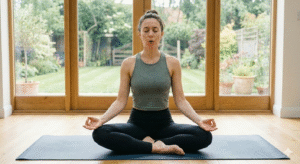
. Sit or lie down comfortably. Place one hand on your belly, one on your chest(option)
. Inhale deeply in three stages
• Fill the belly first (hand on belly rises)
• Then expand the ribcage
• Finally lift the chest and collarbones
. Exhale slowly in reverse
• Chest lowers → ribs contract → belly pulls in
. Breathe continuously without strain for 10–12 rounds
Benefits:
-
Reduces stress and anxiety – Calms the nervous system and slows heart rate
-
Increases oxygen intake – Boosts lung efficiency and overall energy
-
Improves posture – Encourages upright spine and mindful breathing
-
Enhances mental clarity – Supports focus, memory, and concentration
-
Balances emotions – Releases tension and promotes inner calm
-
Strengthens diaphragm and core – Improves respiratory and abdominal muscles
-
Supports digestion – Massages internal organs and aids metabolism
-
Prepares for meditation – Deepens mindfulness and centered awareness
-
Improves sleep quality – Encourages restful and restorative sleep
-
Releases body pain and tension – Eases muscular stiffness and promotes physical relaxation
-
Boosts overall vitality – Energizes the body and clears stagnation
Contraindications:
1. Severe respiratory illness (COPD/asthma attack)
2. Recent abdominal surgery (pressure on belly)
3. Very low blood pressure (deep relaxation may cause faintness)


0 Comments