
The Complete Nightly Ritual for Deep, Restorative Sleep
A truly peaceful night’s sleep begins long before your head touches the pillow. Gentle yoga poses help release physical tension, slow racing thoughts and guide the nervous system into a state of deep relaxation. Practicing yoga for better sleep alongside mindful evening habits, become a powerful foundation for restful and restorative nights.
Restful sleep is not accidental—it is a skill your body learns over time. Through consistent repetition, your body develops what can be called a sleep memory, recognizing familiar cues that signal it is safe to rest. A nurturing evening routine gradually trains your mind and body to relax the moment your nightly ritual begins.
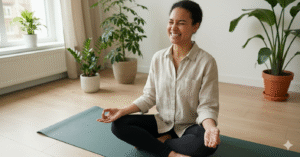
This calming process starts hours before bedtime. Eating a light, early dinner allows digestion to settle, making it easier for the body to fully rest at night. Reducing screen time at least one hour before sleep supports natural melatonin production and helps quiet mental stimulation. Use this screen-free time for journaling, gentle reflection,reading ,listening to calm music /story ,breath awareness, or simply releasing the day’s tension by meditation.
Your sleep environment is just as important as your internal state. Create a peaceful sleep sanctuary that is cool, dark and quiet. Maintain a consistent sleep and wake schedule to support your natural circadian rhythm .Most importantly, reserve your bed for sleep only, strengthening the mind’s association between lying down and drifting into rest.
When gentle yoga, mindful habits and a supportive environment come together, your evening routine becomes a reliable invitation into deep, restorative sleep—allowing your body and mind to truly renew each night.
Restorative Sleep Induction Sequence
Move through this slow, soothing sequence for 8–15 minutes, allowing your breath to guide every movement and soften every muscle. The goal is to activate the parasympathetic nervous system—the body’s natural “rest and restore” mode.
- Seated Forward Bend (Paschimottanasana) – 1–3 minutes
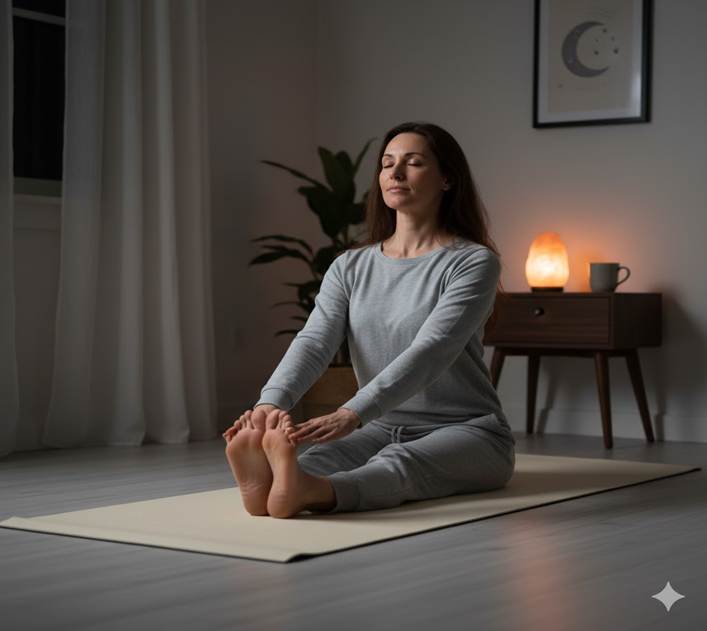
Begin seated on the floor or on your bed with your legs extended comfortably in front of you. Sit tall, allowing your spine to lengthen naturally. If your lower back feels tight, place a folded blanket or cushion under your hips to elevate them slightly.
Take a gentle inhale to lift through the crown of your head. As you exhale, begin to fold forward from your hips—not from the waist—allowing your torso to move toward your legs at a pace that feels easeful. There is no need to reach for your feet; let your hands rest wherever they naturally fall, such as on your thighs, shins, or ankles.
Allow your head and neck to fully relax, releasing any effort to hold them upright. Let the weight of your head gently traction the spine, creating space along the back body.
Close your eyes and bring your attention to your breath. With each exhale, invite the spine, shoulders, and jaw to soften. Feel tension slowly draining away from the back of the body, especially along the spine and lower back.
Remain here for one to three minutes, or longer if it feels comfortable. When you are ready to come out, gently engage your core, inhale, and slowly roll back up to a seated position, allowing your head to lift last.
This pose releases spinal tension and helps settle an overactive mind, making it an ideal preparation for deep rest and sleep.
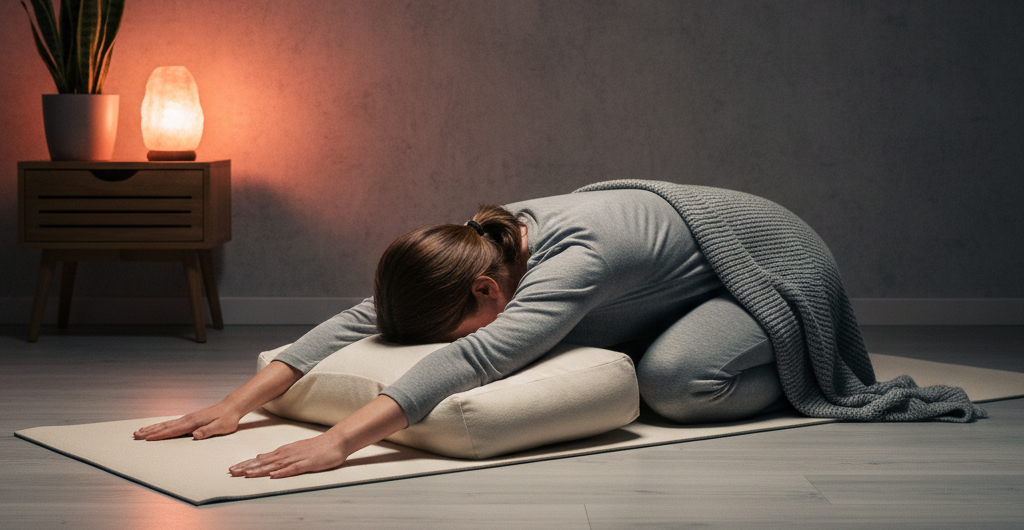
- Child’s Pose (Balasana) – 2–3 minutes
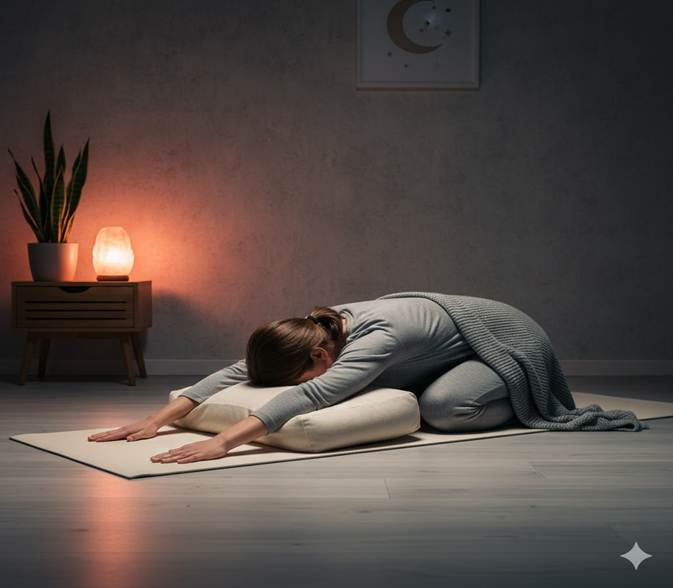
Begin by coming onto your hands and knees. Gently bring your big toes together and allow your knees to widen comfortably. Slowly fold your hips back toward your heels and lengthen your spine as you fold forward.
Lower your torso between or over your thighs and allow your forehead to rest on the floor, or folded blanket, or a pillow. Choose a height that feels supportive rather than over stretching
Extend your arms forward with the palms resting on the floor or draw them back alongside your body with the palms facing up—whichever feels more comforting and grounding.
Close your eyes and bring your awareness to your breath. Feel the gentle pressure of the forehead against the ground, which naturally stimulates a calming response in the nervous system. Allow your breathing to slow and deepen without effort.
Remain here for two to five minutes, or longer if it feels nourishing. If thoughts arise, allow them to pass quietly as you return to the steady rhythm of your breath.
When you are ready to come out, press gently into your hands, lift your torso slowly, and take a moment to notice the sense of calm before transitioning to the next posture or rest.
This grounding position naturally quiets the mind, slows the breath, and prepares the body for deep relaxation and sleep.
- Reclining Bound Angle Pose (Supta Baddha Konasana) – 3–5 minutes
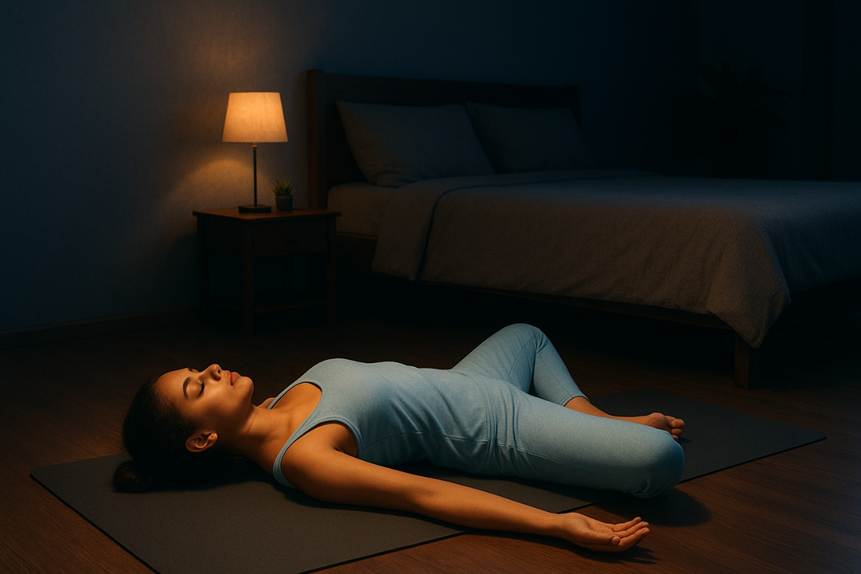
Lie comfortably on your back, preferably on your bed or a yoga mat. Gently bring the soles of your feet together, allowing your knees to fall open to the sides. Place pillows, bolsters, or folded blankets under each knee so they are fully supported—there should be no strain or stretching sensation.
Adjust your position so your lower back and hips feel completely at ease. If needed, place a pillow under your head or a light blanket over your body to maintain warmth and comfort.
Rest your arms softly by your sides, palms facing up, or place one hand on your heart and the other on your lower belly. Close your eyes and take a few slow, conscious breaths.
Remain here for three to five minutes, or longer if it feels deeply restorative. When you are ready to come out, slowly bring your knees together with the support of your hands, pause for a breath, and then roll gently onto one side before transitioning to the next posture or rest.
This pose gently dissolves emotional tension and prepares both body and mind for deep rest and sleep.
Legs-Up-the-Wall Pose (Viparita Karani) – 5–10 minutes
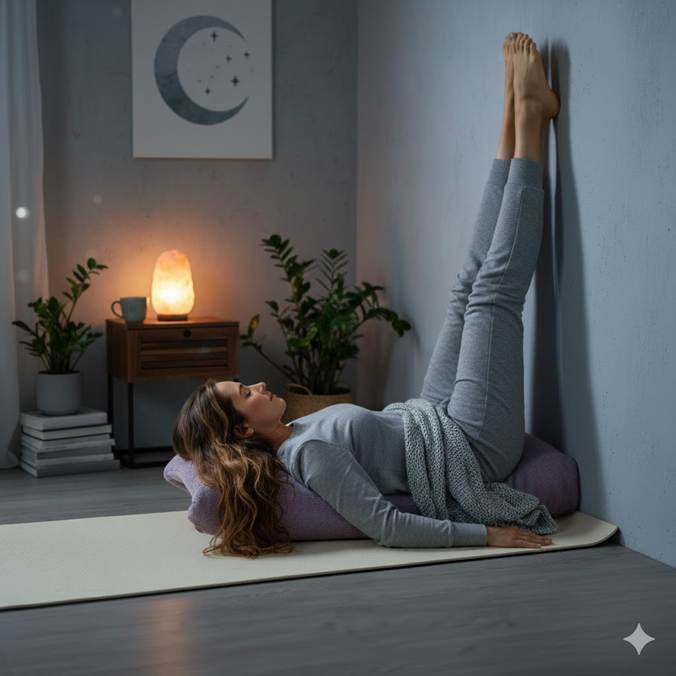
Move into a comfortable position close to a wall or the headboard of your bed. Gently lie down on your back and extend your legs upward, allowing them to rest vertically against the wall or supported surface. Your hips can be slightly away from the wall—comfort is more important than alignment.
Allow your arms to relax by your sides, palms facing up or place one hand on your belly and one on your heart. If your lower back feels sensitive, place a folded blanket or cushion under your hips for gentle support.
Close your eyes and soften your breath. Let it become slow, smooth and effortless. With each exhale, feel the weight of your legs being supported, releasing tension from your feet, calves, knees and thighs.
This gentle inversion encourages blood and lymph to flow back toward the heart, soothing tired legs and calming the nervous system. As the body senses safety and support, the mind naturally begins to quiet.
Remain here for five to ten minutes or longer if it feels nourishing. When you are ready to come out, bend your knees, roll gently onto one side, and pause for a few breaths before slowly sitting up or transitioning directly into bed.
This posture signals to the body that it is time to rest, restore, and prepare for deep, peaceful sleep.
5. Corpse Pose (Savasana) – 5+ minutes
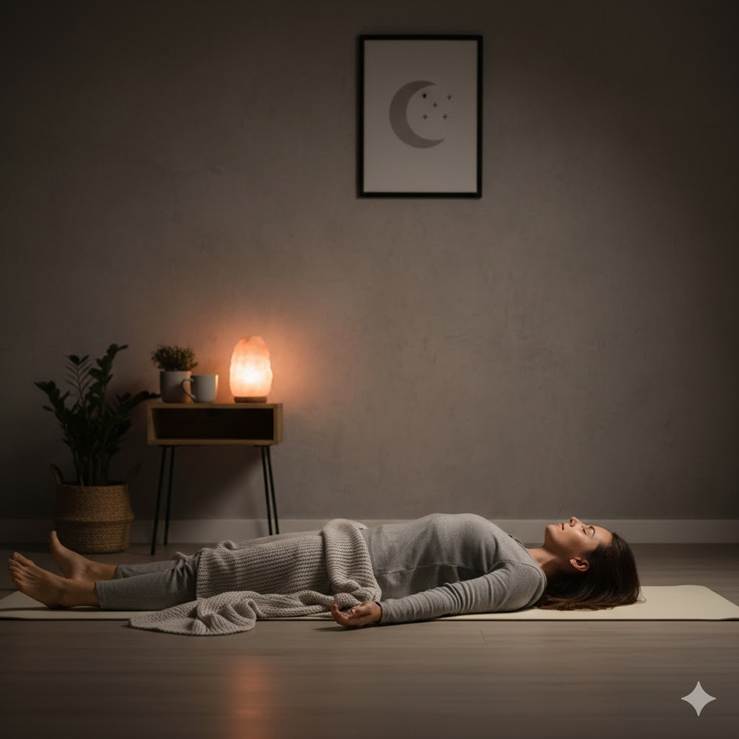
Move directly from yoga mat into bed and lie down on your back. Allow your legs to fall open naturally and let your arms rest comfortably by your sides, palms facing up or resting softly on the body. Make yourself completely comfortable—use a pillow under your knees or neck if needed.
Close your eyes and consciously release any remaining effort. Let the weight of your body sink fully into the bed, as though you are being gently held and supported.
Bring your attention to your breath without changing it. Feel the natural rise and fall of your chest and belly. With each exhale, invite deeper relaxation, allowing tension to melt away from your feet, legs, hips, abdomen, chest, shoulders, arms, neck and face.
Mentally scan your body from head to toe, softly encouraging each area to let go. If thoughts arise, do not engage with them—simply, acknowledge them and return to the sensation of stillness and breath. This way of sleeping allows the mind to quiet and the body to fully relax. Sleep becomes deeper and you wake up feeling fresh, clear and natural.



0 Comments