
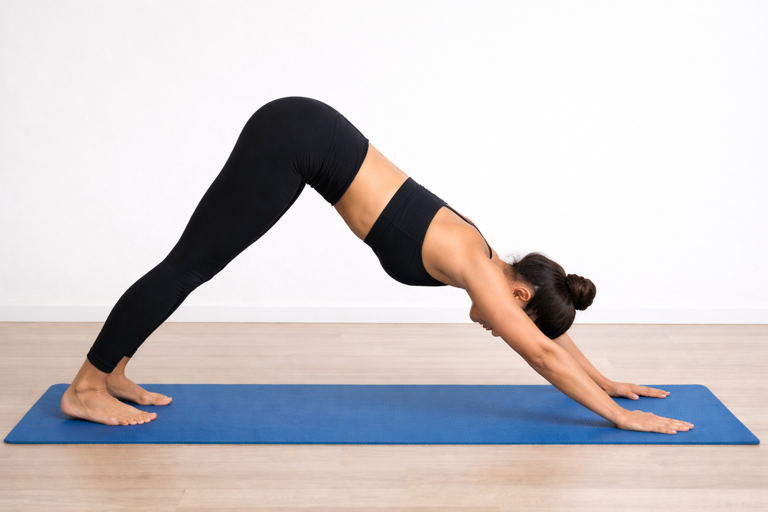
Downward-Facing Dog is a classical yoga posture rooted in Hatha Yoga and widely practiced across many yoga traditions today. Its Sanskrit name, Adho Mukha Svanasana, comes from three words: Adho meaning “downward,” Mukha meaning “face,” and Svana meaning “dog.” The posture is named after the natural stretch a dog takes when it lengthens its body—grounding the front body while lifting the hips and spine.
Although it appears simple, Downward Dog integrates strength, flexibility, alignment, and breath awareness. The posture encourages an even distribution of weight between the hands and feet while lengthening the spine and releasing tension.
In yogic practice, Downward-Facing Dog is valued not only for its physical effects but also for its balancing influence on the nervous system. The gentle inversion, combined with steady breathing, invites a sense of grounding and mental refreshment. Over time, this posture becomes a place of pause—where effort softens and awareness deepens—making it especially supportive for maintaining vitality and clarity as we age.
Supportive Benefits
Downward-Facing Dog is commonly practiced to support both physical and mental well-being.
- Encourages healthy blood flow toward the head, which may support mental alertness
- Gently stretches the spine, shoulders, hamstrings, and calves
- Helps relieve physical fatigue and mild stiffness
- Supports postural alignment and upper-body strength
- Creates a sense of mental refreshment and clarity through inversion and steady breathing
When practiced mindfully, this pose can feel both energizing and grounding, helping the body and mind reset.
How to Practice Downward-Facing Dog (Adho Mukha Svanasana)
- Begin on hands and knees
Come into a tabletop position with your wrists under your shoulders and knees under your hips. Spread your fingers wide and press evenly through the palms. - Prepare the foundation
Tuck your toes under and gently engage the abdominal muscles. Keep a soft bend in the knees, especially if the hamstrings feel tight. - Lift the hips
Slowly lift your knees away from the floor and raise your hips up and back, forming an inverted “V” shape with the body. - Lengthen the spine
Rather than forcing the heels toward the floor, focus on lengthening the spine. Press the chest gently toward the thighs while keeping the neck relaxed. - Soften the head and neck
Allow the head to hang naturally between the arms. The gaze can rest toward the legs or the mat without strain. - Ground through hands and feet
Press evenly through the palms and the balls of the feet. Keep the shoulders relaxed away from the ears. - Breathe steadily
Take slow, comfortable breaths. With each inhale, feel the spine lengthen. With each exhale, allow unnecessary tension to release. - Hold and release
Stay in the pose for 5–10 slow breaths, or as long as it feels comfortable. To release, gently lower the knees back to the mat and rest.
Helpful Modifications
- Bend the knees to reduce strain on the lower back or hamstrings
- Use blocks or a chair under the hands for extra support
- Practice Half Downward Dog at the wall if full weight-bearing feels challenging
Contraindications & Precautions
While generally safe, Downward-Facing Dog should be practiced with awareness and modifications when needed.
- Avoid or modify if you have severe wrist, shoulder, or neck pain
- Those with high blood pressure, glaucoma, or recent eye surgery should practice gently and may shorten the duration
- Use support or bend the knees if you have tight hamstrings or lower back discomfort
- Avoid holding the pose for long periods if you feel dizziness or strain


0 Comments