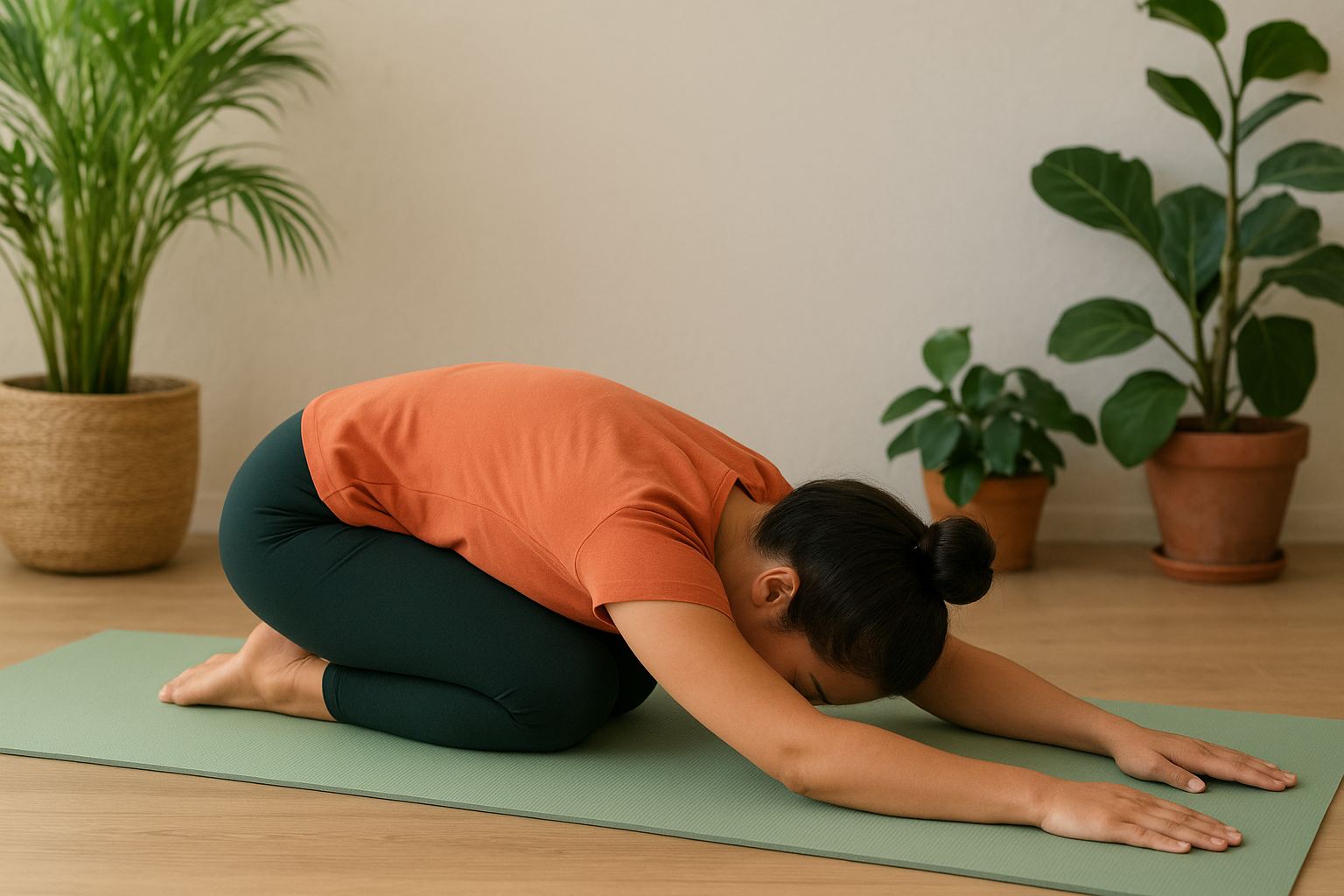
When you step onto your mat and surrender to your own practice, something begins to shift. Your attention slowly moves away from the outside world and into your inner space. You become quieter inside and more connected to yourself.
Your breathing softens and finds its own natural rhythm. Your body starts to feel supported, and your mind becomes calm and settled. You gently move from the outer layers of activity into a deeper, quieter place — a place where you feel more like yourself.
As you move through different postures, each position naturally guides the breath in its own way. The body and breath begin to work together without effort.
For example, curling into a resting position naturally slows the breath, creating a feeling of comfort and ease. Other stretches invite a sense of openness and lightness. With gentle awareness, these experiences unfold naturally.
There are a few postures where this inward shift is felt more clearly:
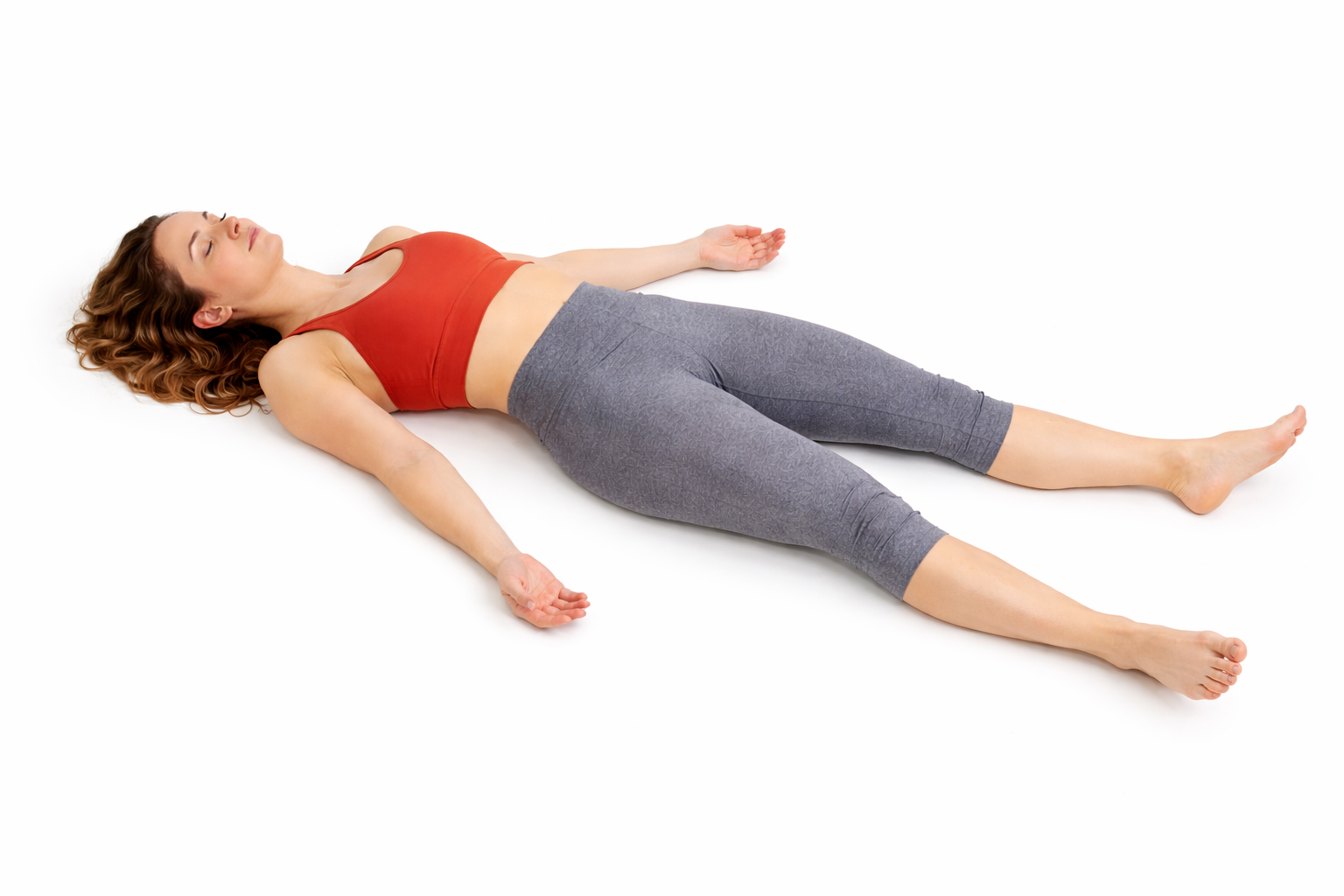
Shavasana (lying flat on the back)
The body feels fully supported, allowing deep rest. Breathing becomes slow and effortless, helping awareness turn inward.
Instructions
Lie down on your back with your legs comfortably apart and your arms resting by your sides, palms facing upward. Let your feet fall open naturally. Allow your body to feel heavy against the floor. Breathe normally and let each breath become slower and softer.
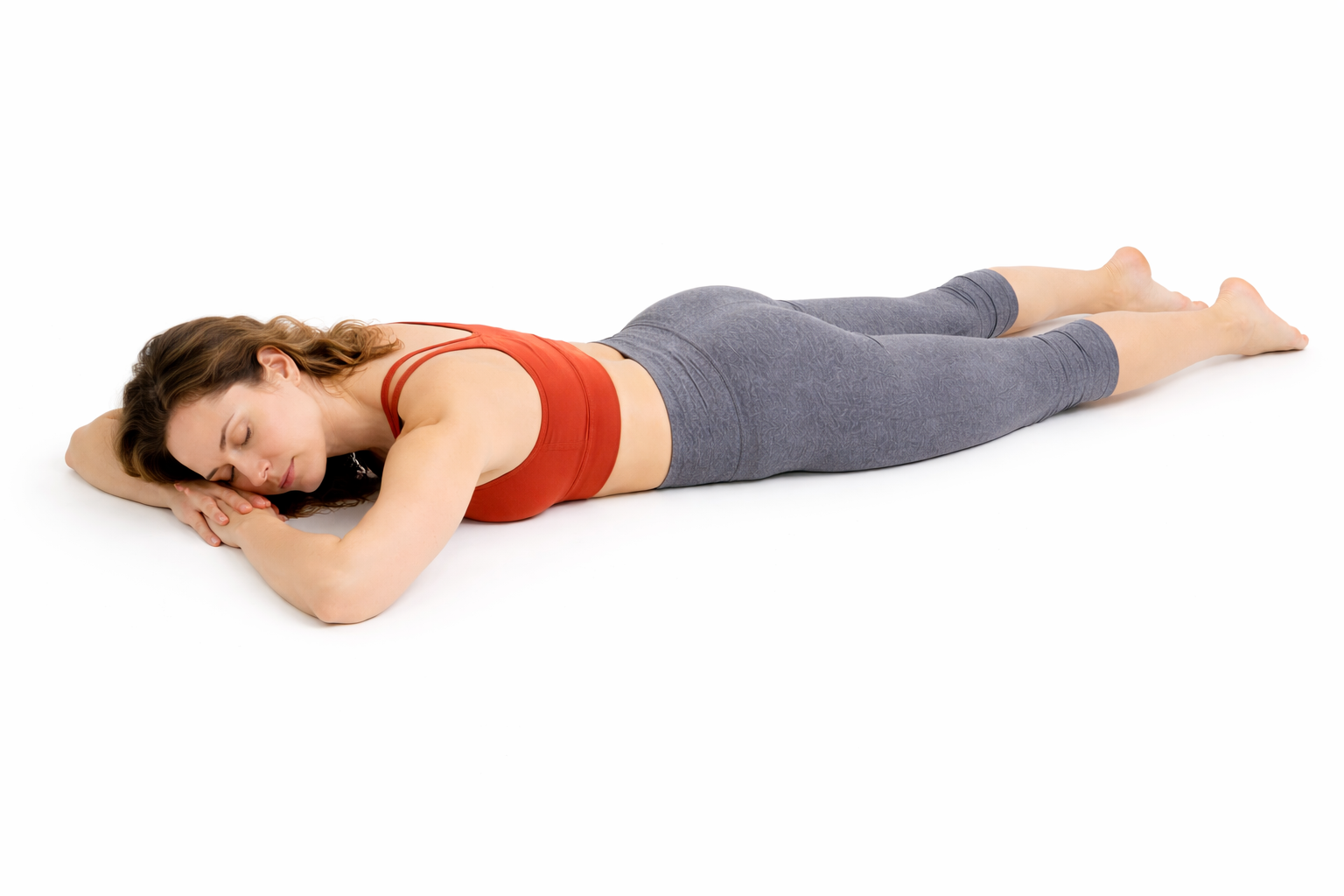
Makarasana – Crocodile Resting Pose (lying on the belly)
Resting on the belly with the chest supported allows the breath to gently move into the front of the body. This creates a calming rhythm in the breath and helps release tension from the back and shoulders, bringing a sense of grounding and inner quiet.
Instructions
Lie on your belly and spread your legs slightly apart, Fold your arms and rest your forehead or chin on your arms. Allow the shoulders and back to relax. Feel the breath gently move into the front of your body and soften with each exhale.
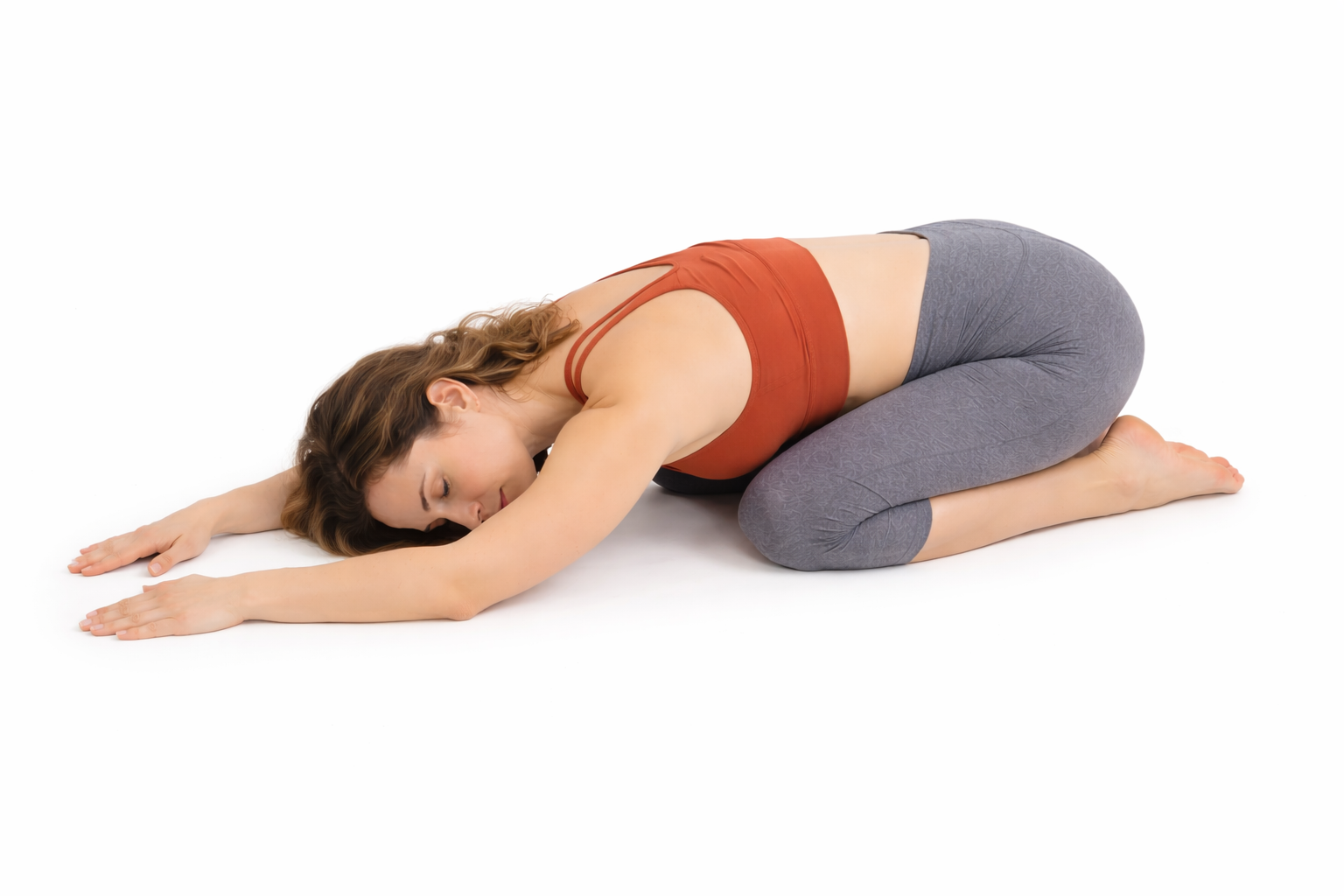
Balasana (child’s posture)
This posture offers comfort and stability. The breath softens, especially the exhale, supporting relaxation and emotional ease.
Instructions
Kneel on the floor and gently sit back toward your heels. Lower your upper body forward, allowing your chest to rest toward your thighs. Extend your arms forward or let them relax alongside your legs. Let the head rest comfortably and breathe slowly.
Apanasana (knees drawn toward the chest)
This gentle posture creates a feeling of closeness and support. The breath moves naturally into the belly, helping the body relax and settle.
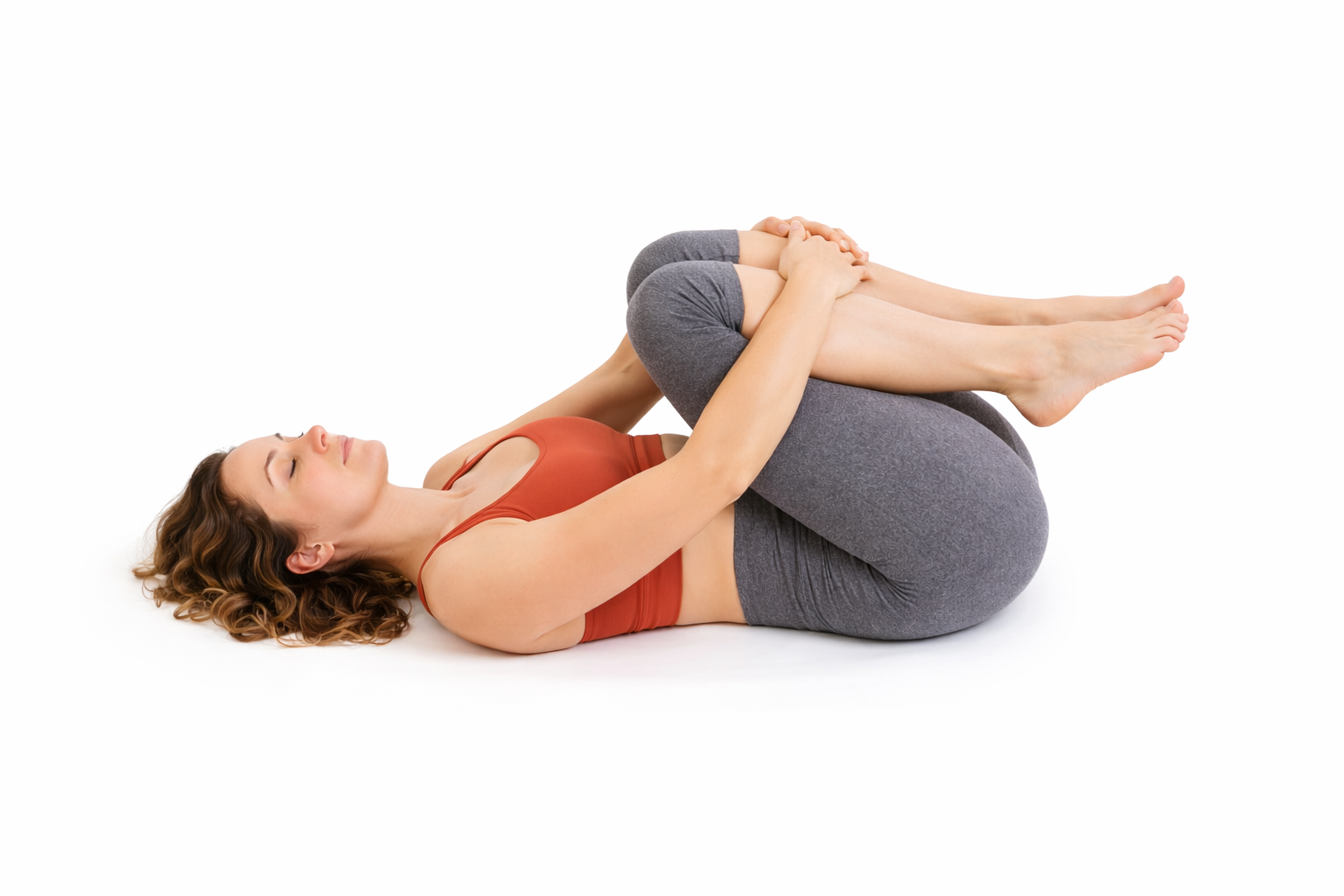
Instructions
Lie on your back and bring both knees toward your chest. Hold them gently with your hands. Keep the shoulders relaxed and the lower back soft against the floor. Breathe into the belly and feel the body relax with every exhale.
Supta Baddha Konasana
The body opens gently without strain. Breathing feels smooth and natural, encouraging ease and quiet awareness.
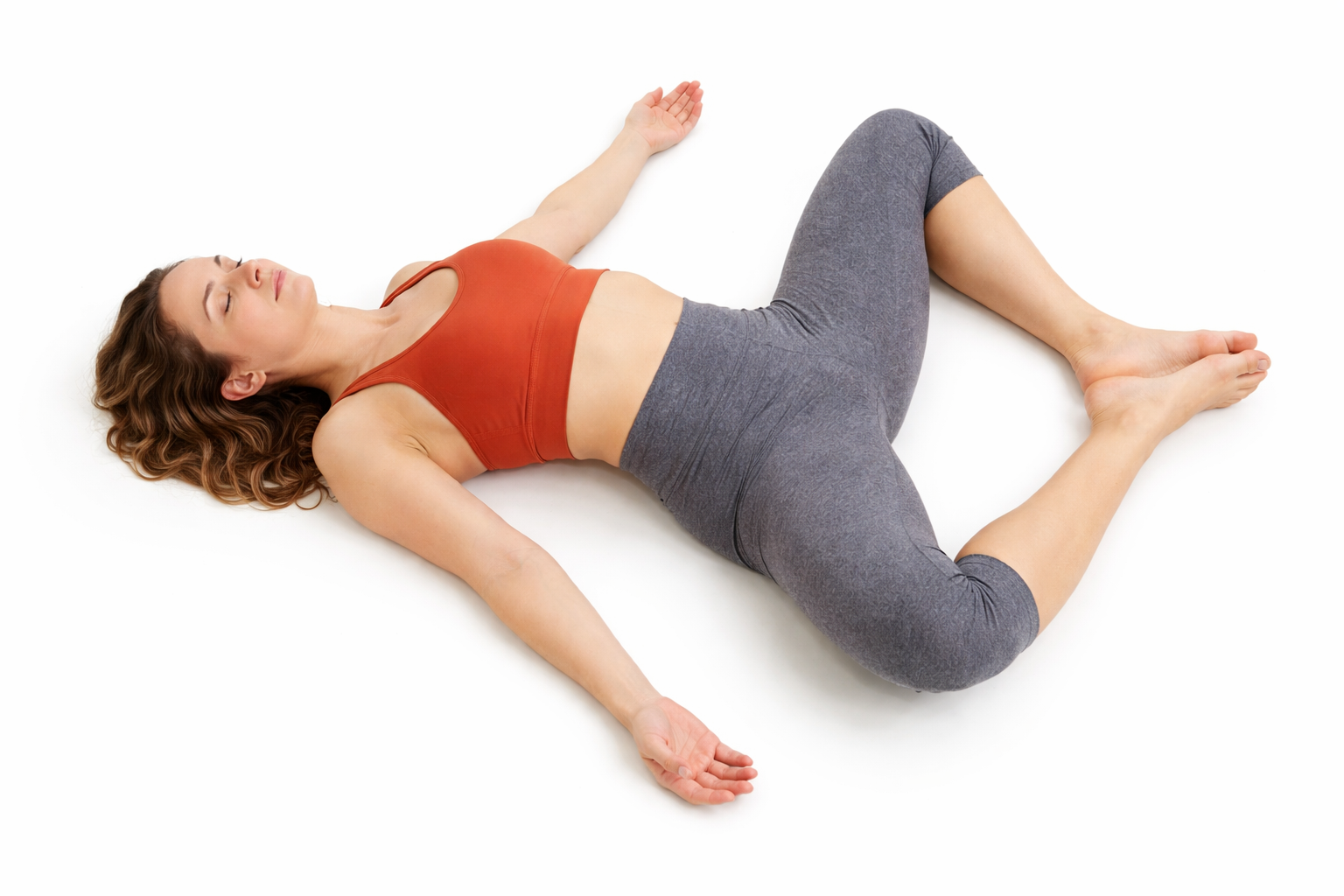
Instructions
Lie on your back and bring the soles of your feet together, allowing the knees to fall open naturally. Rest your arms by your sides with palms facing up. Let the body stay open and relaxed. Breathe smoothly and comfortably.
These postures invite you to slow down, turn inward, and rest in a calm, steady connection with yourself — a feeling that gradually extends beyond the mat and into daily life.