
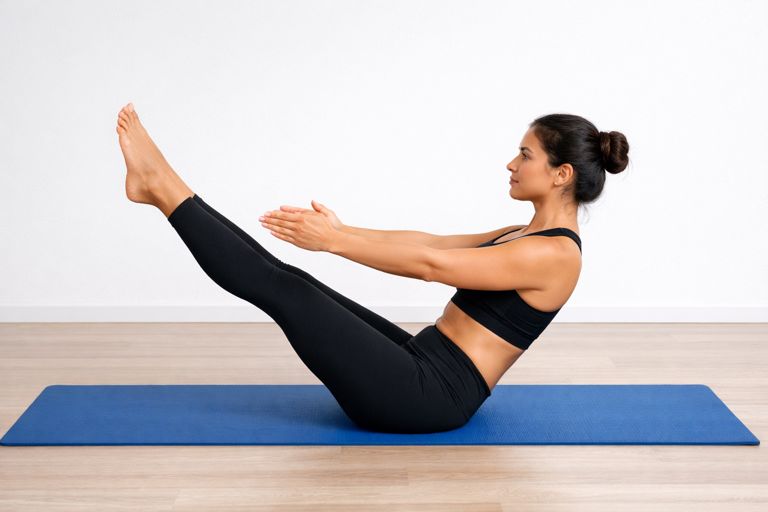
Naukasana, or Boat Pose, is a classical posture described in traditional Hatha Yoga texts. Its Sanskrit name comes from Nauka, meaning “boat,” reflecting the body’s shape in the pose, balanced like a boat floating on water. Also, this posture was practiced not only for physical strength but also as a means to develop focus, willpower, and mind-body awareness.
Core strength was seen as essential for stability in both body and mind, supporting long meditation sessions and overall vitality. Naukasana engages the abdominal and spinal muscles, which are believed to help stimulate digestive fire (Agni) and maintain the body’s internal energy channels.
Benefits of Naukasana
- Strengthens core muscles including the abdominals, hip flexors, and lower back
- Improves posture and spinal stability
- Stimulates digestion by gently compressing abdominal organs
- Enhances balance and concentration
- Energizes the body and can help reduce fatigue
- Supports mind-body awareness through focus and breath
Psychological Benefits
- Builds mental strength & willpower by training the mind to stay steady under effort
- Improves focus and concentration through balance and core engagement
- Reduces anxiety and restlessness by activating the solar plexus (Manipura Chakra)
- Boosts confidence and self-esteem by strengthening inner power
- Releases emotional tension stored in the abdominal region
Yogic insight: Naukasana balances prana in the core, helping digest emotions as well as experiences.
How to Practice Naukasana
- Start in Dandasana (Staff Pose): Sit with legs extended straight in front, spine tall, hands resting beside hips.
- Engage the core: Draw the navel inward and lift the chest.
- Lift the legs: Slowly raise both legs off the floor until they form a 45–60° angle with the ground. Keep them straight if possible or slightly bent if needed.
- Lift the torso: Lean back slightly, forming a “V” shape with the body. Extend your arms forward, parallel to the floor, palms facing inward.
- Breathe steadily: Maintain deep, even breaths while keeping the core engaged.
- Hold the pose: Start with 10–15 seconds and gradually increase as strength improves.
- Release gently: Lower the legs and torso back to the floor slowly and relax.
Counter pose after the practice
After Naukasana, always follow with a calming, releasing posture to balance the abdomen and nervous system.Now best counter pose after Naukasana is Paschimottanasana (Seated Forward Bend)
Releases abdominal and spinal tension
Calms the mind after effort
Restores pranic(life force energy) balance
Contraindications & Precautions
- Avoid if you have lower back injuries, spinal problems, or hernia
- Should be modified during pregnancy
- People with neck strain or severe hip issues should practice carefully or skip
- Avoid forcing the legs straight if it causes discomfort—bend knees to maintain safety


0 Comments