
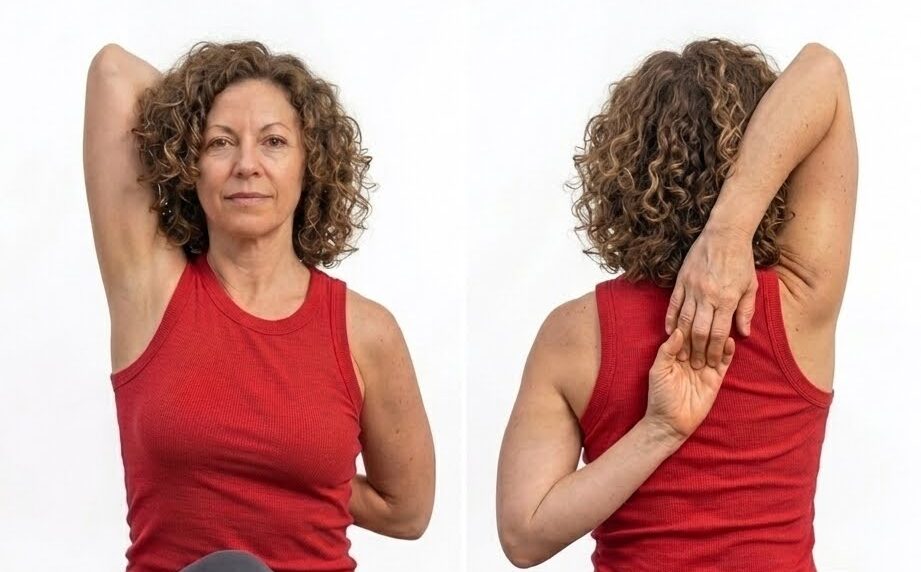
Gomukhasana, also known as Cow Face Pose, is a seated yoga posture that focuses on opening the hips, shoulders, chest, and upper back. The pose involves crossing the legs and bringing the arms into a position that stretches the shoulders and improves flexibility.
The name comes from the Sanskrit words “Go” meaning cow and “Mukha” meaning face, as the position of the legs resembles the shape of a cow’s face. Gomukhasana is a calming pose that encourages deep breathing, relaxation, and body awareness.
How to Practice Gomukhasana (Instructions)
• Sit comfortably on the floor with your legs extended forward in Dandasana (Staff Pose).
• Bend your left knee and bring your left foot beside your right hip.
• Cross your right leg over the left, stacking the knees on top of each other.
• Keep both sitting bones grounded on the floor and lengthen your spine.
• Raise your right arm overhead and bend the elbow, bringing your hand down toward the upper back.
• Take your left arm behind your back and try to hold the right hand with your left hand.
• Keep your chest open, shoulders relaxed, and breathe slowly.
• Hold the pose for 20–30 seconds or as comfortable.
• Slowly release the arms and legs, then repeat on the opposite side.
Benefits of Gomukhasana
• Improves flexibility of the shoulders and upper back
• Releases tension from the neck and shoulder area
• Opens the hips and stretches the outer thighs
• Improves posture and spinal alignment
• Strengthens awareness of body balance
• Encourages deep breathing and relaxation
• Helps reduce stiffness caused by prolonged sitting
• Promotes calmness and mindfulness
Contraindications
Practice with caution or modify the pose if you have:
• Shoulder, elbow, or wrist injuries
• Knee or hip injuries
• Severe back pain
• Limited mobility in the shoulders or hips
• Recent surgery or joint problems
Avoid forcing the hands to meet behind the back. Use a yoga strap or towel if needed to maintain a comfortable stretch.
Tips for Practicing Gomukhasana
• Warm up the shoulders and hips before attempting the full pose.
• Keep the spine tall and avoid rounding the back.
• Relax the shoulders away from the ears.
• Do not force the knees to stack if there is discomfort.
• Use a cushion or folded blanket under the hips for better comfort.
• Practise both sides equally, as flexibility may differ between the left and right sides.Beginner Tip: If the arms cannot reach each other, hold a yoga strap between the hands and gradually work on improving shoulder flexibility.

0 Comments