
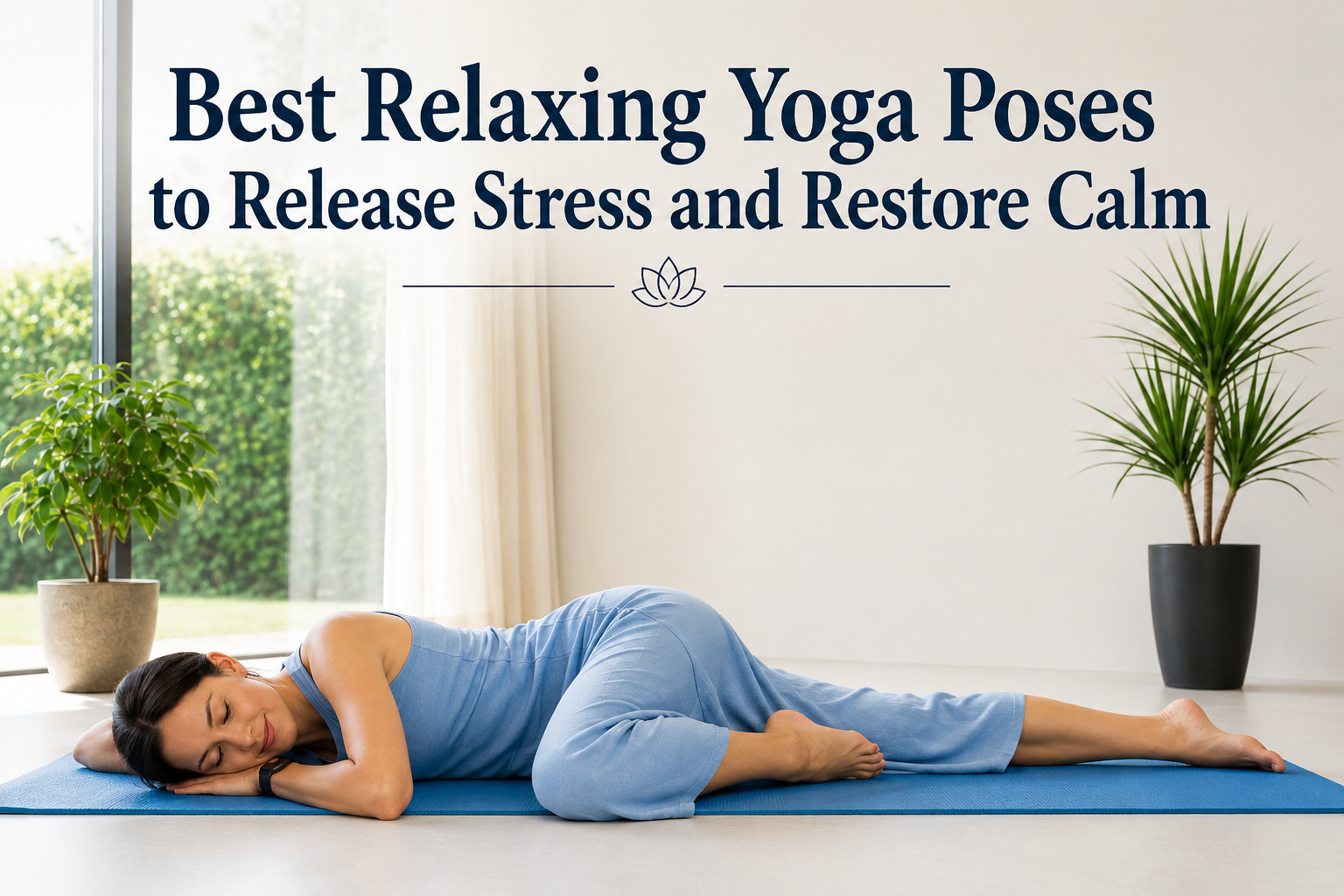
In today’s busy world, we spend much of our time moving, working, exercising, thinking, and staying active. Just as the body needs activity to stay healthy, it also needs time to rest and recover.
Resting yoga poses provide a gentle opportunity to pause after physical or mental effort. They can be practiced after a rigorous workout, physical exercise, a demanding day of mental activity, or a more vigorous yoga practice. Instead of asking the body to work harder, these postures encourage you to slow down, breathe naturally, and allow the body to settle.
Each resting posture has its own unique benefits. Some may help release tension from specific areas of the body, while others can support comfortable breathing, gentle mobility, recovery, or a sense of calm.
These poses can be suitable for beginners, seniors, and people of different fitness levels, and many can be modified with props or support for greater comfort.
Practicing resting yoga poses regularly can give both the body and mind a chance to slow down and recover. These gentle postures may help reduce everyday stress and anxiety, calm the nervous system, and support better sleep
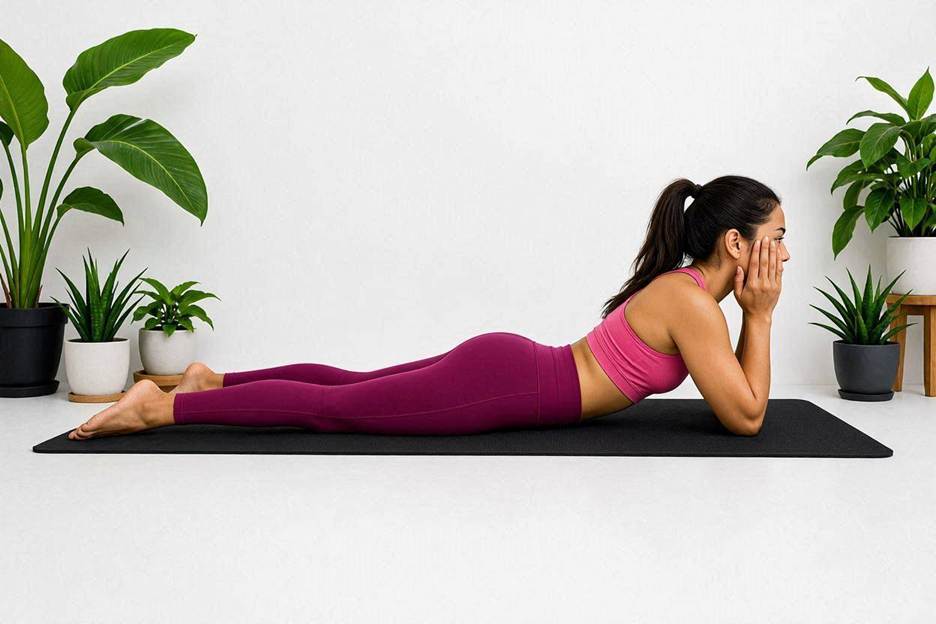
Makarasana (Crocodile Pose)
Makarasana is a particularly effective prone relaxation posture because the abdomen and chest are supported by the floor, allowing the body to become heavy and the back muscles to release. The position encourages slow, natural breathing and is especially useful when the body feels tired or tense.
Instructions:
- Lie on your abdomen with your legs comfortably apart and your toes turned outward.
- Rest your head on your hands or forearms, relax the shoulders and breathe slowly and naturally.
When to avoid or modify:
Avoid or modify if lying on the abdomen causes discomfort, particularly during pregnancy or with a painful abdominal, chest or recent surgical condition.
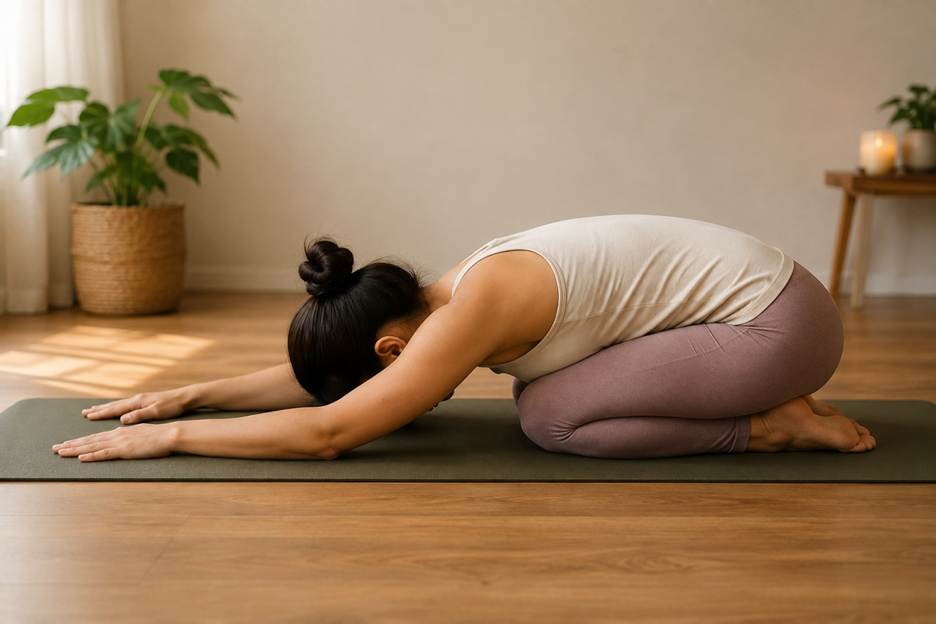
Balasana (Child’s Pose)
It is a gentle, grounding resting posture that brings the body into a forward-folded position. It can encourage physical relaxation and a sense of inward withdrawal, making it useful as a resting or calming posture between more active yoga practices.
Instructions:
- Kneel with your big toes touching, sit your hips toward your heels, and fold your torso forward, resting your forehead on the floor or a support.
- Let your arms relax comfortably, soften your shoulders and jaw, and breathe slowly without forcing the posture.
When not to practise or modify:
Avoid or modify Balasana if it causes knee, hip, ankle, or lower-back pain. Use a bolster or cushion under the torso and head if the full position is uncomfortable.
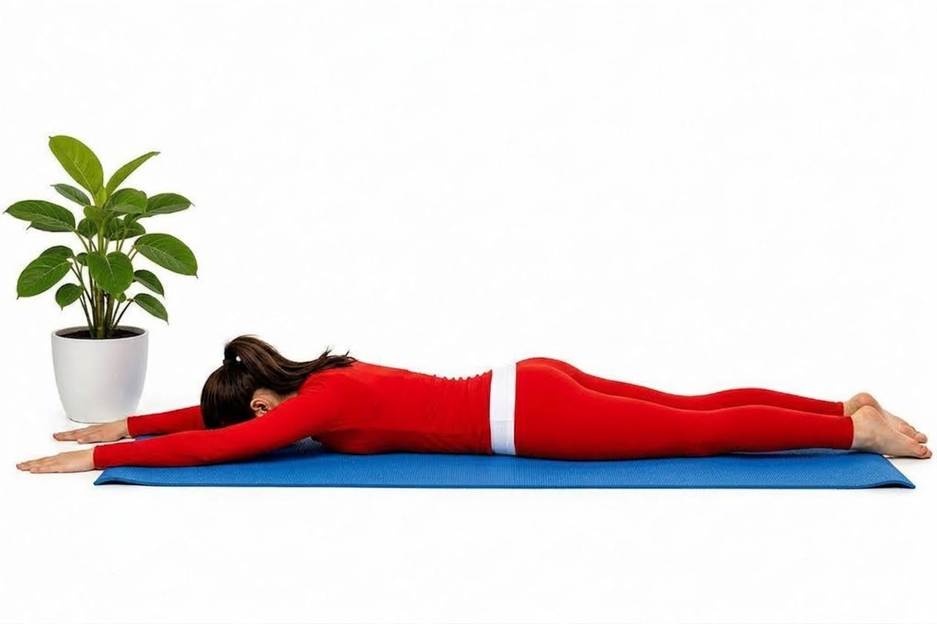
Advasana (Reverse Corpse Pose)
It provides deep prone relaxation with gentle lengthening of the body. With the arms extended overhead and the body resting on the floor, it allows the muscles to release unnecessary effort while creating a quiet sense of whole-body extension.
Instructions:
- Lie on your abdomen and position your hands or arms so that your forehead can rest comfortably.
- Relax the shoulders, jaw and back while allowing the breath to become slow and effortless.
When to avoid or modify:
Modify if the position of the neck or pressure on the forehead causes discomfort. Avoid prolonged prone lying when it is medically unsuitable.
Jyestikasana (Superior Pose)
A comfortable prone resting posture that gives additional support to the head and upper body. This makes it useful for settling the neck, shoulders and back while encouraging physical stillness and relaxation.
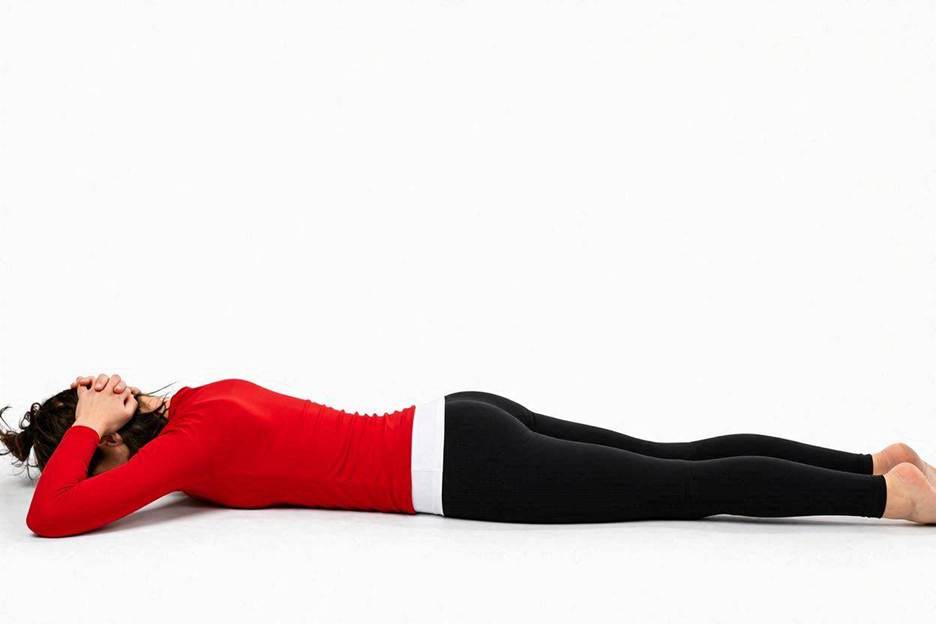
Instructions:
- Lie on your abdomen and position your hands or arms so that your forehead can rest comfortably.
- Relax the shoulders, jaw and back while allowing the breath to become slow and effortless.
When to avoid or modify:
Modify if the position of the neck or pressure on the forehead causes discomfort. Avoid prolonged prone lying when it is medically unsuitable.
Matsya Kridasana (Flapping Fish Pose)
It offers a relaxed asymmetrical prone position in which one leg is bent comfortably to the side. The posture can provide a soothing way to rest while allowing the abdomen, chest and back to remain supported by the floor
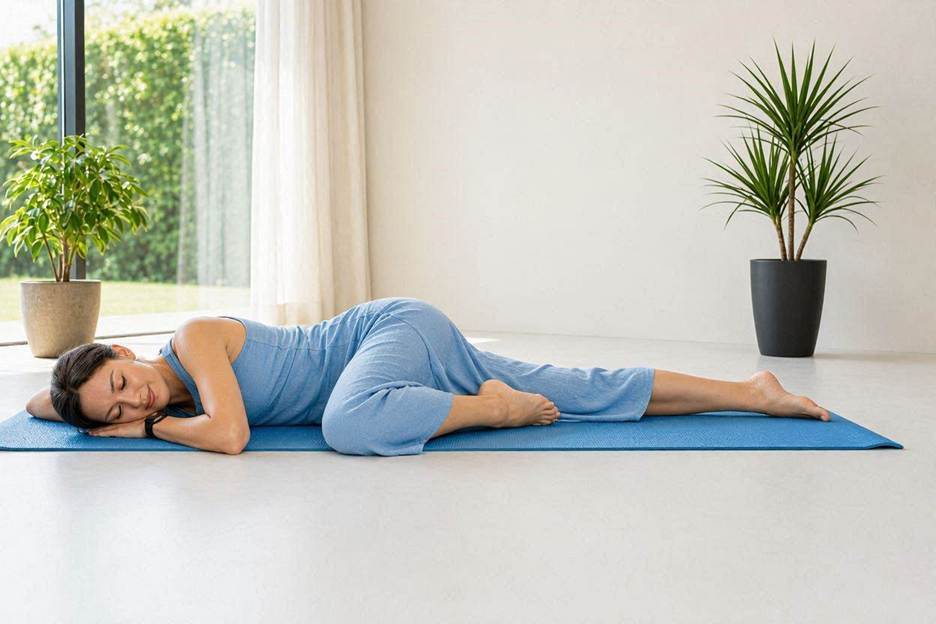
Instructions:
- Lie on your abdomen, bend one knee out to the side and rest your head comfortably on your hands.
- Allow the bent leg and entire body to become heavy, then repeat on the other side.
When to avoid or modify:
Modify or avoid if bending the hip or knee outward causes pain. It may also be unsuitable when prone lying or hip rotation is restricted.
Supta Baddha Konasana (Reclining Bound Angle Pose)
Supta Baddha Konasana combines deep supported rest with gentle opening of the hips and inner thighs. Because the back is supported by the floor, the body can remain relaxed while the legs settle into a naturally open position.
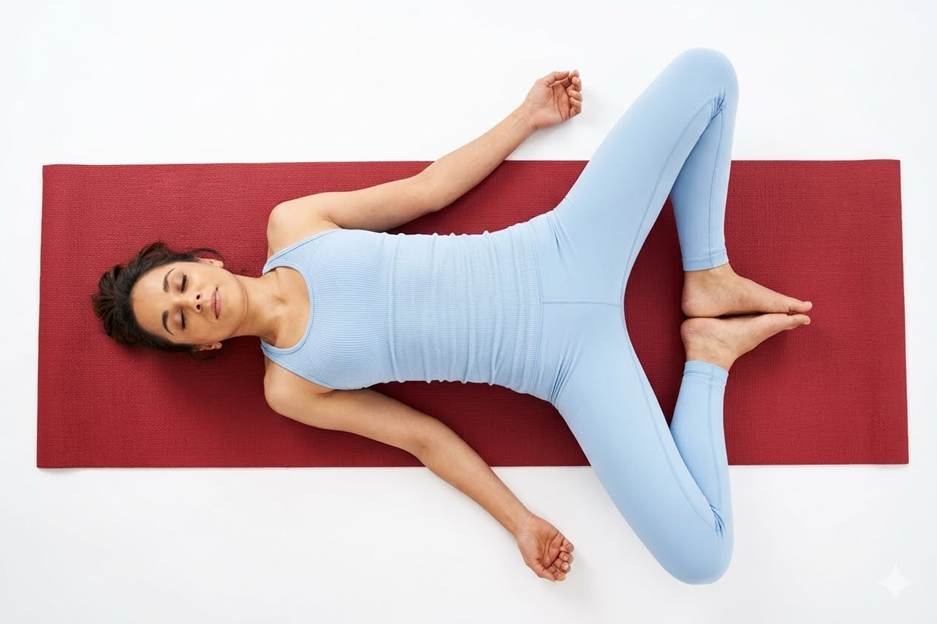
Instructions:
- Lie on your back, bring the soles of the feet together and allow the knees to open gently.
- Support the knees with cushions if needed and let the legs relax without forcing them downward.
When to avoid or modify:
Modify if there is hip, groin or knee discomfort by placing firm support beneath both knees. Never force the knees toward the floor.
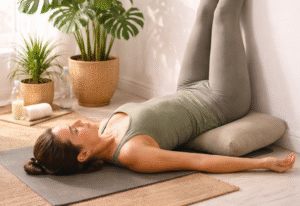
Viparita Karani (Legs Up the Wall Pose)
It is a restorative posture that combines reclining relaxation with supported elevation of the legs. The elevated position provides a restful change from standing and can be particularly soothing when the legs feel tired after prolonged activity.
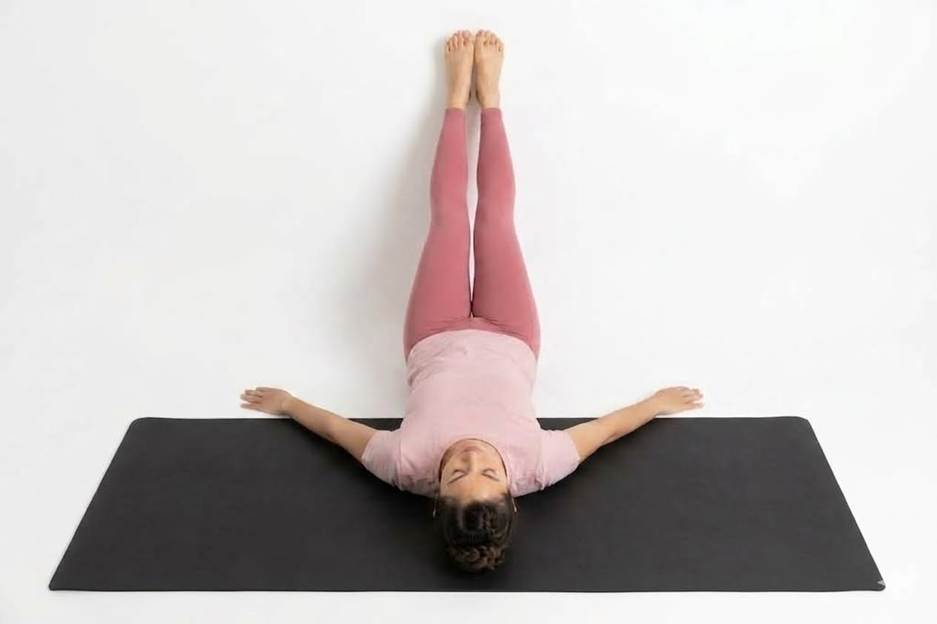
Instructions:
- Lie on your back with your legs comfortably supported against a wall.
- Keep the legs passive, relax the arms and shoulders, and breathe slowly while remaining still.
When to avoid or modify:
Modify or avoid if leg elevation causes dizziness, pressure or discomfort. People with certain eye, cardiovascular or other medical conditions should seek professional advice before prolonged inverted or elevated-leg practices.
Supta Sukhasana (Easy Pose)
Familiar cross-legged position of Sukhasana to be experienced with the entire body supported. This makes it easier to relax the back and shoulders while maintaining a comfortable, familiar leg position.
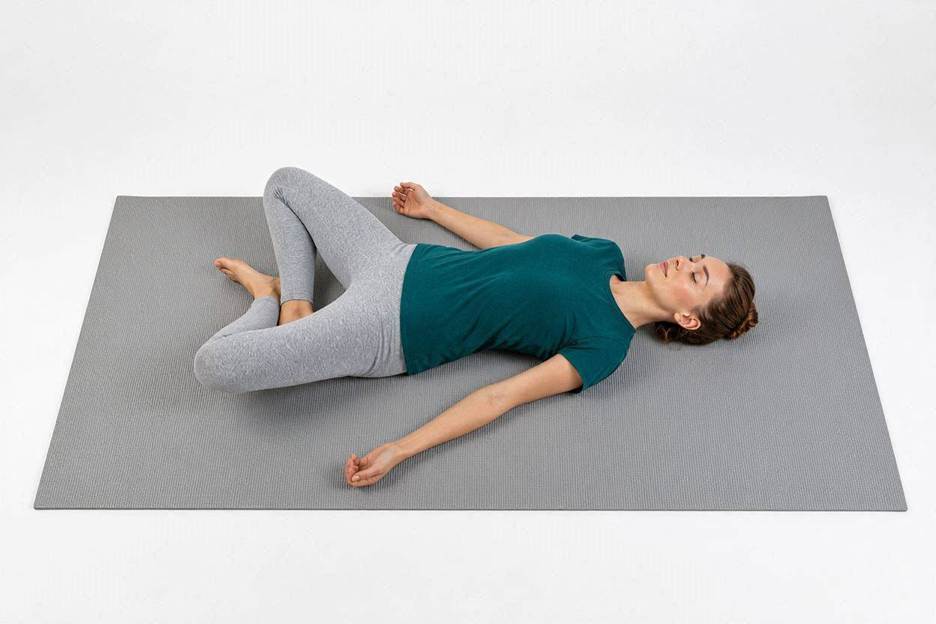
Instructions:
- Lie on your back and gently cross the legs in a comfortable position.
- Support the knees if necessary and allow the spine, shoulders and legs to relax completely.
When to avoid or modify:
Modify if crossing the legs causes hip, knee or ankle discomfort. Keep the legs in a looser position or support the knees rather than forcing them downward.
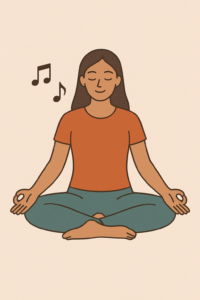
Seated Sukhasana (Easy Pose)
It provides a different form of relaxation because the body remains upright and gently alert rather than completely reclined. It is particularly valuable for combining physical ease with conscious breathing, meditation and mental stillness.
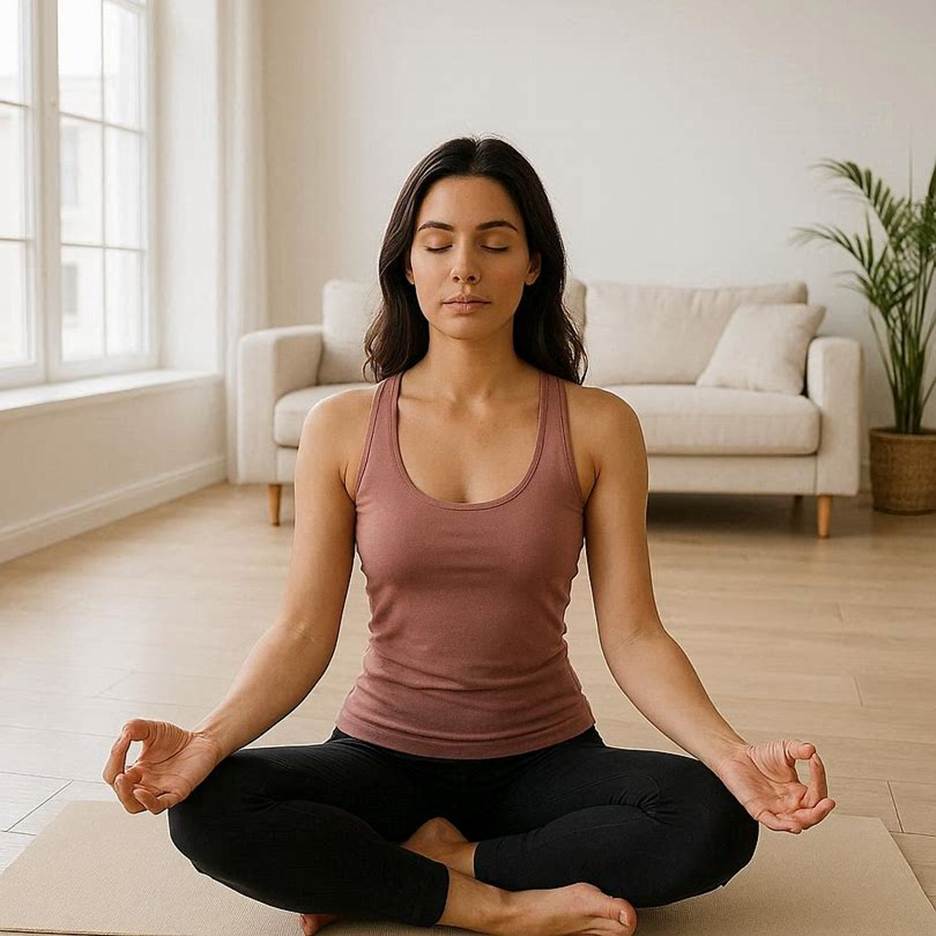
Instructions:
- Sit comfortably with the legs crossed, using a cushion beneath the hips if needed.
- Keep the spine naturally upright, relax the shoulders and observe the breath without forcing it.
When to avoid or modify:
Modify if sitting cross-legged causes knee, hip or back discomfort. Sit on a chair or use adequate cushions rather than forcing the legs or spine into position.
Shavasana (Corpse Pose)
It is the classic whole-body relaxation posture because there is no specific stretch, movement or muscular action required. The neutral position allows the practitioner to consciously release physical effort and remain completely still, making it especially suitable at the end of a yoga practice or relaxation session.
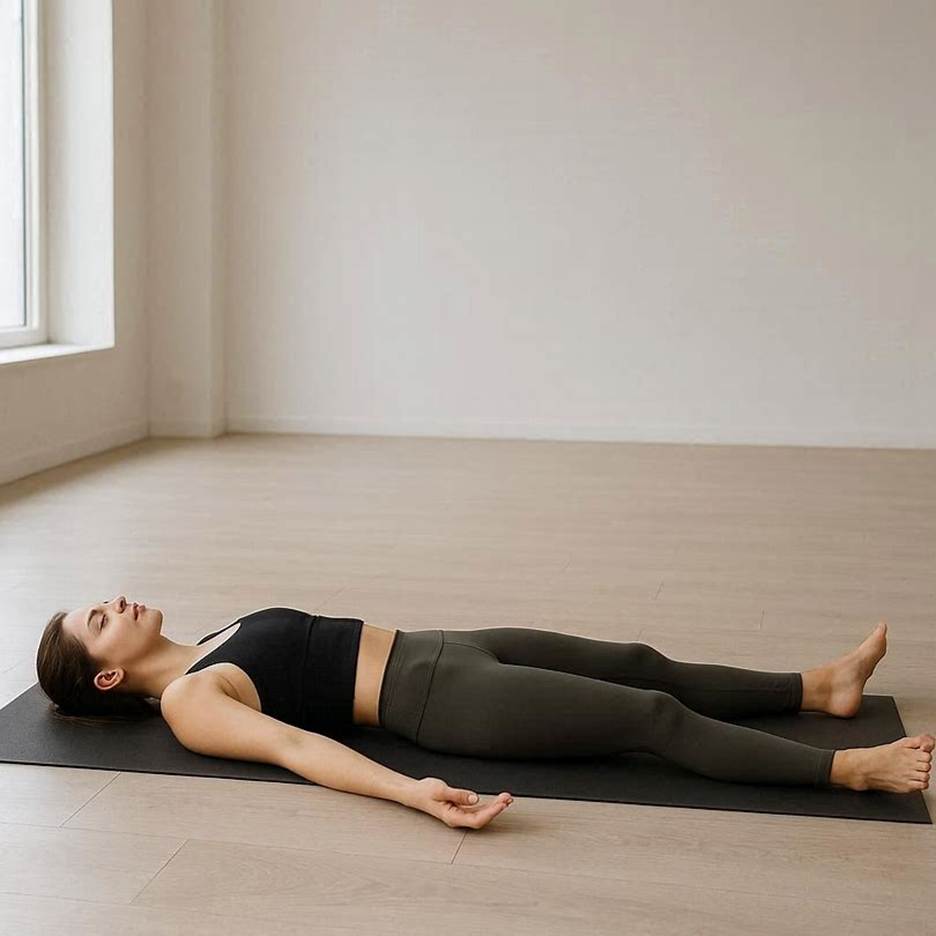
Instructions:
- Lie on your back with the legs comfortably apart and the arms resting naturally beside the body.
- Close the eyes, remain still and gradually release tension from the body while allowing the breath to flow naturally.
When to avoid or modify:
Modify if lying flat causes discomfort or breathing difficulty by placing a bolster beneath the knees or using a supported side-lying position. During pregnancy, a side-lying or well-supported variation may be more comfortable, particularly for longer periods.
Final Thoughts
Relaxation is an essential part of yoga, not just the end of a practice. Traditional relaxation postures such as Makarasana, Shavasana, Balasana, Advasana, and Jyestikasana help release physical tension while calming the mind and nervous system. By incorporating these gentle poses into your daily routine, you can create moments of stillness, improve your overall wellbeing, and cultivate a deeper sense of balance in everyday life.

0 Comments