
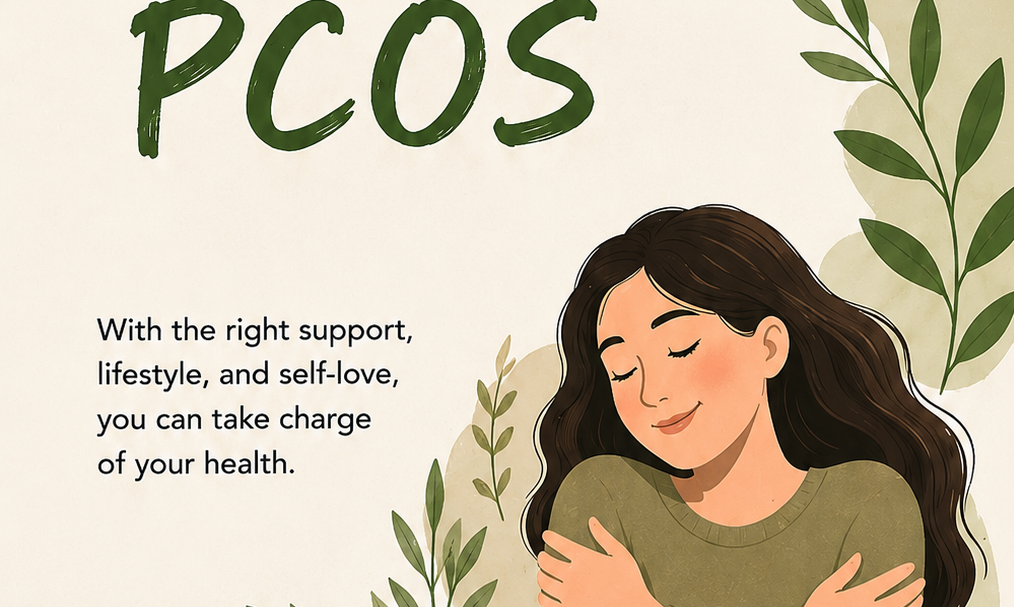
For many women, Polycystic Ovary Syndrome (PCOS) is more than a diagnosis. It is a daily experience that touches nearly every aspect of life—from menstrual health and metabolism to mood, energy, self-confidence, and fertility.
One month your period is absent. The next, you’re struggling with fatigue, unexplained weight gain, acne, or emotional ups and downs that seem impossible to control. Over time, it can feel as though your body is working against you.
Understanding PCOS Beyond the Symptoms
PCOS is one of the most common hormonal disorders affecting women of reproductive age. At its core, it involves an imbalance in hormones—particularly insulin and androgens—which can disrupt ovulation, metabolism, and reproductive function.
While PCOS is often associated with ovarian cysts, not every woman with PCOS develops cysts, and not every woman with ovarian cysts has PCOS.
What makes the condition particularly challenging is that it affects much more than the ovaries.
Common symptoms include:
- Irregular or absent menstrual cycles
- Weight gain or difficulty losing weight
- Persistent acne
- Excess facial or body hair growth
- Hair thinning on the scalp
- Fatigue and low energy
- Mood changes, anxiety, or depression
- Fertility challenges
No two women experience PCOS in exactly the same way, which is why a personalized approach to management is so important.
The Hidden Role of Stress in PCOS
While genetics and insulin resistance play a significant role in PCOS, modern research is increasingly highlighting the impact of chronic stress.
When the body perceives ongoing stress, it releases cortisol—the primary stress hormone. Over time, elevated cortisol levels can influence blood sugar regulation, inflammation, sleep quality, and hormonal balance.
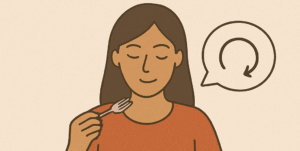
In many ways, the body becomes trapped in a cycle:
Stress increases hormonal disruption.
Hormonal disruption increases physical symptoms.
Physical symptoms create emotional stress.
The cycle continues.
Breaking this cycle requires more than managing symptoms—it requires supporting the nervous system itself.
This is where yoga offers something uniquely valuable.
Why Yoga Matters for Women with PCOS
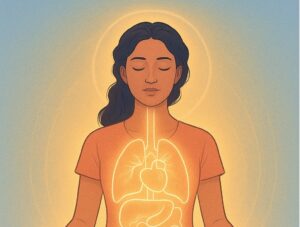
Unlike many forms of exercise that focus solely on physical fitness, yoga works simultaneously on the body, breath, nervous system, and mind.
Rather than forcing change, yoga creates conditions that allow the body to return to balance.
Research suggests that regular yoga practice may help:
- Reduce stress and cortisol levels
- Improve insulin sensitivity
- Enhance circulation and metabolic function
- Support hormonal regulation
- Improve sleep quality
- Reduce anxiety and emotional distress
- Foster a healthier relationship with the body
For women living with PCOS, these benefits address not only the symptoms but also many of the underlying factors that contribute to them.
Yoga as Emotional Healing
One of the most overlooked aspects of PCOS is its emotional impact.
Living with unpredictable cycles, body changes, fertility concerns, or persistent symptoms can create feelings of frustration, helplessness, and self-criticism.
Yoga offers an opportunity to shift that relationship.
Through mindful movement and conscious breathing, women learn to listen to their bodies rather than battle them.
The practice becomes less about fixing the body and more about creating a partnership with it.
This subtle shift often becomes one of the most transformative aspects of healing.
The Most Effective Yoga Poses for PCOS
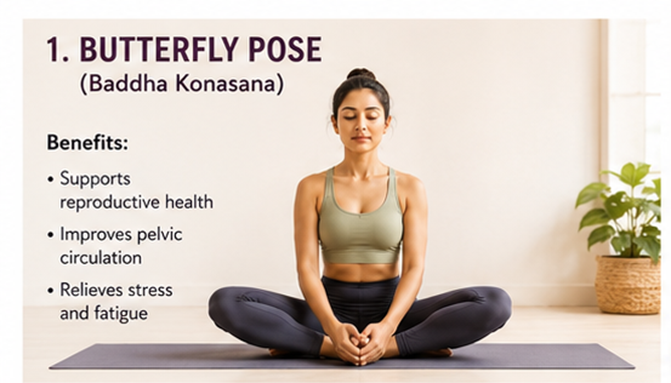
This gentle hip-opening posture encourages circulation throughout the pelvic region while promoting relaxation.
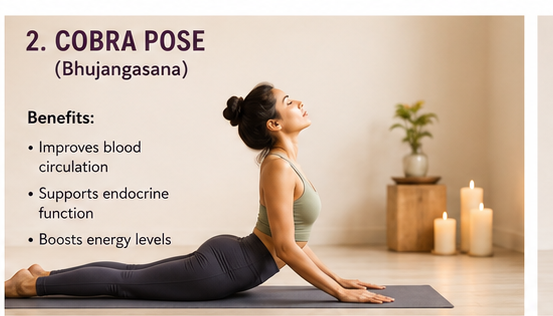
A gentle backbend that stimulates abdominal organs and promotes vitality.
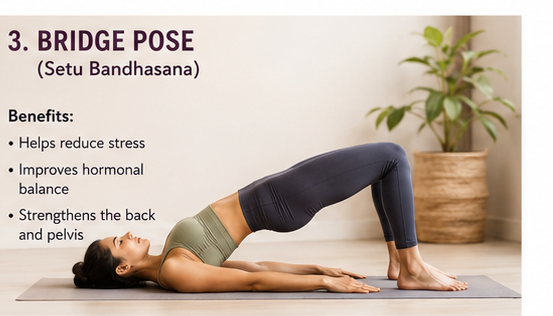
This posture opens the chest while strengthening the back and pelvis.
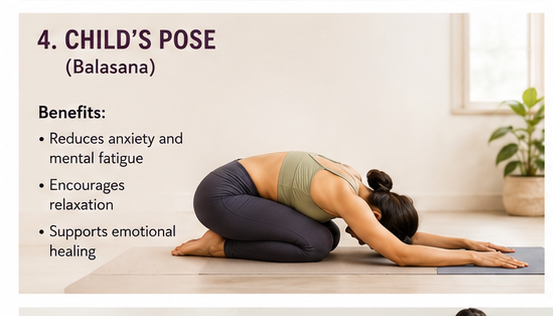
A deeply nurturing posture that signals safety and relaxation to the nervous system.
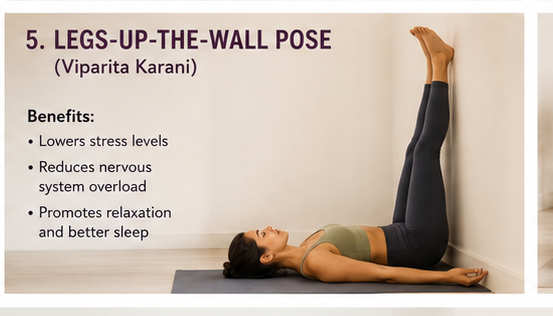
One of yoga’s most restorative postures.
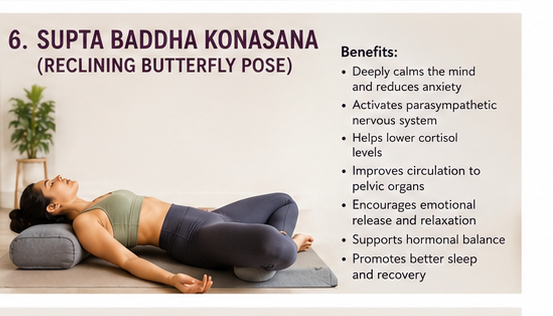
Often considered one of the most therapeutic poses for stress-related conditions.
Supported with cushions or bolsters, this posture allows the body to completely surrender into relaxation.
The Transformative Power of Breath
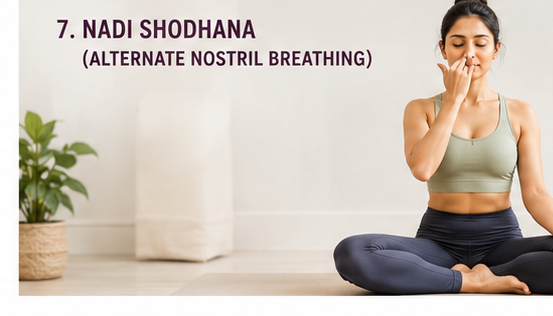
If yoga is the doorway to healing, breath is often the key.
Among all yogic breathing practices, Nadi Shodhana (Alternate Nostril Breathing) stands out for its ability to calm the nervous system and restore mental clarity.
By balancing the body’s stress response, this simple practice can help:
- Reduce anxiety
- Improve emotional stability
- Enhance focus and concentration
- Support restful sleep
- Create a healthier hormonal environment
Just five to ten minutes a day can have a profound effect on how the body responds to stress.
Healing Is a Process, not a Destination
In a world that constantly promotes quick fixes, PCOS reminds us that true healing rarely happens overnight.
The path forward is not about perfection, restriction, or punishing exercise routines.
It is about consistency.
It is about nourishing your body with wholesome food, moving regularly, sleeping deeply, managing stress, and creating moments of stillness amid the noise of everyday life.
Yoga supports this journey by helping the body feel safe, the mind feels steady, and the nervous system returns to balance.
Final Thoughts
PCOS is not simply a reproductive condition. It is a whole-body experience influenced by hormones, metabolism, emotions, lifestyle, and stress.
While there is no single solution, a holistic approach can make a profound difference.
Yoga offers more than flexibility or fitness offers a pathway back to connection, balance, and self-awareness. And sometimes, that is where healing truly begins: not by fighting the body, but by learning to work with it.




0 Comments