
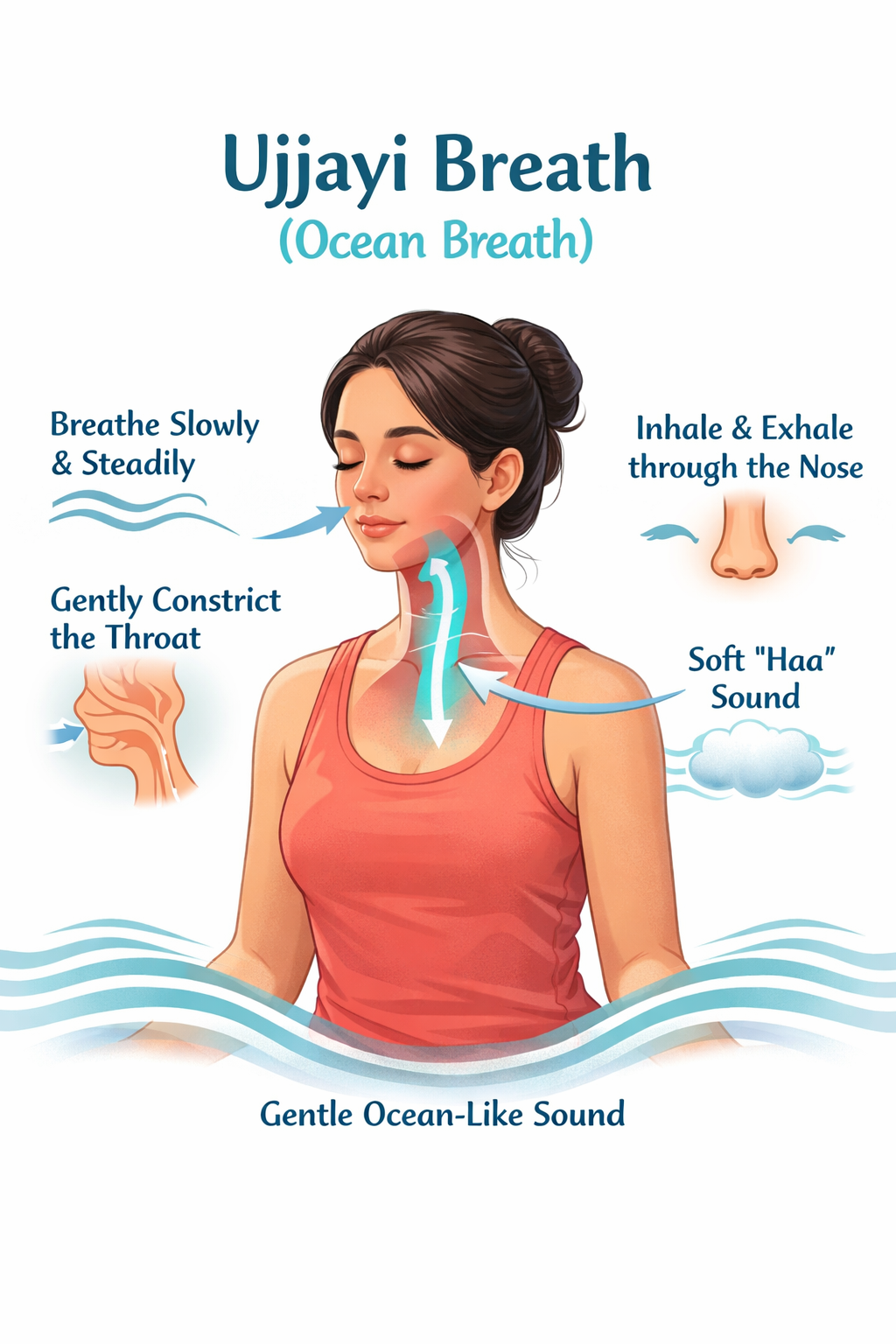
In yoga, Ujjayi breathing—often hailed as the “Victorious Breath”—serves as a powerful tool for physiological and mental regulation. Known for its distinct, ocean-like resonance, this ancient pranayama involves a gentle constriction of the throat that transforms each breath into a meditative anchor.
Beyond its soothing sound, Ujjayi is uniquely designed to build internal heat (Ushna) and increase respiratory efficiency, making it a vital bridge between physical movement and mental stillness. By regulating the flow of Prana (life force) and lengthening the breath, it provides a stable foundation for managing stress and balancing the nervous system. Whether used to sharpen focus or support cardiovascular health, mastering Ujjayi is the first step toward a deeper, more intentional practice.
Steps to Practice
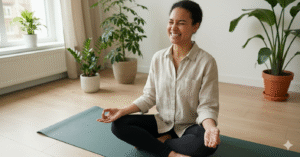
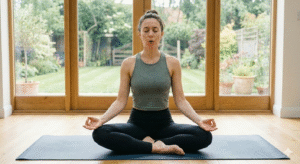
- Preparation: Sit in a comfortable meditative posture like Sukhasana with a straight spine.
- Throat Constriction: Slightly contract the glottis (the back of the throat), as if you are about to whisper or fog up a window.
- Inhalation: Breathe in deeply through the nose. The air should graze the back of the throat, creating a soft, “hissing” or ”haaa” or ocean wave -like sound.
- Exhalation: Slowly exhale through the nose while maintaining the same throat constriction. The sound should be consistent on both the inhale and exhale.
- Focus: Keep your awareness on the sound and the sensation of the air passing through the throat.
Key Benefits
- Mental Clarity: The rhythmic sound soothes the nervous system and reduces anxiety.
- Internal Heat: Builds “Agni” (digestive fire) and warms the muscles for physical practice.
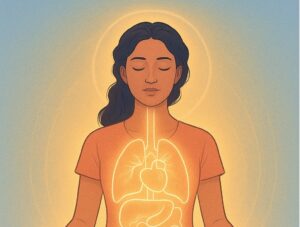
- Increased Oxygenation: Improves the exchange of gases in the lungs by lengthening the duration of each breath.
- Detoxification: The internal heat generated helps release toxins during asana practice.
Psychological Benefits of Ujjayi Breathing (Victorious Breath)
Reduces anxiety and mental agitation
The slow, resistance-based breath calms the nervous system and lowers stress signals in the brain.
Improves emotional regulation
The steady rhythm helps manage emotional reactivity, making it easier to stay composed under stress.
Enhances focus and concentration
The audible breath anchors attention, reducing mind-wandering and rumination.
Promotes a sense of inner control and stability
Conscious regulation of breath builds self-awareness and psychological resilience.
Encourage the relaxation
Gentle throat constriction stimulates the vagus nerve, encouraging a relaxation response.
Reduces mental fatigue and overwhelm
Efficient oxygen use and rhythmic breathing refresh the mind without overstimulation.
Creates grounding and present-moment awareness
The sound and sensation of the breath bring awareness out of anxious thought loops.
Contraindications & Precautions
- Low Blood Pressure (Hypotension): Because Ujjayi stimulates the carotid sinus receptors, it can trigger a parasympathetic response that further lowers blood pressure. Individuals with low BP should avoid long, intensive sessions to prevent dizziness.
- Heart Conditions: Those with cardiac issues should avoid “holding” the breath (Kumbhaka) during Ujjayi.
- Throat Infections: Avoid practice if you have an acute sore throat or respiratory infection to prevent irritation.
- Introduction for Beginners: If practiced too forcefully, it can lead to “over-breathing” or lightheadedness.
How to Combine Ujjayi with few Specific Poses
1. Tadasana (Mountain Pose) – For Stability
- The Action: Stand tall with feet together. On the Ujjayi inhale, reach your arms overhead and lift your heels (balance on toes). On the Ujjayi exhale, slowly lower your heels and arms.
2. Adho Mukha Svanasana (Downward Dog) – For Cerebral Flow
- The Action: Hold the pose for 5–10 deep Ujjayi breaths.
3. Setu Bandhasana (Bridge Pose) – For Heart Regulation
- The Action: Lie on your back, knees bent. On a slow Ujjayi inhale, lift your hips. On the Ujjayi exhale, lower your spine bone-by-bone.
4. Viparita Karani (Legs-Up-The-Wall) – For Gentle Recovery
- The Action: Rest with legs up the wall for 5 minutes. Use a very soft, quiet Ujjayi breath.
Tips :
- Listen to your body: Pay attention to how you feel throughout your practice. If a pose doesn’t feel right, simply skip it.
- Use props: Blocks, straps, and blankets can help you modify poses to make them more accessible and comfortable.
- Consult a professional: If you have any health concerns, consult with a doctor or a qualified yoga instructor before starting a new practice.

0 Comments