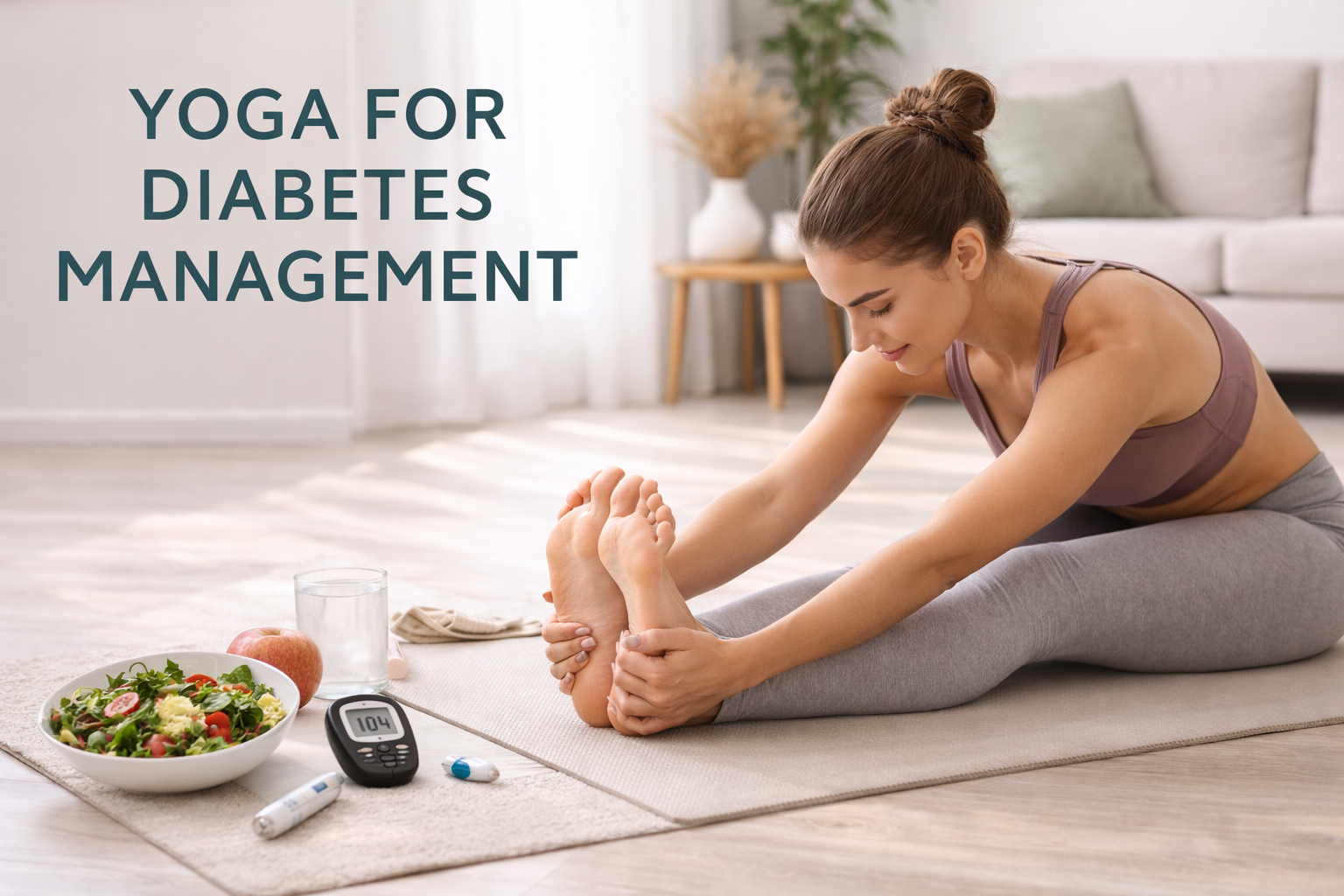
Managing diabetes effectively requires a multi-faceted and sustainable approach that supports both physical health and mental well-being. Alongside medical care, mindful movement, balanced nutrition, and stress management, yoga can serve as a powerful complementary practice in diabetes management.
Improved Insulin Sensitivity
Research suggests that regular yoga practice may help improve insulin sensitivity, allowing the body to use insulin more efficiently and supporting healthier blood sugar levels. Certain yoga postures gently stimulate internal organs, including the pancreas, which plays a key role in insulin production.
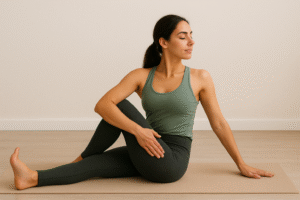
Seated forward bends and spinal twists are especially beneficial as they massage the abdominal organs and encourage better metabolic function.
Stress Reduction
Stress has a direct impact on blood sugar levels, as elevated stress hormones can cause glucose spikes. Yoga’s focus on slow, conscious breathing (pranayama) and meditation helps calm the nervous system and shift the body out of “fight or flight” mode. This relaxation response supports better blood sugar regulation and emotional balance.
Weight Management and Energy Balance
Maintaining a healthy weight is an important aspect of diabetes care, particularly for Type 2 diabetes. Yoga helps build strength, improve stamina, and increase overall body awareness. Regular practice encourages mindful movement and supports calorie expenditure without placing excessive strain on the body, making it suitable for long-term practice.
Recommended Yoga Practices for Diabetes Management
The following poses and movements are commonly recommended for diabetes care and should be practiced gently, consistently, and with appropriate modifications:
- Seated Forward Bend (Paschimottanasana)
- Seated spinal twist Pose (Ardha Matsyendrasana)
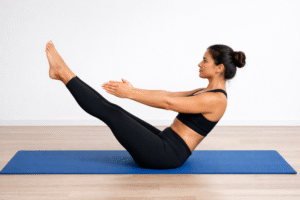
- Boat Pose (Naukasana) – practiced mindfully and with support if needed
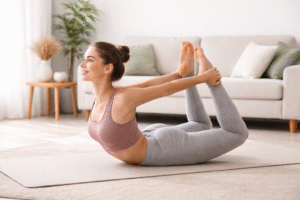
- Bow Pose (Dhanurasana) – gentle and modified as required
- Leg Raising Exercise (pada Uttanasana / Supta Leg Raises)
- Child’s Pose (Balasana)
- Sun Salutations (Surya Namaskar) – performed slowly and with suitable modifications
- Savasana
Key Research Findings
Immediate Blood Sugar Reduction: A study published in Qeios (2025) found that even two cycles of deep breathing significantly decreased random blood glucose (RBG) in Type 2 diabetics compared to healthy subjects.
Pancreatic Rejuvenation: Some clinical trials suggest that the “abdominal pumping” action during diaphragmatic breathing may physically stimulate the pancreas, potentially improving insulin secretion over time.
Scientific research suggests that Slow Deep Breathing (SDB) and Pranayama act as “metabolic modulators” that can directly lower blood sugar and improve insulin sensitivity.
Here are the step-by-step instructions for these two powerful breathing techniques, specifically tailored for metabolic health and inflammation reduction.
1. Diaphragmatic (Belly) Breathing
The “Internal Massage”
This technique moves the focus of breathing from the chest to the abdomen. It creates a gentle pressure change in the abdominal cavity, which is thought to “massage” the pancreas and liver while lowering cortisol.
The Instructions:
- Get Comfortable: Sit upright in a chair or lie flat on your back on a yoga mat. You can place a small pillow under your hip or knees for support.
- Hand Placement: Place one hand on your upper chest and the other hand on your belly, just below the rib cage.
- The Inhale: Breathe in slowly through your nose. Aim for the air to go deep toward your stomach. The hand on your belly should rise, while the hand on your chest remains as still as possible.
- The Exhale: Tighten your abdominal muscles slightly and let them fall inward as you exhale through pursed lips (like you are blowing through a straw).
- The Rhythm: Inhale for 4 seconds, hold for 2 seconds, and exhale for 6 seconds.
- Duration: Practice for 5–10 minutes.
2. Nadi Shodhana (Alternate Nostril Breathing)
The Autonomic Balancer
Proven to balance the autonomic nervous system and reduce post-meal sugar spikes
The Instructions:
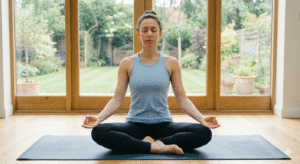
- Preparation: Sit in a comfortable cross-legged position in yoga mat or on a chair with a straight spine. Relax your left hand on your lap.
- The Mudra (Hand Position): Using your right hand, fold your index and middle fingers toward your palm. You will use your thumb to close your right nostril and your ring finger to close your left nostril.
- The Start: Close your right nostril with your thumb. Inhale deeply and quietly through your left nostril.
- The Switch: Close your left nostril with your ring finger so both are briefly closed. Release your thumb and exhale through your right nostril.
- The Return: Inhale through the right nostril.
- The Cycle: Close the right nostril with your thumb, release the ring finger, and exhale through the left nostril.
- Summary: One full cycle is Left-In, Right-Out, Right-In, Left-Out.
- Repetition: Complete 5–10 cycles. Keep your breath slow, steady, and effortless.
Meditation practice
The following meditation techniques are clinically supported for managing the stress–diabetes cycle.
Practicing while seated on a comfortable meditation cushion or ergonomic meditation seat can support posture, ease pressure on the lower back and hips, and help the body settle more easily into relaxation
1. Mindfulness-Based Stress Reduction (MBSR)
Mindfulness-Based Stress Reduction (MBSR) is one of the most clinically researched meditation approaches for chronic conditions, including diabetes. It is based on cultivating non-judgmental awareness of the present moment, allowing the mind to respond rather than react to daily challenges.
Why It’s Helpful for Diabetes
Research published in Diabetes Care has shown that regular MBSR practice can help reduce HbA1c levels and blood pressure. By calming stress-driven thought patterns, MBSR helps lower cortisol levels and systemic inflammation—both of which directly influence blood sugar regulation.
Purpose
- Reduce stress and emotional reactivity
- Support blood sugar stability
- Lower inflammation associated with chronic diabetes management
How to Practice MBSR
- Find a Comfortable Position
Sit on a chair or yoga mat on the floor with your spine upright yet relaxed. If sitting is uncomfortable, you may lie down. - Settle Into the Breath
Gently close your eyes and bring attention to your natural breathing. Do not try to control it—simply observe. - Feel the Breath
Notice the sensations of the breath as it moves through the nostrils, chest, or abdomen. - Work with Thoughts
When thoughts arise—about food, blood sugar levels, responsibilities, or worries—acknowledge them without judgment and gently return your attention to the breath. - Sustain Awareness
Continue this practice for 5–10 minutes, gradually extending to 15–20 minutes as your comfort grows. - Close the Practice
Take a few deeper breaths and slowly open your eyes.
Practice Tip
Consistency matters more than duration. Even 5 minutes of daily mindfulness practice can create meaningful shifts in stress levels and long-term diabetes management.
2. Body Scan Meditation
Body Scan Meditation is a gentle mindfulness practice in which awareness is slowly moved through the body—from the toes to the head—observing sensations without trying to change them.
Why It’s Helpful for Diabetes
People living with diabetes often experience neuropathy, numbness, tingling, or a sense of disconnect from certain parts of the body. Body scan meditation helps rebuild this connection by strengthening interoceptive awareness—the ability to sense internal bodily signals.
This awareness can support early recognition of physical discomfort or subtle blood sugar fluctuations, while also reducing anxiety and mental fatigue.
Purpose
- Improve body awareness
- Reduce stress and anxiety
- Recognize early physical cues related to blood sugar imbalance or neuropathy
How to Practice Body Scan Meditation
- Get Comfortable
Lie down on your back or sit supported in a chair. Allow your body to relax fully. - Settle the Breath
Close your eyes and take a few slow, deep breaths to settle the mind. - Begin at the Toes
Bring your attention to your toes. Notice any sensations—warmth, coolness, tingling, heaviness, or numbness—without trying to change them. - Move Awareness Upward
Slowly guide your attention through the body:
feet → ankles → calves → knees → thighs → hips → abdomen → chest → back → shoulders → arms → hands → neck → face → head. - Observe Gently
Spend about 5–10 seconds on each area, simply noticing sensations. - Meet Discomfort with Kindness
If you notice discomfort, tension, or numbness, observe it with patience and compassion rather than resistance. - Rest in Whole-Body Awareness
Once you reach the head, take a few deep breaths and feel the body as a whole for a minute. - Close Slowly
Gently open your eyes when you feel ready.
In conclusion, yoga is far more than a physical exercise; it is a sophisticated system of preventative and restorative care. By integrating mindful movement with breathwork, you address the root causes of chronic illness—such as systemic inflammation and nervous system dysregulation—rather than just treating the symptoms.