
Introduction
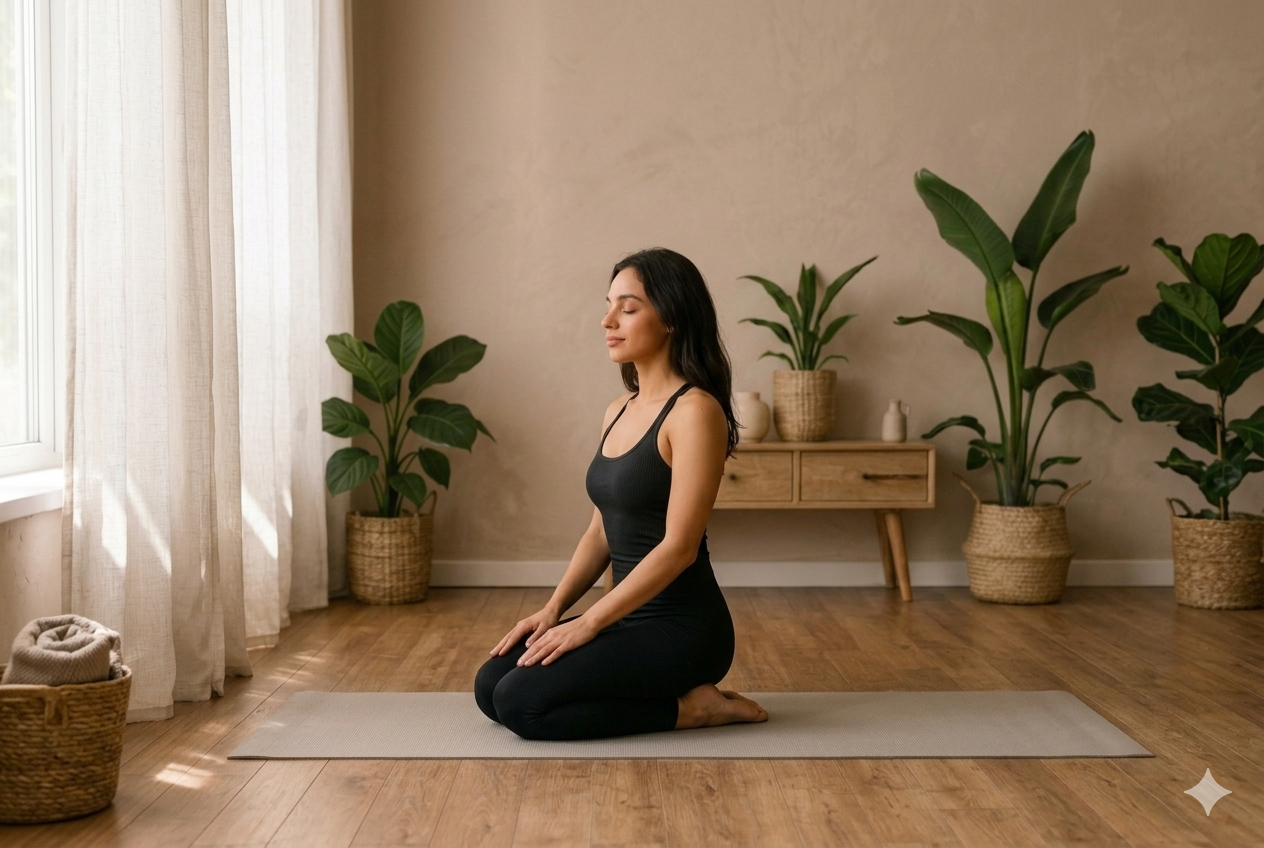
Vajrasana, also known as Thunderbolt Pose or Diamond Pose, is a simple seated yoga posture where you sit on your heels with an upright spine. Unlike many yoga poses, Vajrasana can be practiced comfortably after meals and is traditionally associated with supporting digestion and creating a calm, grounded state.
This gentle pose encourages proper posture, mindful breathing, and relaxation. It is suitable for beginners, seniors, and those looking for a simple meditation or breathing posture.
Regular practice of Vajrasana may help improve body awareness, support digestive comfort, and create a peaceful connection between the body and mind.
How to Practice Vajrasana (Thunderbolt Pose)
- Begin in a kneeling position
- Kneel on the floor with your knees together or slightly apart.
- Keep your spine upright and shoulders relaxed.
- Sit back on your heels
- Slowly lower your hips and sit between your heels.
- Keep the tops of your feet resting on the floor.
- Place your hands comfortably
- Rest your hands on your thighs with your palms facing down.
- Relax your arms and shoulders.
- Lengthen your spine
- Sit tall through the crown of your head.
- Keep your neck relaxed and your gaze forward.
- Practice mindful breathing
- Close your eyes if comfortable.
- Take slow, deep breaths.
- Stay in the pose for 2–5 minutes, gradually increasing the duration with practice.
Modification:
- Place a cushion, yoga block, or folded blanket between your heels and hips for extra comfort.
- If sitting directly on your heels feels uncomfortable, use support under your hips.
Benefits of Vajrasana
1. Supports Digestion
Vajrasana is traditionally practiced after meals as it encourages an upright sitting position, which may support comfortable digestion.
2. Improves Posture Awareness
Sitting tall in this pose helps develop awareness of spinal alignment and encourages better sitting habits.
3. Calms the Mind
The steady posture and slow breathing can promote relaxation and help reduce mental tension.
4. Supports Meditation and Breath Practices
Vajrasana provides a stable seated position for meditation, pranayama (breathing exercises), and mindfulness practices.
5. Strengthens Sitting Endurance
Regular practice can improve comfort and awareness while sitting for longer periods.
6. Gently Stretches the Lower Body
The pose provides a gentle stretch for the thighs, ankles, and feet.
7. Encourages Mind-Body Connection
By combining stillness, posture, and breathing, Vajrasana helps create a sense of grounding and inner balance.
Contraindications & Precautions
Avoid or modify Vajrasana if you have:
- Recent knee injury or knee surgery
- Severe knee pain or arthritis flare-ups
- Ankle injuries or limited ankle mobility
- Hip problems that make kneeling uncomfortable
- Numbness, tingling, or pain while sitting in the pose
Safety Tips:
- Do not force your hips down towards your heels.
- Use cushions or props to reduce pressure on knees and ankles.
- Keep the practice comfortable and pain-free.
- Come out of the pose slowly if your legs feel stiff or numb.



0 Comments