
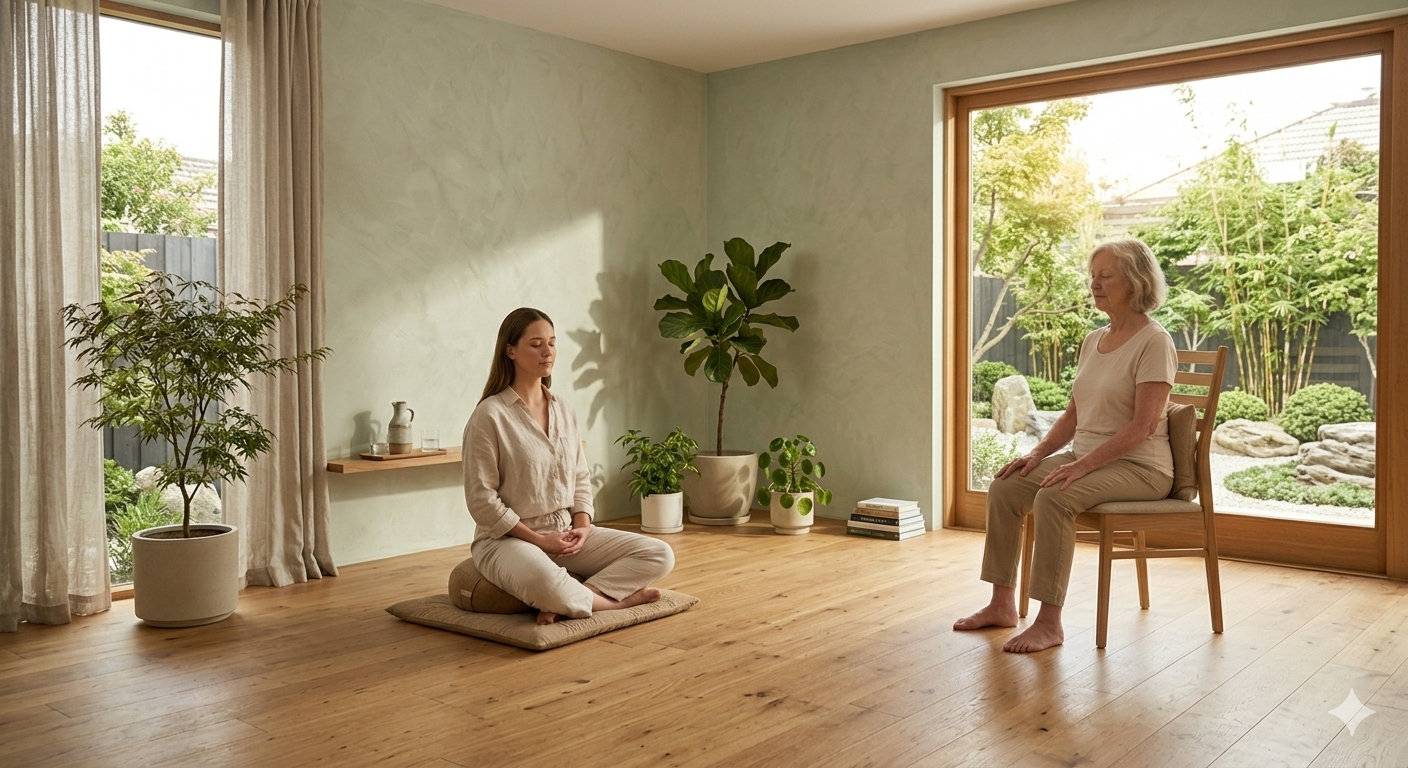
When people think about meditation or pranayama, they often imagine someone sitting cross-legged on the floor in Lotus Pose. But if you are not comfortable in this position, or your body simply does not allow it, there are always other ways to sit and different poses that can support your practice just as well.
The purpose of a meditation seat is simple: to create enough stability and comfort that you can bring your attention to your breath and your inner experience. In yoga, a steady and comfortable posture is traditionally considered important for meditation and pranayama. It is also associated with creating a supportive foundation for the movement of prana, or life energy.
A common instruction in meditation is to “keep your spine straight,” but this does not mean forcing your body into a rigid, uncomfortable shape. True alignment is found in the perfect balance of being upright, relaxed, and completely comfortable, allowing the natural, gentle curves of your spine to remain exactly as they are. As you settle into this effortless lift, invite a wave of relaxation to soften your shoulders, release your jaw, smooth your face, and loosen your hands and abdomen. Finally, keep your head comfortably balanced at the peak of your spine, allowing your neck and throat to stay completely soft without pushing your chin upward or forcing your posture backward.
To know if you have found the right position before starting your meditation or pranayama, take a moment to check five core elements of alignment and ease. Ask yourself if you can breathe comfortably, if you can sit completely without pain, and if your shoulders feel relaxed rather than tense. Notice if your head and neck are comfortable, and ensure that you can stay relatively still without constantly needing to adjust your posture. From a general perspective, a comfortable posture can help reduce physical distractions and make it easier to maintain relaxed, attentive breathing. So, rather than asking, “What is the perfect meditation posture?”, ask: “Which position allows me to breathe comfortably and remain present?” If you can answer yes to these checkpoints, you have successfully found a suitable meditation seat that will fully support your practice.
While meditating or practicing breathwork, feeling mild discomfort or experiencing your legs going numb is simply a gentle sign from your body that you need to change your position. You do not need to remain completely still during the process just because you are practicing; if you feel significant numbness, pain, tingling, or general discomfort, you should feel fully empowered to shift. You can easily stretch your legs out, move over to a chair, or add additional propped support to relieve the pressure. Ultimately, mindfulness and breathwork should never become a test of how long you can tolerate physical discomfort, as true wellness thrives on treating your body with kindness and ease.
Here are a few comfortable and supportive positions you can try for meditation and breathwork. Choose the one that feels most natural for your body, and remember that you can adjust your position whenever needed.
Sukhasana — Easy Pose
Sukhasana is a simple, cross-legged sitting position that serves as one of the most accessible traditional floor shapes. It provides a highly stable physical foundation while allowing the spine to remain comfortably upright, making it an excellent starting point for breath awareness without overwhelming the body. From a traditional yogic perspective, this posture is deeply associated with grounding, stability, and inward awareness; sitting close to the earth builds a natural sense of physical connection and quiet steadiness.
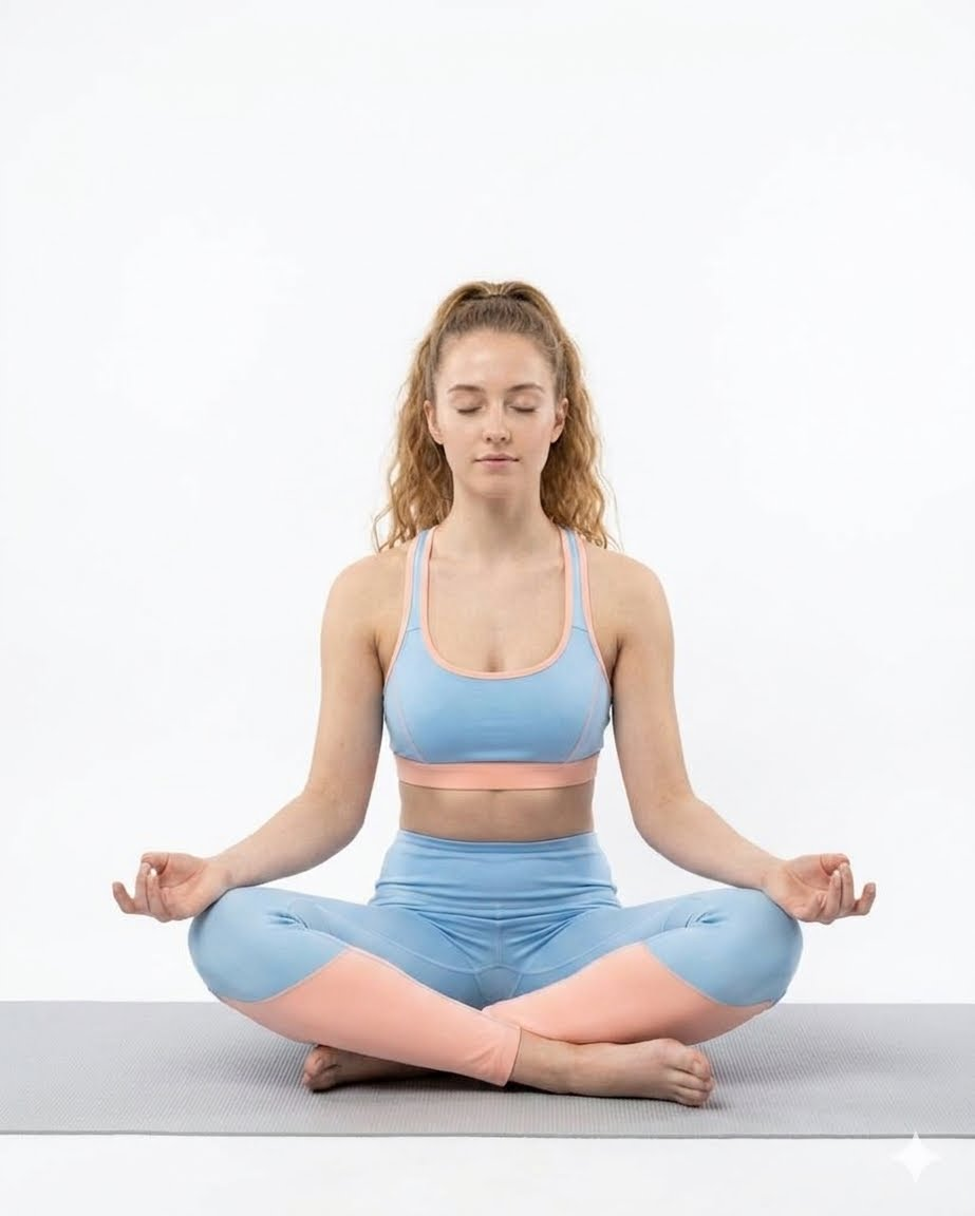
- Best for: Beginners, shorter sessions, those who naturally sit cross-legged comfortably, and general breathwork.
- How to adapt: If your knees sit higher than your hips or your lower back rounds, slide a firm cushion or folded blanket underneath your hips.
Ardha Padmasana — Half Lotus
Half Lotus is a structured posture where one foot rests on top of the opposite thigh while the other leg tucks underneath. This specific arrangement creates an incredibly solid, locked-in foundation for individuals who have excellent hip mobility, offering a more stable anchor for the torso during extended sessions. Traditionally, this posture is linked with deep physical stillness, intense concentration, and focused, unwavering inward attention.
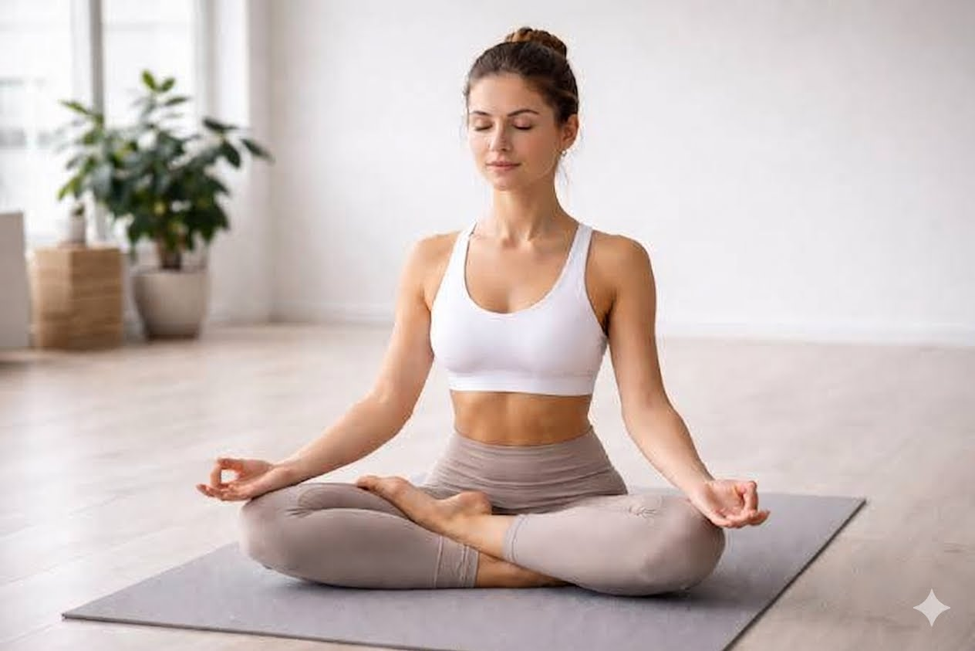
- Best for: Experienced practitioners who can enter the shape smoothly without forcing their joints.
- How to adapt: Never force your knee or foot into position. If you feel any pinching or discomfort, immediately return to Sukhasana.
Padmasana — Lotus Pose
Padmasana is the traditional advanced seated posture where both feet rest simultaneously on opposite thighs. It anchors the lower body completely to the earth, creating an immutable, highly stable base that has been used historically to lock the physical body into place for advanced, long-duration practices. In yogic philosophy, Lotus is considered the ultimate symbol of deep meditative stillness and supreme concentration.
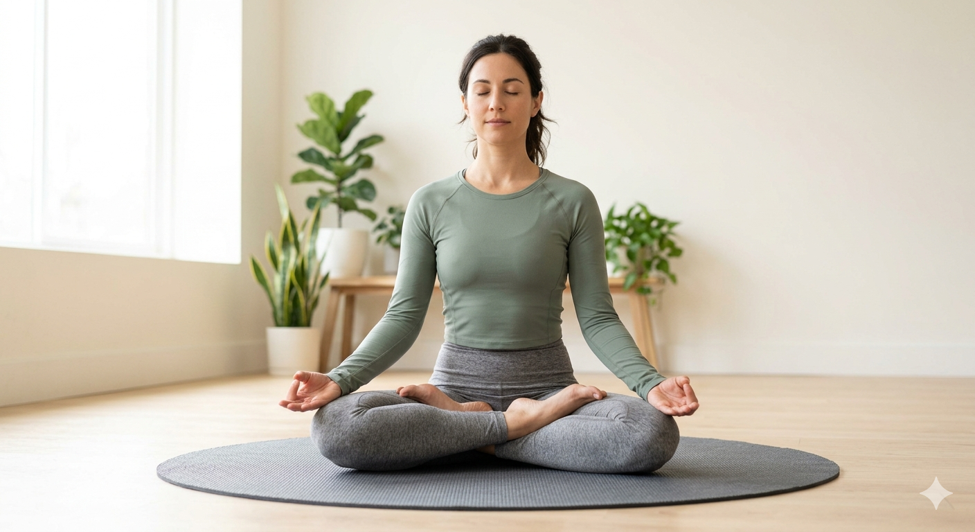
- Best for: Highly advanced practitioners whose anatomical hip structures naturally allow deep external rotation.
- Who should avoid: Anyone experiencing discomfort in the knees, ankles, or hips. Remember: you do not need Lotus Pose to meditate effectively. Mindfulness is about awareness, not mastering complicated shapes.
Vajrasana — Thunderbolt Pose
Vajrasana is a kneeling position where you sit directly back toward your heels with an upright torso. It serves as an excellent, sturdy alternative for people who dislike or cannot tolerate cross-legged sitting, naturally encouraging a tall, vertically stacked spine. In traditional yoga, this posture is highly associated with instant grounding, spinal steadiness, and maintaining an alert, awake mind.
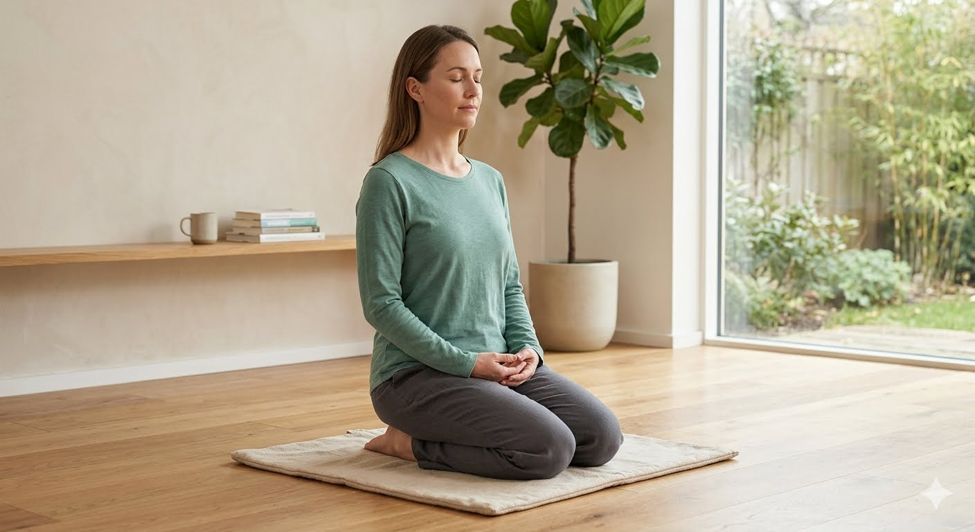
- Best for: Natural kneelers, those who experience hip pinching while cross-legged, and gentle breathing practices.
- How to adapt: Place a yoga block, firm cushion, or folded blanket between your heels and hips to take pressure off your joints. If kneeling causes foot numbness or sharp knee pain, move to a chair.
Meditation Bench
A meditation bench is an angled wooden or padded bench that straddles your calves while you kneel. By supporting your weight, it takes the entire load of your torso off your ankles and heels, keeping your spine effortlessly tall without crushing your legs or cutting off circulation. This prop provides a deeply grounded, stable foundation that naturally tilts the pelvis forward, perfectly honoring the yogic goal of finding effortless posture and joint longevity.
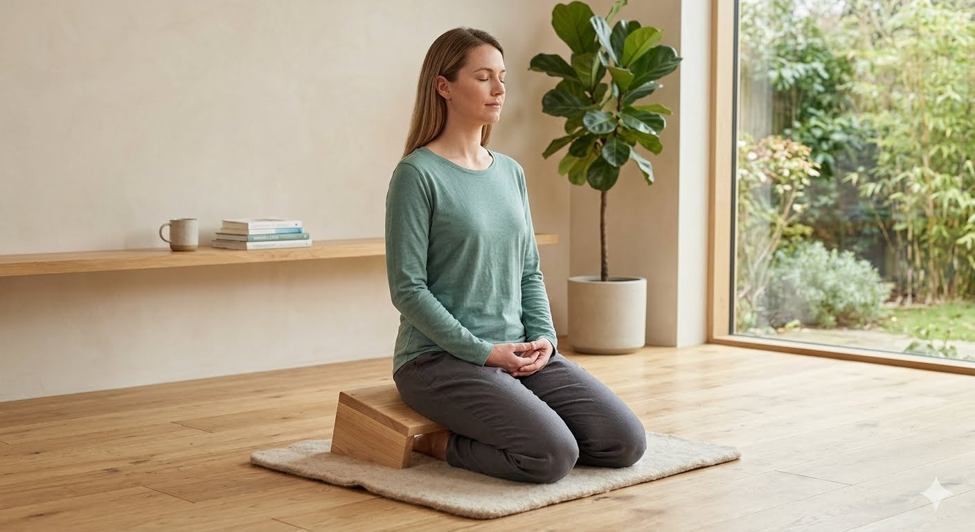
- Best for: People who love the focus of kneeling but get joint pain or numbness in traditional Vajrasana.
- How to adapt: Adjust the padding under your knees if the floor feels too hard, and listen to your ankles.
Active Chair Sitting
Active chair sitting involves resting upright near the front or middle of a standard chair without leaning against the backrest, keeping both feet flat on the floor and hands resting easily on the thighs. This is one of the most practical and accessible seats available, completely removing hip, knee, and ankle flexibility barriers while still allowing you to build core strength. From a yogic perspective, true posture is defined by internal stability, comfort, and a free-flowing breath, making a chair a completely valid and spiritually powerful choice for meditation.
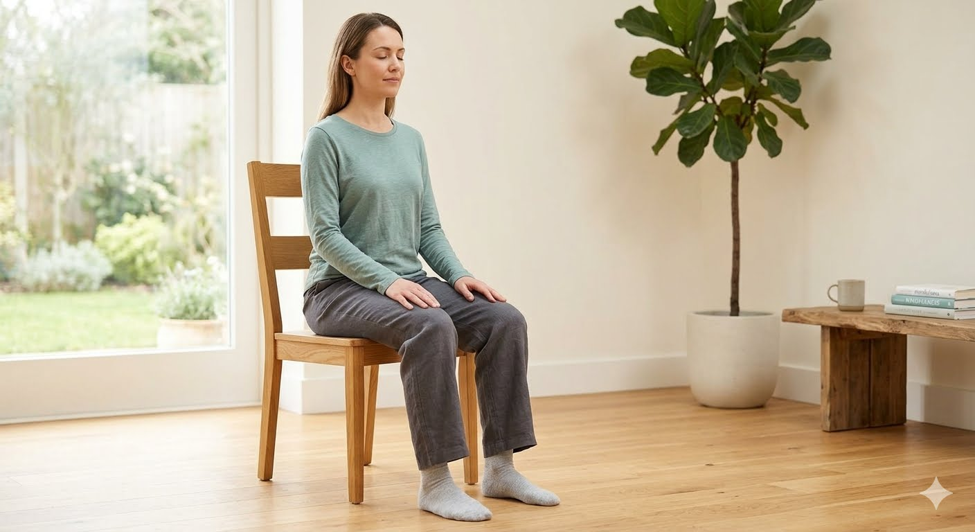
- Best for: Beginners, seniors, office workers, individuals with limited mobility, or anyone managing stiff joints.
- Remember: Your meditation or breathwork does not lose an ounce of value just because you choose to sit in a chair.
Supported Chair Sitting
Supported chair sitting allows you to sit fully back in a chair, utilizing the backrest for physical support while keeping your head and neck aligned. This additional structural support dramatically reduces the muscle endurance required to stay upright, allowing you to completely shift your energy toward breathwork or deep relaxation rather than battling physical fatigue. In yoga, the ultimate quality of a posture is its ability to create ease so the mind can settle, making this supported variant perfect for nourishing the nervous system.
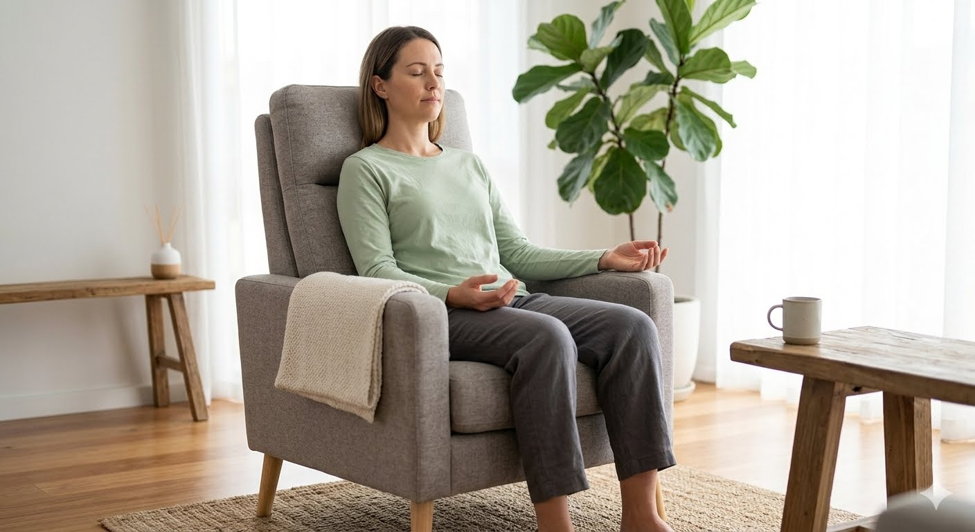
- Best for: People who tire easily while sitting, beginners building core stamina, and longer relaxation sessions.
- How to adapt: The goal is to let the chair hold you up without letting your spine collapse or slump forward. You can place a small pillow behind your lower back for lumbar support.
Cushion-Supported Sitting
Cushion-supported sitting involves elevating your hips on a bolster, firm pillow, or folded blanket while sitting cross-legged on the floor. Lifting your hips slightly higher than your knees naturally tilts your pelvis forward, which protects the natural curve of the lower back and eliminates tight hip strain. This supported setup beautifully aligns with the yogic principle of creating a physical “nest” of comfort, which sends a safety signal to the nervous system and allows the practitioner to settle into quiet stillness much faster.
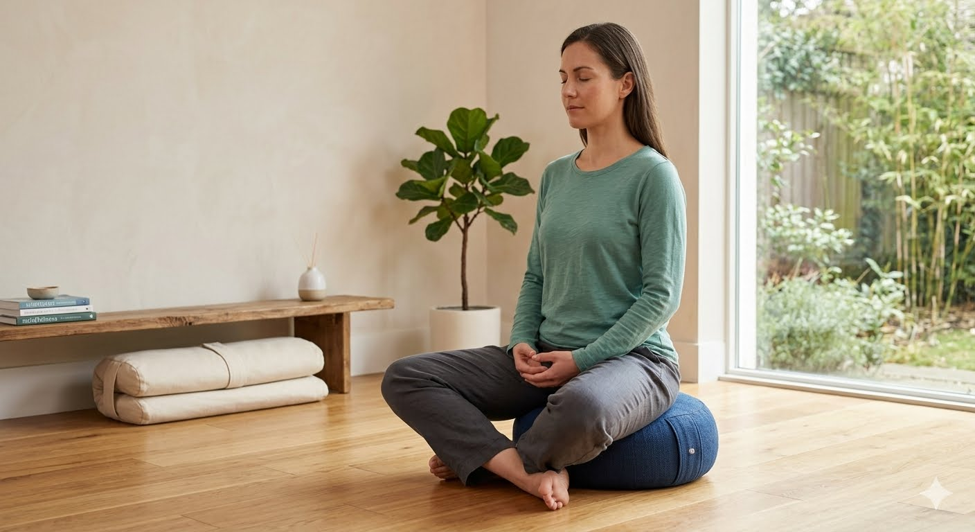
Best for: Beginners, tight hips, floor-sitters facing lower back ache, and extended meditation sessions.
Wall-Supported Sitting
Wall-supported sitting is the practice of sitting on the floor (either cross-legged or with legs extended) with your upper back resting gently against a flat wall. The wall acts as a literal safety net, preventing slouching when your back muscles get tired and allowing you to focus entirely on your breath rather than constantly adjusting a fatiguing posture. This external physical support creates a psychological feeling of being safely “backed” and grounded, helping the practitioner drop resistance and melt into stillness.
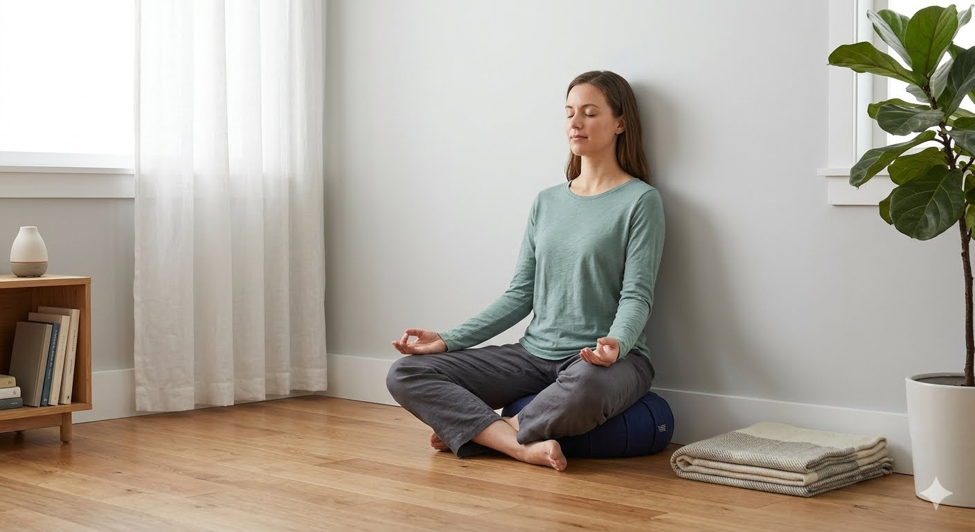
- Best for: Beginners struggling to sit upright independently, short sessions, and deep breathing.
- How to adapt: Use the wall for gentle alignment feedback rather than slumping heavily into it like a couch.
Enhance your mindfulness and breathwork practice with these essential, anatomically supportive tools available directly on Amazon: Few essential tools and gear to support these poses, such as:
Ergonomic Zafu Cushions: Select a round 13-16” buckwheat hull cushion to lift the hips and tilt your pelvis forward into comfortable alignment.
Cushioned Zabuton Mats: Layer an thick 36”x28” cotton-padded mat beneath your seat to fully insulate sensitive feet from cold, hard floors.
0 Comments