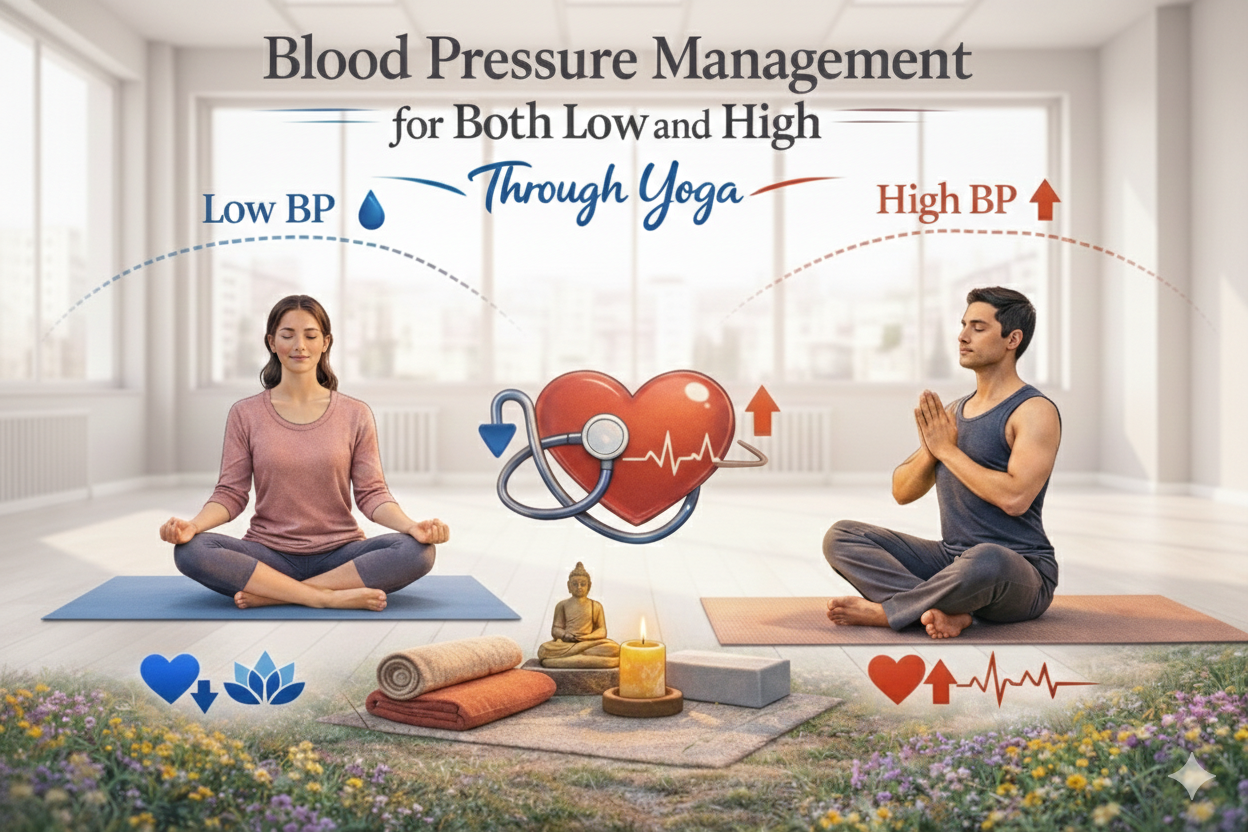
Yoga is an evidence-based lifestyle practice that supports healthy blood pressure by calming the stress response and activating the body’s natural relaxation and recovery systems. It is not a replacement for any medication or medical treatment, but a complementary approach that can enhance overall heart health when practiced regularly.
For High Blood Pressure (Hypertension)
Regular practices specifically for about an hour, five times a week—has been shown to significantly reduce both systolic and diastolic blood pressure.
For those with high BP, the goal is relaxation. Studies show that restorative practices can lower systolic blood pressure by 5 mmHg or more.
Recommended Poses:
Child’s Pose (Balasana): Child’s Pose gently calms the nervous system and reduces stress hormones. The forward-folding position soothes the mind and relaxes the spine, helping the body shift into a relaxation response.

Instruction :
- Kneel on the floor, sit back on your heels, and fold forward.
- Stretch arms forward or by your sides, resting your forehead on the mat.
- Breathe deeply and relax for 30 seconds to 2 minutes.
Legs-Up-The-Wall (Viparita Karani):
This gentle inversion supports venous return, allowing blood to flow back toward the heart with less effort. It reduces heart strain, calms the nervous system, and is especially effective for lowering stress-related BP.

Instruction
- Lie on your back with legs resting up a wall.
- Supports venous return and calms the nervous system.
- Stay 5–10 minutes, breathing gently.
👉 Suggested Amazon link: Yoga Bolster
Baddhakonasana (Bound Angle Pose)
This pose promotes a sense of safety and emotional grounding by gently opening the hips, where stress is often stored. It calms the mind, reduces anxiety, and supports nervous system relaxation, helping stabilize high blood pressure.

Instruction:
- Sit with soles of the feet together and spine tall.
- Inhale to lengthen, exhale and gently fold forward from the hips.
- Relax the neck and breathe slowly, staying comfortable.
👉 Suggested Amazon link: Yoga Block or Bolster under hip
Cobra Pose (Bhujangasana):
Cobra Pose expands the chest and lungs, improving oxygen intake and circulation. Practiced gently, it helps release tension in the upper body and supports heart function without overstimulation.

Instruction :
- Lie on your stomach and lift the chest gently with hands for support.
- Expands the chest, strengthens the back, and supports heart function.
- Hold 15–30 seconds, repeat 3–5 times.
👉 Suggested Amazon link: Yoga Mat
Corpse Pose (Savasana):
Savasana is essential for BP management as it trains the body to fully relax. Deep rest naturally lowers heart rate, pulse, and blood pressure by reducing sympathetic nervous system activity.

Instruction :
- End each session lying fully relaxed for 5–10 minutes.
- Focus on releasing tension and breathing naturally to lower pulse and BP.
👉 Suggested Amazon link yoga blanket, Eye Pillow
Breathing Practices (Pranayama):
Extended Exhale: By making the exhale longer than the inhale, it signals the body to relax, slowing the heart rate and reducing stress hormones. Slow, controlled breathing helps blood vessels relax, supporting more stable blood pressure.
Instruction:
- Sit comfortably with spine straight.
- Inhale slowly for 4 counts.
- Exhale gently for 6–8 counts.
- Repeat for 5 minutes, focusing on lengthening the exhale.
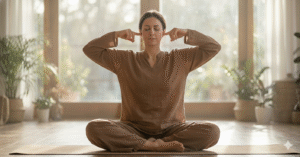
Chandra Bhedi pranayama (left nostril breathing): A calming practice that involves inhaling and exhaling through the left nostril, Chandra Bhedi helps soothe the nervous system, reduce stress, and regulate blood pressure. It’s ideal for high BP, anxiety, and promoting mental relaxation.
Instruction:
- Sit comfortably with a straight spine and relaxed shoulders.
- Close your right nostril gently with your thumb.
- Inhale slowly through the left nostril.
- Exhale slowly through the left nostril.
- Continue for 2-5minutes, keeping your breath smooth and steady.
- Focus on calming the mind and relaxing the body throughout the practice.
Ujjayi Breath: Slow, controlled breathing improves oxygenation and steadies the nervous system without over-stimulating.
Instruction:
- Inhale and exhale slowly through the nose with a gentle throat contraction, creating a soft ocean-like sound.
- Keep the breath smooth and relaxed, practicing for about 3–5 minutes without strain.
Alternate Nostril Breathing (Nadi Shodhana): Alternating nostrils balances the left and right brain hemispheres, harmonize the nervous system, and calms the mind and body, helping blood pressure stay steady.
Instruction:
- Sit upright and relax.
- Close your right nostril with your thumb, inhale through left.
- Close left nostril with ring finger, exhale through right.
- Inhale right, close right, exhale left.
- Continue for 5–10 cycles, breathing smoothly.
Bhramari (Bee Breath): Bhramari Pranayama calms the mind, reduces stress, and supports healthy blood pressure by activating the body’s natural relaxation response. It also enhances focus, promotes restful sleep, and fosters a sense of inner calm.
Instruction:
- Sit comfortably, eyes closed.
- Inhale deeply, then hum slowly on exhale like a buzzing bee.
- Feel vibration in head and chest.
- Repeat 5–10 times, relaxing mind and body.
Diaphragmatic / Deep Belly Breathing:
Diaphragmatic breathing is unique because it directly engages the diaphragm, the largest breathing muscle, allowing for fuller oxygen exchange and slower, deeper breaths. This slows the heart rate and reduces stress hormone activity, which helps lower blood pressure naturally.
Instruction:
- Lie down or sit upright.
- Place one hand on chest, one on belly (option)
- Inhale deeply through nose, letting belly rise more than chest.
- Exhale slowly, feeling belly fall.
- Continue 2-3 minutes, focusing on gentle but full breaths.
👉 Suggested Amazon link: Meditation Cushion
What to Avoid:
- Advanced inversions like Headstand (Sirsasana) or Shoulder Stand (Sarvangasana).
- Breath retention (Kumbhaka) and vigorous techniques like Kapalabhati or Bhastrika, which can spike BP.
Low Blood Pressure (Hypotension)
Yoga for hypotension focuses on improving circulation and training the heart to be more efficient and boost energy without causing strain.
For low BP, the focus is on energy and stability. You want to improve arterial tone without causing dizziness.
Recommended Poses:
Surya Namaskar:
For low blood pressure, practice Surya Namaskar slowly and mindfully, only if it feels comfortable. On days of dizziness skip it and practice the alternative grounding poses instead listed below.
Bridge Pose (Setu Bandhasana):
Bridge Pose opens the chest and stimulates baroreceptors in the neck, which play a role in regulating blood pressure. The gentle backbend improves circulation while balancing the autonomic nervous system.

Instruction :
- Lie on your back, bend knees, and lift hips.
- Opens the chest and improves circulation.
- Hold 20–30 seconds, repeat 3–5 times.
👉 Check recommended yoga pants here (Amazon link)
Downward-Facing Dog (Adho Mukha Svanasana):
An inverted “V” shape that boosts energy and enhances blood flow to the head.

Instruction :
Start on hands and knees, lift hips to form an inverted “V”.
Keep spine long and heels reaching toward the floor.
Breathe deeply, hold 30 sec–1 min.
👉 Suggested Amazon link: Non-slip Yoga Mat
Thunderbolt Pose (Vajrasana):
A seated kneeling posture that improves blood circulation and supports digestion when practiced after meals.

Instruction :
Kneel with heels under your hips, sit back on heels.
Keep spine straight and hands on thighs.
Breathe slowly, hold 2–3 min after meals.
Mountain Pose (Tadasana):
Helps improve posture and overall circulatory efficiency while providing a stable, grounded base.

Instruction :
Stand tall with feet hip-width apart, arms by your sides.
Engage core and lengthen spine.
Breathe evenly, hold 1–2 min.
Also , other recommended practices are
- Setu Bandhasana (Bridge Pose): Opens the chest and heart area, strengthening the cardiovascular system.
- Matsyasana (Fish Pose): Stretches the neck and back, facilitating deep breathing and proper blood distribution throughout the body.
- Uttanasana (Standing Forward Bend) : This pose gently directs blood toward the head and vital organs, improving circulation and helping to relieve fatigue, making it beneficial for low blood pressure.
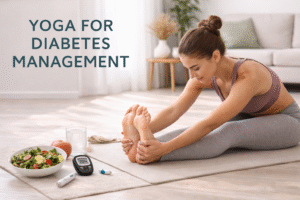
- Paschimottanasana (Seated forward bend): This pose gently boosts circulation to the heart and brain, helping reduce fatigue and dizziness. This calming supported forward bend also stimulates energy without straining the body.
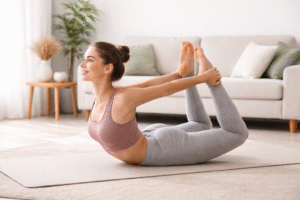
- Boat Pose: Strengthens the core and helps regulate blood pressure.
👉 View recommended yoga accessories on Amazon
Breathing practice for low BP
Breathing directly affects heart rate, circulation, and stress, which influences blood pressure. Slow, mindful breaths calm the nervous system, improve vascular tone, and help stabilize BP naturally.
For low blood pressure, Practice gently, focus on steady breathing, and stop if lightheaded.
Recommended practices:
Kapalbhati: This “cleansing” technique involves forceful exhalations and passive inhalations. It provides an immediate sympathetic boost, increasing blood pressure and heart rate during the practice. It is often described as “initially energizing and heating.
Instruction:
- Sit upright and exhale forcefully through the nose by drawing the abdomen in, letting the inhale happen naturally. Practice 20–30 gentle rounds if you are beginner. Always feel free to take a break if you feel uncomfortable.
Bhastrikā Prāṇāyāma: A more dynamic practice involving rapid, deep inhalations and exhalations. It purifies the blood by ensuring a high intake of oxygen and is used to regulate a slow-pumping circulatory system.
Instruction:
- Inhale and exhale forcefully and evenly through the nose using both the chest and abdomen.
- Practice in short rounds, then rest and observe the breath. Stay alert and stop if you feel dizzy.
Surya Bhedana (Right nostril breathing): According to yogic physiology, the right nostril (Surya Nadi) is linked to heat and energy. Breathing exclusively through the right nostril is used to stimulate the sympathetic nervous system and can help increase blood pressure.
Instruction :
- Sit comfortably with a straight spine and relaxed shoulders, gently close the left nostril, and inhale slowly through the right nostril.
Exhale through the right nostril, keeping the breath smooth and steady, and continue for 2–3 minutes.
Equal Breathing (Sama Vritti): Balanced inhale and exhale maintain calm and steady circulation, preventing drops in BP.
Instruction:
- Inhale and exhale for the same count, keeping the breath smooth and steady. Continue comfortably for about 3–5 minutes without strain.
*To balance all above practice: Alternate Nostril Breathing (Nadi Shodhana):
Safety Tip: Move slowly between poses to avoid orthostatic hypotension (dizziness from sudden position changes).
General Safety Guidelines
- Consult a Professional: Speak with a doctor before starting, especially if BP is uncontrolled.
- Avoid Excessive Heat: Hot yoga can increase cardiovascular strain.
- No Breath Holding: Avoid breath retention which can sharply increase arterial pressure.
- Use Props: Blocks and blankets make poses safer and more accessible.
- Stay Hydrated : Dehydration is a common trigger for low BP
- Immediate Action : If you feel fain during practice , immediately sit or squat down or lie down and elevate your legs
Affiliate Disclosure:
This page may contain affiliate links. If you purchase through these links, I may earn a small commission at no extra cost to you, which helps support this platform and the content I create.