
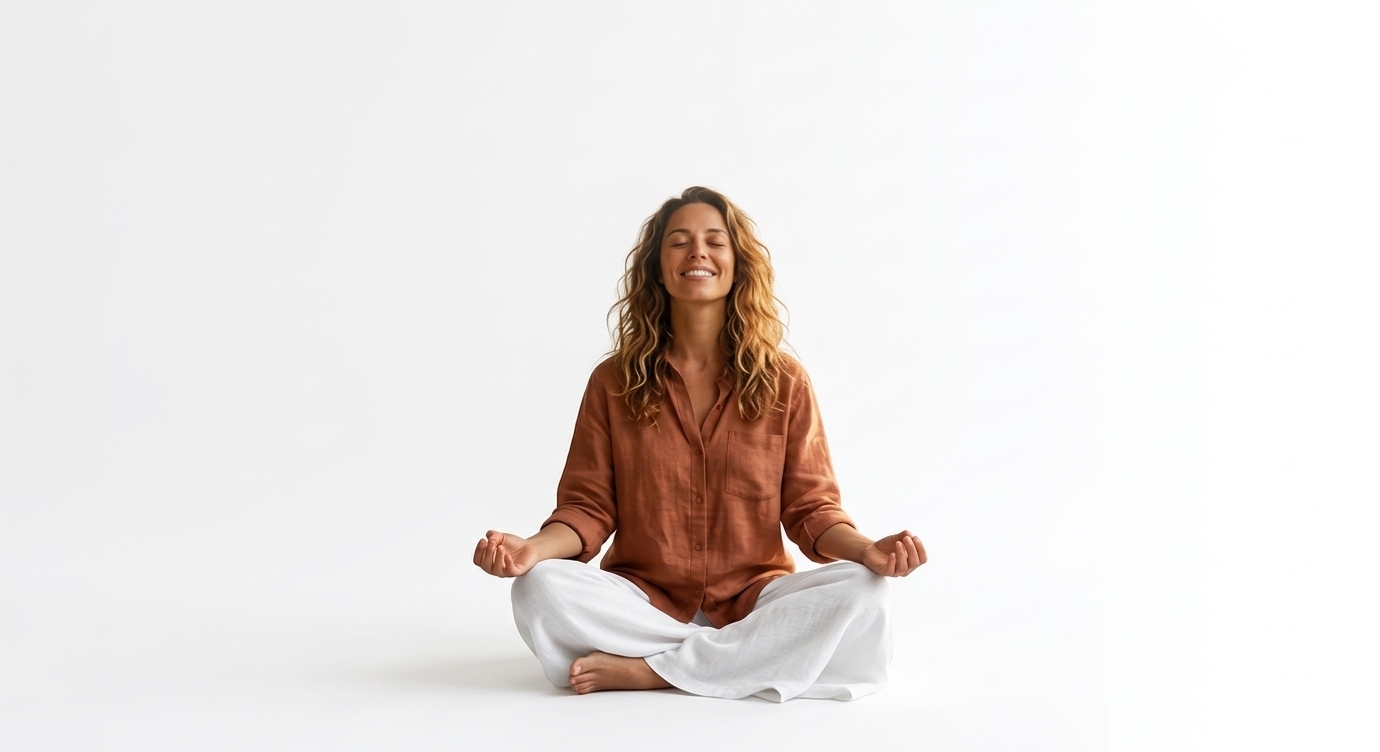
We’ve all heard the modern wellness phrase: “We store our issues in our tissues.” You might have experienced it yourself—a sudden, unexpected wave of tears or an overwhelming surge of release during a deep stretch, a rigorous workout, or a mindful movement practice.
There are moments when digging up old trauma only complicates your present state—and best practice is to simply shift your frequency and elevate your mood.
But here is the catch: the traditional path to emotional healing is never a rigid, one-size-fits-all formula. The ancient masters understood that our internal landscape shifts daily. Sometimes the authentic way forward is to sit in quiet meditation and process. Sometimes you must dynamically move your body to unlock frozen energy.
By looking at authentic texts like Patanjali’s Yoga Sutras and the Hatha Yoga Pradipika, we discover that ancient yogis gave us multiple roads to emotional freedom. Here are three completely different ways to release emotional weight, backed by ancient philosophy.
Option 1: The Analytical and Contemplative Path (Patanjali’s Yoga Sutras)
Best for when you have the mental spaciousness to observe your internal landscape without getting swept away by it.
Written nearly two millennia ago, Patanjali’s Yoga Sutras serve as the definitive, authentic manual on the psychology of the human mind. Patanjali opens this timeless text with his foundational definition of the practice: “Yoga Chitta Vritti Nirodhah”—Yoga is the intentional stillness of the mind’s chaotic fluctuations.
In this classic tradition, our emotional suffering is traced back to mental traps called Kleshas especially our desperate grip on things that feel good and our deep fear of pain. When life gets heavy, our natural instinct is to run away from discomfort. However, ancient yoga philosophy warns that burying our feelings doesn’t make them disappear. Instead, it creates Samskaras – subconscious emotional habits that keep us repeating the same exhausting patterns of stress over and over again.
The Authentic Practice: This path invites you into quiet, seated meditation. Instead of running from or fighting a heavy emotion, you adopt the role of the Drasta (the pure witness). By observing your thoughts, memories, and bodily sensations with absolute neutrality and zero judgment, you starve the old emotional grooves of their power, allowing them to naturally untangle and dissolve.
Option 2: The Physical Route (The Hatha Yoga Pradipika)
Best for: When you are too anxious to sit still and your body feels tense or heavy.
If Patanjali gives us the psychology of emotion, the 15th-century text Hatha Yoga Pradipika gives us the physiology. Its author, Swami Swatmarama, recognized a fundamental truth: when you are trapped in anxiety or grief, you cannot simply “tell” your mind to calm down.
Instead, Hatha Yoga uses a brilliant workaround: Master the body and the breath, and the mind will follow. The text introduces a foundational law: “Chale Vate Chalam Chittam, Nischale Nischalam Bhavet.”
“When the breath wanders, the mind is unsteady. But when the breath is still, the mind too becomes still.”
When we trap trauma, our breath becomes shallow, our muscles grip, and our Prana (vital energy) gets blocked.
How to apply it: Roll out your mat for physical practice. By holding deep postures, rigorous yoga flow practice or sometimes practicing steady stable , intentional breathing (Pranayama), you physically blast through those energetic dams. The physical release of a tight muscle is quite literally the freeing of trapped, stagnant emotion.
Option 3: The Path of Transcendence & State-Shifting (Pratipaksha Bhavana)
Best for when analyzing your feelings feels completely overwhelming, and digging into old trauma only complicates your present state.
Let’s be honest: constantly overthinking your deep spiritual blocks or sitting with heavy grief can trap you in a dark loop. The ancient masters anticipated this mental exhaustion. In Yoga Sutra 2.33, Patanjali outlines a brilliant psychological shortcut called Pratipaksha Bhavana—which means when disrupted by negative, heavy thoughts, you must instantly cultivate the exact opposite.
In plain terms, you flip the switch. Instead of sitting in a dark room analyzing the darkness, you simply walk over and turn on the light. This authentic technique can be applied in two powerful ways to lift your emotional and mental wellbeing:
The Power of a Good Laugh: You instantly disrupt your heavy emotional state. Put down the yoga mat, close the intense philosophy books, and go watch a stand-up comedy special, read a funny book, or call the friend who makes you laugh until your stomach hurts. Scientifically, a deep belly laugh physically shakes your diaphragm, stimulates your vagus nerve, and floods your system with endorphins—acting as an instant circuit breaker for anxiety.
The Power of Higher Action (Sattva): You channel your energy into positive, awe-inspiring actions that completely transcend your personal ego. Instead of trying to “fix” your bad mood, you outgrow it. You can do this by stepping out into nature to look at the ocean or the stars, losing yourself in creating art, listening to high-vibrational music, or practicing Karma Yoga (selfless service) by doing something incredibly kind for someone else.
By intentionally elevating your external actions and shifting your focus to joy or awe, your personal emotional storm naturally loses its power. Sometimes, the most authentic and advanced spiritual practice is simply allowing yourself to change your frequency and transcend the mood entirely.
Ancient yoga philosophy is a vast toolbox. just pick the one that brings you back to peace right now.


0 Comments