

Using a chair as a yoga prop is rapidly gaining popularity because it makes mindfulness and movement completely accessible to everyone. In fact, many stretches are actually performed better using a chair, simply because you have a solid, stable surface to hold onto. No longer seen as just an alternative for limited mobility, the chair is now embraced by office workers, frequent travelers, and advanced yogis alike as a tool for deepening stretches and improving alignment. It transforms any space—from a corporate office to a small living room—into a personal wellness studio, proving that you don’t need a traditional mat to build a meaningful, daily practice.
Just like any traditional mat-based yoga class, chair yoga is considered exactly the same in spirit and purpose. It brings that exact same amount of joy, presence, and vitality into your life through a supported, seated format. It’s a natural fit for beginners, older adults, people with different levels of mobility, and anyone who appreciates the comfort and stability a chair provides. All you need for meaningful yoga practice is a chair, a few quiet minutes, and the willingness to connect with yourself.
The beauty of chair yoga is its simplicity and convenience. You can bring it into your morning routine, take a mindful movement break during the day, practice between meetings, or unwind in the evening — whenever you have a chair nearby. It can be part of your life at home, at work, while travelling, or alongside your regular yoga practice. It isn’t limited to a particular age or experience level; it’s simply another way to explore movement, breath, and awareness.
Choosing the Right Chair as Your Yoga Prop
To get the most out of your practice, you don’t need expensive fitness equipment—just a standard household or office chair. However, selecting the right type of chair is essential for ensuring your stability, safety, and proper alignment.
When choosing a chair to use as a yoga prop, keep these key features in mind:
- Sturdy and Armless: Look for a solid four-legged chair without arms. Armless designs give your body a full range of motion, allowing you to twist, stretch your arms out wide, or swing your legs over the side without obstruction.
- Flat, Firm Seat: A flat wooden, metal, or lightly padded plastic chair works best. Avoid soft, deep couches or heavily cushioned armchairs that cause your hips to sink, as they collapse your posture and misalign your spine.
- No Wheels or Swivels: Never use a rolling office chair. Your chair needs to stay perfectly anchored to the ground when you lean your weight onto it or press against the backrest.
- The Ideal Height: Choose a chair where your feet can rest flat on the floor with your knees bent at a comfortable 90-degree angle. If your chair is a bit too tall, you can easily remedy this by placing a yoga block or a thick book under your feet for support.
Chair Yoga Practices
Here are simple chair practices that can be done by everyone.
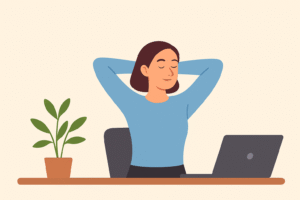
Seated Neck & Spine Stretch
A gentle flow between opening the chest and releasing through the neck and spine. Moving with the breath eases tension in the neck and shoulders while keeping the spine mobile — a soothing stretch for any time of day.

Instructions
- Sit toward the front of a stable chair, feet flat on the floor, hands resting on your knees or thighs.
- Open: Inhale, lift your chest, gently tilt your head back, and let your gaze rise toward the ceiling.
- Release: Exhale, round your spine, drop your chin toward your chest, and let your head fall gently forward.
- Move slowly between the two positions, letting your breath guide the pace.
- Repeat for 5–8 rounds, keeping the movement soft and controlled.
Seated Spinal Twist
A gentle twist that helps release tension along the spine and improve mobility through the mid-back and shoulders. Practised seated, it’s an easy way to bring more ease and flexibility into your day.

Instructions
- Sit tall on a chair with both feet flat on the floor.
- Place your left hand on your right thigh and your right hand behind you on the chair.
- Inhale and lengthen your spine.
- Exhale and gently twist your torso to the right, keeping your hips facing forward.
- Keep your shoulders relaxed and avoid forcing the twist.
- Hold for 3–5 breaths, then return to centre and repeat on the other side.
Seated Cat-Cow Stretch
A simple way to wake up the spine from a chair. Moving between rounding and extending your back with your breath eases tension in the spine, neck, and shoulders — a gentle start to your practice, or a quick reset anytime.

Instructions
- Sit toward the front edge of a stable chair, feet flat on the floor, hands resting on your knees or thighs.
- Cat (round): Exhale, drop your chin toward your chest, round your spine, and draw your belly in — letting your back arch outward like a cat.
- Cow (extend): Inhale, lift your chest, draw your shoulders back, and gently tilt your gaze up — letting your spine arch the other way and your chest open.
- Move slowly between the two shapes, breath leading the movement — exhale to round, inhale to extend.
- Repeat for 5–8 rounds, moving at whatever pace feels good for your spine.
Seated Side Stretch
Reaching one arm overhead and leaning to the side opens up the whole side body — from the hip to the fingertips. This stretch eases tension along the ribs and shoulders, and encourages easier, fuller breathing.

Instructions
- Sit tall toward the front of the chair, feet flat on the floor.
- Rest one hand on the seat or the side of the chair for support.
- Inhale and raise your other arm straight overhead.
- Exhale and gently lean your body to the side, reaching up and over as you stretch through your side body.
- Keep your hips grounded and both sitting bones on the chair.
- Hold for a few breaths, then inhale to come back to centre. Repeat on the other side.
Seated Reach & Forward Fold
A full-body stretch that moves from an energising overhead reach into a calming forward fold. Lengthening upward opens the chest and spine, while the fold releases tension through the back, neck, and shoulders — a simple way to stretch and settle the body at once.

Instructions
- Sit toward the front of a stable chair, feet flat on the floor, hip-width apart.
- Reach up: Inhale, raise both arms overhead, lengthening through your spine and reaching your fingertips toward the ceiling.
- Fold forward: Exhale, hinge at your hips, and fold your chest toward your thighs, letting your arms and head relax down toward your feet or the floor.
- Let your back round softly and your neck stay loose — there’s no need to force the stretch.
- Hold for a few breaths, then inhale to slowly roll back up to sitting.
- Repeat for 3–5 rounds.
Chair-Supported Forward Fold
This variation uses the chair as a support rather than a seat, guiding the body into a standing forward fold. With your hands resting on the chair, you can lengthen through the spine and hamstrings while keeping the pose steady and within easy reach.

Instructions
- Stand facing the chair, feet hip-width apart, and place your hands on the seat or backrest.
- Walk your feet back slightly until your body forms a long diagonal line from your hands to your hips.
- Keep your legs strong and your spine long, hinging from your hips rather than rounding your back.
- Let your head relax between your arms, and press gently through your hands to lengthen your spine further.
- Hold for 5–8 breaths, feeling the stretch through your back and the backs of your legs.
- To release, bend your knees slightly and walk your feet forward as you rise back to standing.
Chair-Supported Forward Fold (Modified)
A gentler variation for when your hands can’t comfortably reach the floor. With hands resting on the chair seat, you can keep your back flat and find length through the spine and hamstrings without straining to fold deeper — a supportive option for tighter hamstrings or a stiffer back.

Seated Twist (Chair-Supported)
Holding the armrests helps you twist your spine safely and with more control. It keeps your hips steady while you rotate, easing tension in your back and improving flexibility.
Holding the armrests helps you twist your spine safely and with more control. It keeps your hips steady while you rotate, easing tension in your back and improving flexibility.

Instructions
- Sit tall near the front of the chair, feet flat on the floor.
- Hold the armrests, one hand on each side.
- Breathe in to sit up tall. Breathe out and slowly twist your body to one side, using your hands to help guide the turn.
- Keep your hips facing forward. Let the twist come from your middle back, not your neck.
- Hold for a few breaths. Then turn back to the centre and repeat on the other side.
Seated Leg Extension
A simple movement that strengthens the legs while gently mobilising the knee. Extending and drawing the leg in builds strength in the thighs, improves knee flexibility, and helps with balance and stability — all from the support of a chair.

Instructions
- Sit tall toward the front of the chair, feet flat on the floor, hands resting on the seat or your thighs.
- Straighten one leg out in front of you, flexing through the heel, keeping your spine tall.
- Hold for a moment, then bend your knee and draw your leg in, hugging your knee toward your chest with your hands.
- Keep your back straight throughout, avoiding any rounding or leaning back.
- Repeat for 5–8 reps, then switch to the other leg.
Chair-Supported Warrior III
This balance pose uses the chair as a steady secure, making a challenging one-legged posture more accessible. With one hand resting on the chair, you can find length through the spine and lifted leg while building strength, focus, and balance with extra support.

instructions
- Stand facing the back of the chair, a small step away, feet hip-width apart.
- Place one hand on the top of the chair for support.
- Shift your weight onto one leg, and slowly hinge forward from your hips while lifting your other leg straight out behind you.
- Reach your free arm forward, keeping your body in one long line from fingertips to lifted heel.
- Keep your standing leg strong and your gaze forward, using the chair to steady your balance.
- Hold for a few breaths, then slowly lower your leg and return to standing. Repeat on the other side.
Chair yoga proves that yoga is truly for everybody. It strips away the barrier of complex poses and leaves you with the pure, functional benefits of movement: enhanced flexibility, dependable balance, and steady physical strength. By integrating these simple supported movements into your daily routine, you are protecting your mobility and choosing a path of vibrant, lifelong wellness. The chair is not a limitation; it is your foundation for a stronger, more resilient life.



0 Comments