
Introduction
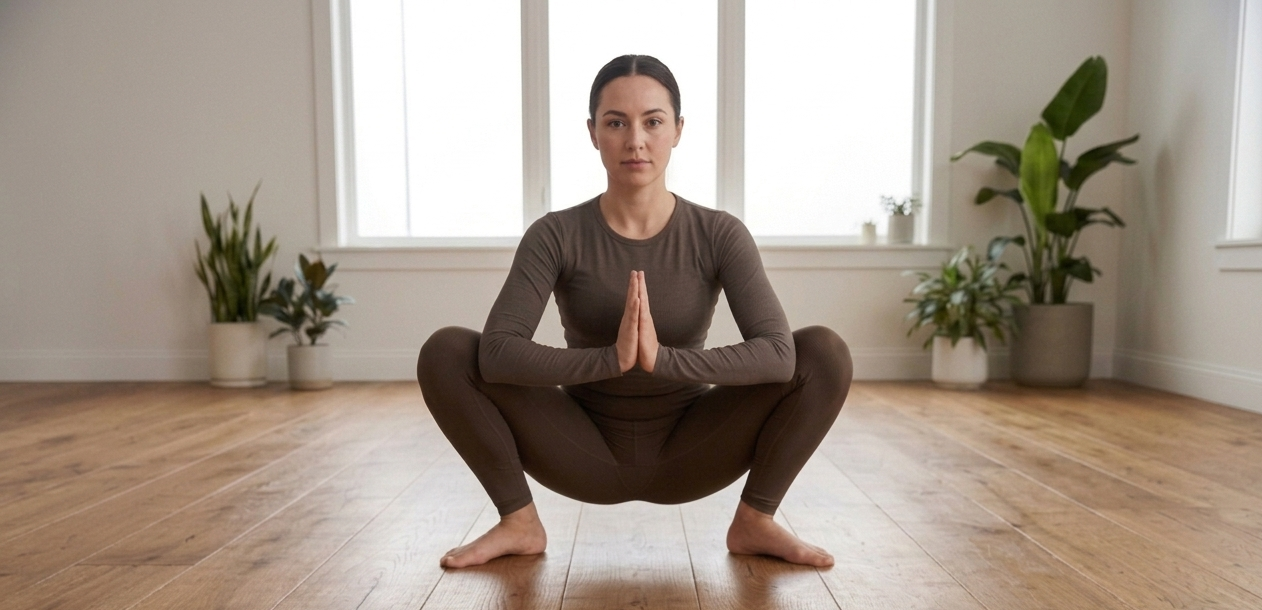
Malasana, also known as Garland Pose or Yogi Squat, is a deep squatting yoga posture that encourages mobility in the hips, ankles, and lower body. This grounding pose helps create space in the pelvis while improving awareness, balance, and strength.
In traditional yoga practice, Malasana is associated with stability, connection to the earth, and mindful movement. It is a beneficial pose for people who want to improve lower-body flexibility, release tension from prolonged sitting, and develop functional movement patterns.
With the support of a block, cushion, or wall, Malasana can be modified to suit beginners, seniors, and those with limited mobility.
How to Practice Malasana (Garland Pose)
- Begin standing
- Stand with your feet slightly wider than hip-width apart.
- Turn your toes slightly outward for comfort.
- Lower into a squat
- Slowly bend your knees and lower your hips towards the floor.
- Keep your heels grounded if possible.
- Bring your hands together
- Place your palms together in front of your chest.
- Gently press your elbows against the inner knees.
- Lengthen your spine
- Sit tall through the crown of your head.
- Keep your chest open and shoulders relaxed.
- Breathe and relax
- Take slow, steady breaths.
- Allow your hips and lower body to soften while maintaining awareness.
- Hold the pose
- Stay for 20–60 seconds.
- Slowly rise back up by pressing through your feet.
Modification:
- Place a yoga block, cushion, or folded blanket under your hips for support.
- Keep heels lifted on a folded mat if ankle flexibility is limited.
- Practice holding onto a chair or wall for balance support.
Benefits of Malasana
1. Improves Hip Flexibility
Malasana gently opens the hips and stretches the inner thighs, helping improve lower-body mobility.
2. Supports Ankle Mobility
The deep squat position encourages flexibility and awareness in the ankles and feet.
3. Strengthens the Lower Body
Holding the squat position engages the thighs, hips, and core muscles.
4. Helps Release Lower Back Tension
By creating space around the hips and pelvis, Malasana may help reduce stiffness caused by prolonged sitting.
5. Supports Better Posture
The pose encourages an upright spine and body awareness, helping counteract sitting-related postural habits.
6. Encourages Pelvic Mobility
Malasana promotes gentle movement and openness around the pelvic region.
7. Improves Balance and Body Awareness
The grounded nature of this pose helps develop stability, coordination, and mindful movement.
8. Supports Functional Movement
Practicing squatting patterns can help maintain everyday movement abilities, especially as we age.
Contraindications & Precautions
Avoid or modify Malasana if you have:
- Recent knee injury or knee surgery
- Severe knee pain or inflammation
- Hip injuries or limited hip mobility
- Ankle injuries or difficulty bearing weight on the feet
- Lower back conditions that worsen in a deep squat
Safety Tips:
- Do not force your hips lower than your comfortable range.
- Keep your knees tracking in line with your toes.
- Use props such as blocks or cushions for support.
- Move slowly and mindfully when entering and leaving the pose.
- Stop if you feel sharp pain or discomfort.

0 Comments