
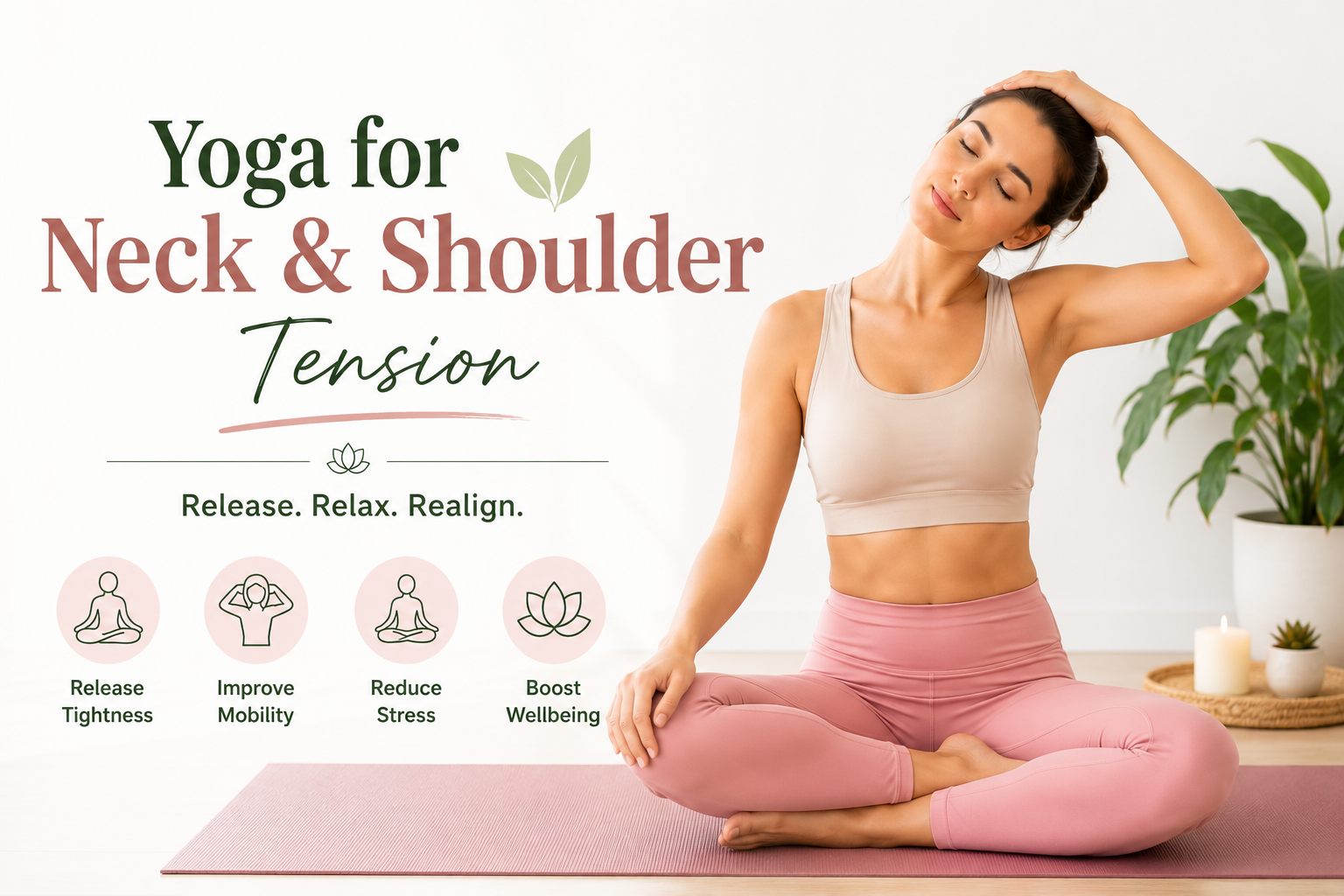
Neck and shoulder tension has become one of the most common physical complaints in modern life. Whether it stems from long hours at a desk, excessive screen time, poor posture, stress, or simply the demands of a busy lifestyle, tightness in these areas can significantly impact our comfort, mobility, and overall wellbeing.
Yoga offers a holistic approach to relieving neck and shoulder tension by addressing both the body and mind. Through gentle movement, conscious breathing, and mindful awareness, yoga helps release accumulated tightness, improve posture, and restore a sense of ease.
Understanding Neck and Shoulder Tension
The neck and shoulders are particularly vulnerable to stress. When we feel overwhelmed, anxious, or under pressure, the body naturally contracts as part of its protective response. Over time, these patterns can become habitual, causing muscles to remain tense even when the stressful situation has passed.
Physical factors such as prolonged sitting, looking down at mobile devices, carrying heavy bags, or working at poorly designed workstations can further contribute to discomfort and muscular imbalance.
The result is often a cycle of tension, restricted movement, and fatigue that affects daily life.
How Yoga Helps
Yoga works by gently stretching and strengthening the muscles that support the neck, shoulders, and upper back. At the same time, mindful breathing helps calm the nervous system, encouraging the body to move from a state of tension into a state of relaxation.
Regular practice may help:
- Release muscular tightness and stiffness
- Improve posture and spinal alignment
- Increase flexibility and mobility
- Reduce tension-related headaches
- Improve circulation to the upper body
- Support healthier breathing patterns
- Lower stress and anxiety levels
- Promote overall physical and mental wellbeing
Unlike quick fixes that only address symptoms, yoga encourages lasting awareness of movement patterns, posture, and stress responses.
Effective Yoga Poses for Neck and Shoulder Relief
Neck Side Stretch (Left & Right)
Slow and mindful neck movements can improve mobility, reduce stiffness, and increase awareness of tension patterns.
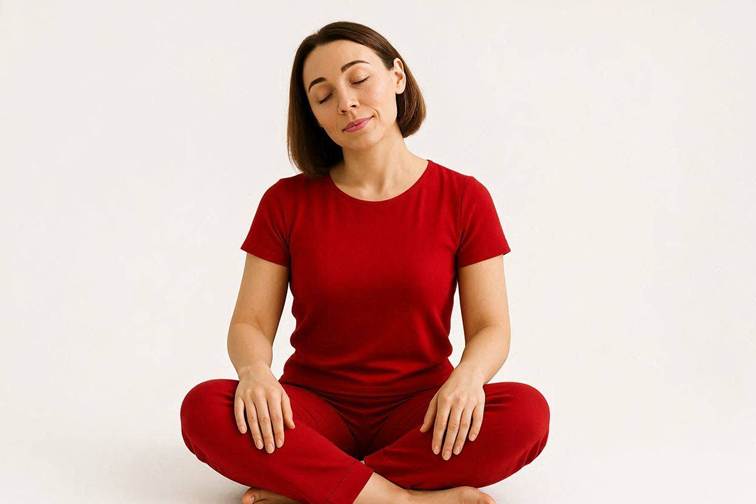
- Sit comfortably on a chair or in a cross-legged position with your spine tall and shoulders relaxed.
- Place your hands on your thighs and keep your chest open.
- Inhale: Lengthen through the crown of your head, creating space along your neck.
- Exhale: Slowly tilt your head toward the right side, bringing your right ear closer to your right shoulder.
- Keep your left shoulder relaxed and gently moving downward to deepen the stretch along the left side of your neck.
- Hold for 10–20 seconds, breathing slowly and allowing the muscles to soften.
- Slowly return your head to the centre.
- Repeat the stretch on the left side, bringing your left ear toward your left shoulder.
- Repeat 2–3 times on each side.
Focus:
Keep both shoulders relaxed and avoid lifting them toward your ears. The movement should create a gentle stretch along the side of the neck without pulling or forcing.
Neck Rotation
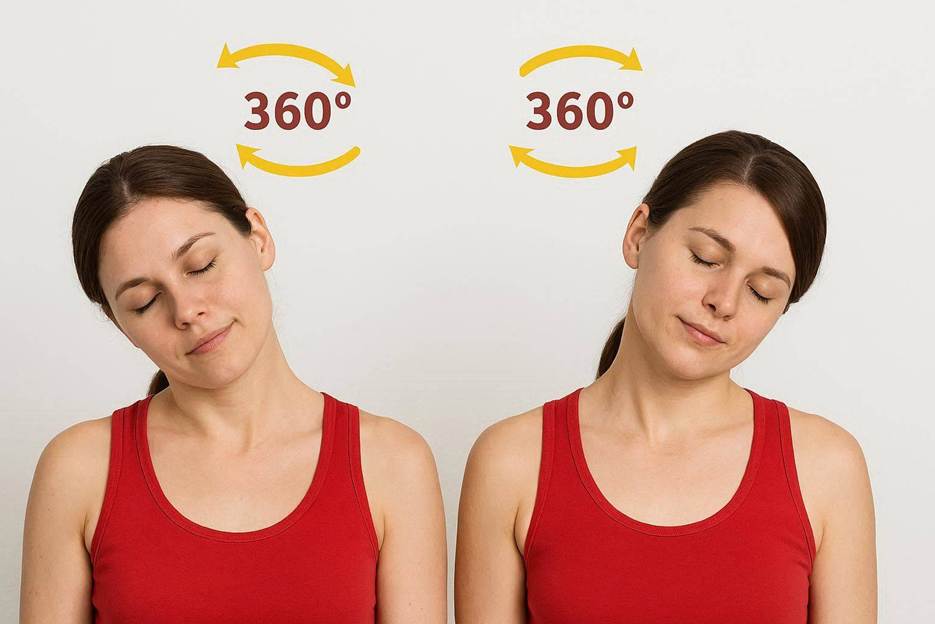
Instructions
- Sit comfortably on a chair or in a cross-legged position with your spine upright and shoulders relaxed.
- Keep your hands resting on your thighs and soften your jaw and facial muscles.
- Inhale: Lengthen through the crown of your head, creating space along your neck and spine.
- Exhale: Slowly turn your head to the right, bringing your chin gently toward your right shoulder.
- Hold for 5–10 seconds, breathing naturally and feeling a gentle stretch along the side of your neck.
- Slowly return your head to the centre.
- Repeat the movement by turning your head to the left side.
- Perform 3–5 repetitions on each side, moving slowly and mindfully.
Focus:
Keep your shoulders steady and relaxed while allowing the movement to come from the neck. Avoid lifting your shoulders or forcing the rotation. Move within a comfortable range.
Neck Forward & Backward Stretch
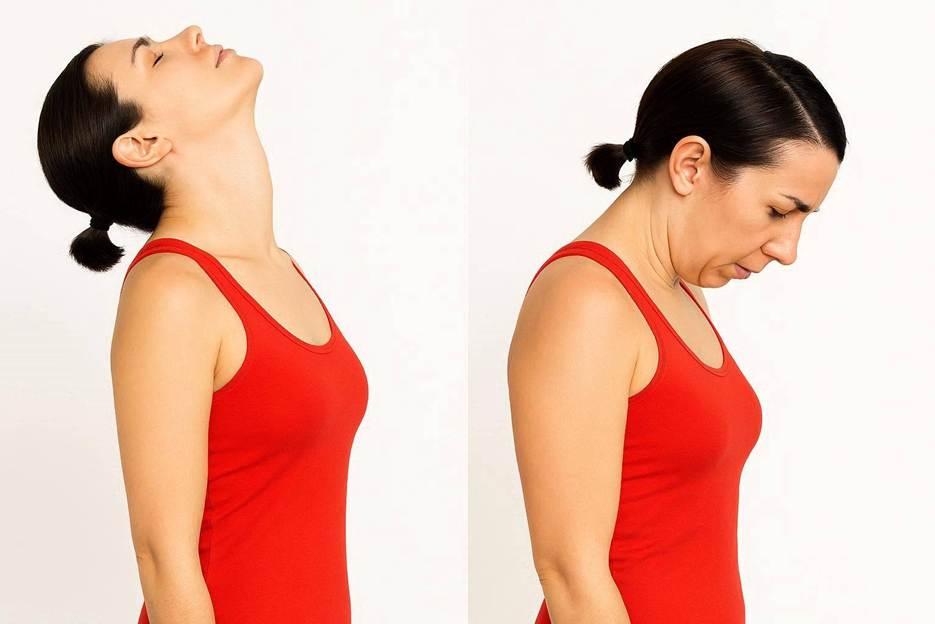
Neck Forward & Backward Stretch – Instructions
- Sit comfortably on a chair or in a cross-legged position with your spine tall and shoulders relaxed.
- Keep your hands resting on your thighs and soften your facial muscles.
- Inhale: Lengthen through the crown of your head, creating space in your neck.
- Exhale: Slowly lower your chin toward your chest, allowing the back of your neck to gently stretch (Forward Neck Stretch).
- Hold for 10–20 seconds, breathing slowly and relaxing any tension.
- Slowly return your head to a neutral position.
- Inhale: Gently lift your chin upward, allowing your head to move slightly back while keeping the front of your neck open (Backward Neck Stretch).
- Hold for 10–20 seconds, then slowly return to the centre.
- Repeat 3–5 times, moving slowly and comfortably.
Focus:
Keep your shoulders relaxed and avoid compressing the back of the neck. The movement should feel gentle, creating space and releasing stiffness rather than forcing a deep stretch.
Benefits:
- Releases tension in the neck and upper shoulders
- Improves neck mobility and flexibility
- Reduces stiffness from prolonged screen use
- Helps improve posture and awareness
- Encourages relaxation and better breathing patterns
Shoulder Circles
One of the simplest yet most effective movements for relieving shoulder tension is the Shoulder Circle. This gentle exercise helps increase blood flow, improve mobility, and release tightness that accumulates from prolonged sitting or stress.
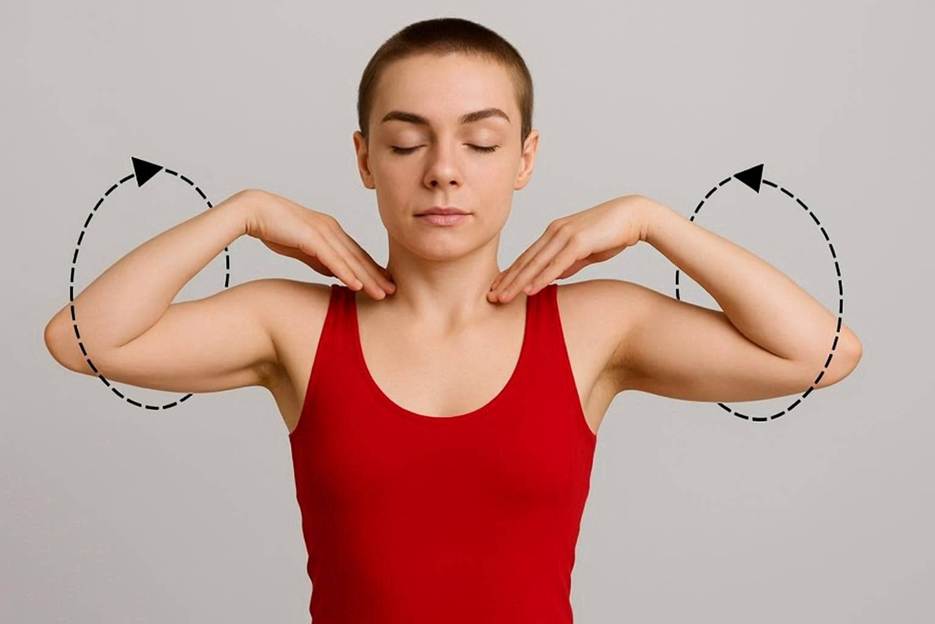
Shoulder Circles – Instructions
- Sit comfortably in a chair, cross-legged position, or stand tall with your spine straight.
- Relax your arms by your sides and soften your shoulders away from your ears.
- Place your fingertips gently on your shoulders or keep your arms relaxed.
- Inhale: Slowly lift your shoulders upward toward your ears, then roll them backward and down in a smooth circular motion.
- Exhale: Continue the circle, allowing the shoulders to relax as they move downward.
- Perform 5–10 slow circles, then repeat in the opposite direction.
- Keep your neck relaxed and breathe naturally throughout the movement.
Focus:
Move slowly and mindfully, creating space around the shoulder joints. Allow the movement to release tightness and tension stored in the neck, shoulders, and upper back.
Benefits:
- Releases shoulder and neck tension
- Improves shoulder mobility and flexibility
- Reduces stiffness from prolonged sitting or desk work
- Promotes better posture
- Increases blood circulation around the upper body
- Helps relax the nervous system
Seated Overhead Shoulder & Tricep Stretch
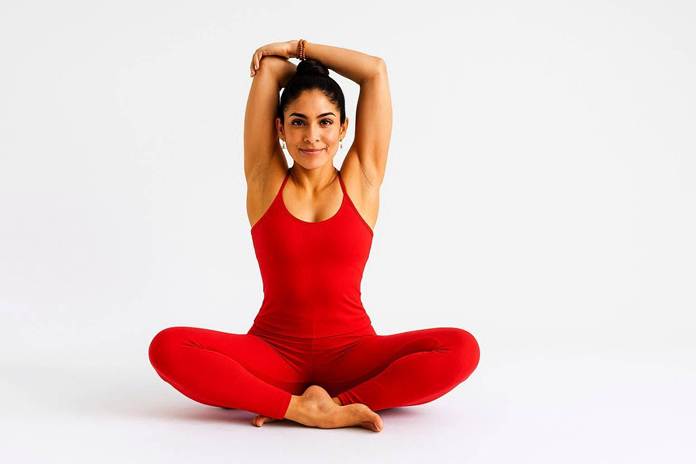
This pose , provides a powerful stretch down the back of the upper arm, releases tension in the armpits, and opens up tight shoulders caused by hunched postures
How to Do It: Step-by-Step Instructions
- Get Into Position: Sit cross-legged with a straight, tall spine
- Lift and Bend: Inhale and reach your right arm straight up toward the ceiling. Bend your right elbow, dropping your right hand down behind your head to rest between your shoulder blades.
- Add Support: Reach your left arm up and over, grasping your right elbow gently with your left hand.
- Deepen the Stretch: Exhale as you gently pull your right elbow toward your midline/head to deepen the stretch along the tricep and side shoulder.
- Align Your Posture: Keep your head pressing gently backward into your arms rather than tilting forward to ensure your neck remains completely straight and tension-free.
- Hold and Breathe: Keep your chest lifted and breathe smoothly for few beath Slowly release your arms on an exhale, and repeat on the opposite side
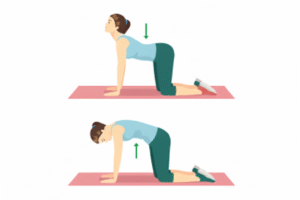
Cat-Cow Stretch (Marjaryasana-Bitilasana)
This flowing movement improves spinal mobility and helps release tension accumulated in the neck and upper back.
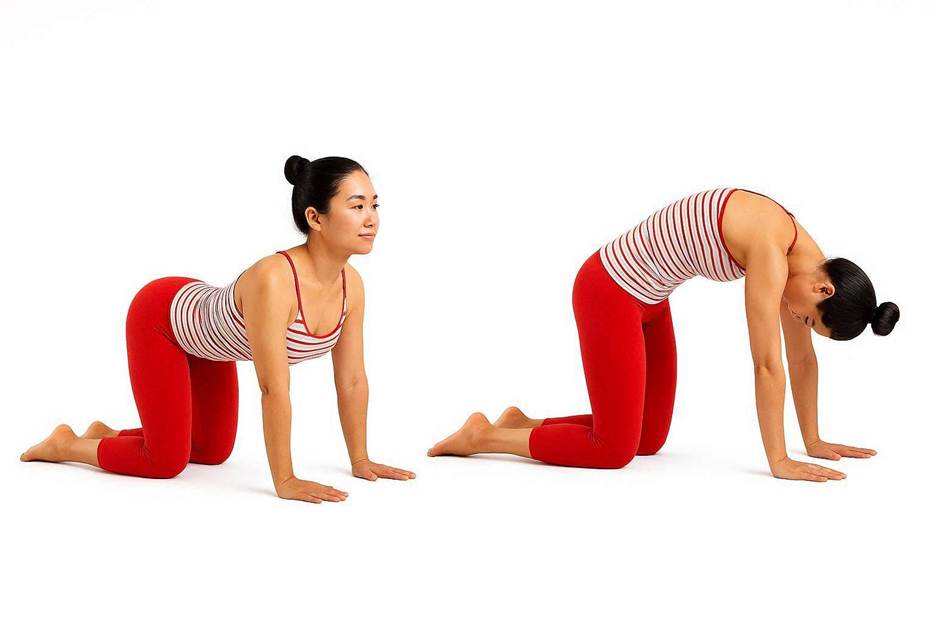
- Begin on your hands and knees in a tabletop position with your wrists under your shoulders and knees under your hips.
- Keep your spine neutral, relax your shoulders, and gently engage your core.
- Inhale: Drop your belly toward the floor, lift your chest forward, and gently raise your tailbone toward the ceiling. Open your heart and look slightly upward (Cow Pose).
- Exhale: Press through your hands, round your spine toward the ceiling, tuck your chin toward your chest, and draw your belly inward (Cat Pose).
- Continue moving slowly between Cat and Cow, following the rhythm of your breath.
- Repeat for 5–10 gentle cycles, allowing the movement to flow through your entire spine.
Focus:
Move with awareness rather than force. Let each breath create space between the vertebrae while releasing tension from the neck, shoulders, and upper back.
Benefits:
- Improves spinal flexibility and mobility
- Releases tension from the neck, shoulders, and upper back
- Helps relieve stiffness from prolonged sitting
- Encourages better posture
- Gently massages the spine and abdominal organs
- Promotes relaxation through mindful breathing
Thread the Needle Pose /Urdhva Mukha Pasasana
A gentle twist that targets tightness between the shoulder blades and provides a deep stretch across the shoulders.
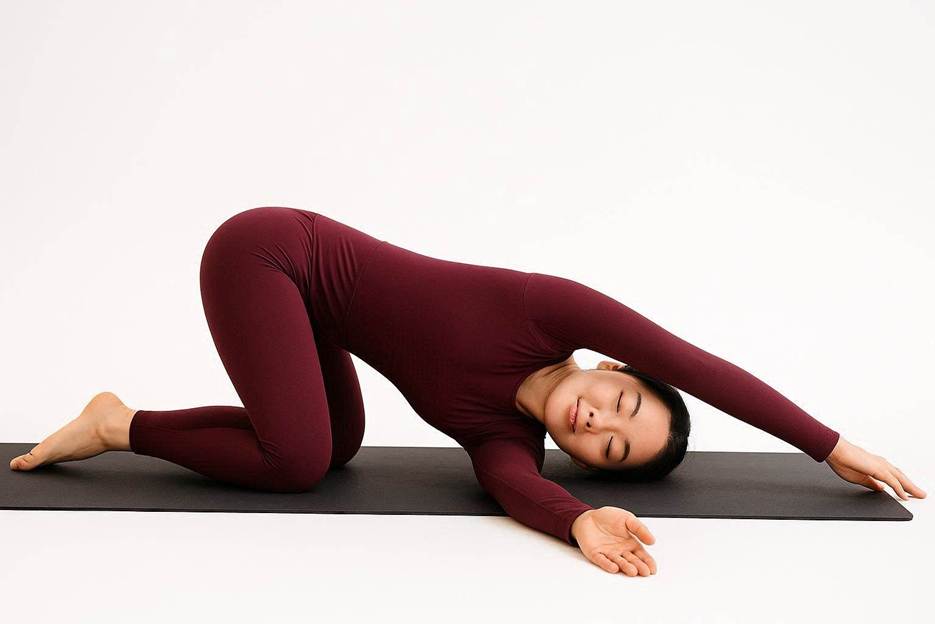
- Begin on your hands and knees in a tabletop position with your wrists under your shoulders and knees under your hips.
- Inhale deeply, creating length through your spine.
- Exhale and gently slide your right arm underneath your left arm, bringing your right shoulder and cheek toward the mat.
- Keep your left hand pressing into the floor or extend it forward for a deeper stretch.
- Relax your neck and shoulders while allowing your upper back and shoulder blade area to gently release.
- Breathe slowly and hold the pose for 20–30 seconds.
- Slowly return to tabletop and repeat on the opposite side.
Focus:
Keep your hips stable and avoid collapsing your body weight into the shoulder. Allow each breath to create more space across the upper back, shoulders, and chest.
Benefits:
- Releases tension in the upper back and shoulders
- Improves shoulder mobility and flexibility
- Creates space between the shoulder blades
- Relieves stiffness caused by prolonged sitting or computer work
- Encourages spinal rotation and relaxation
- Helps calm the nervous system through gentle twisting
Eagle Arms (Garudasana Arms)
Excellent for creating space between the shoulder blades and relieving tension caused by prolonged.
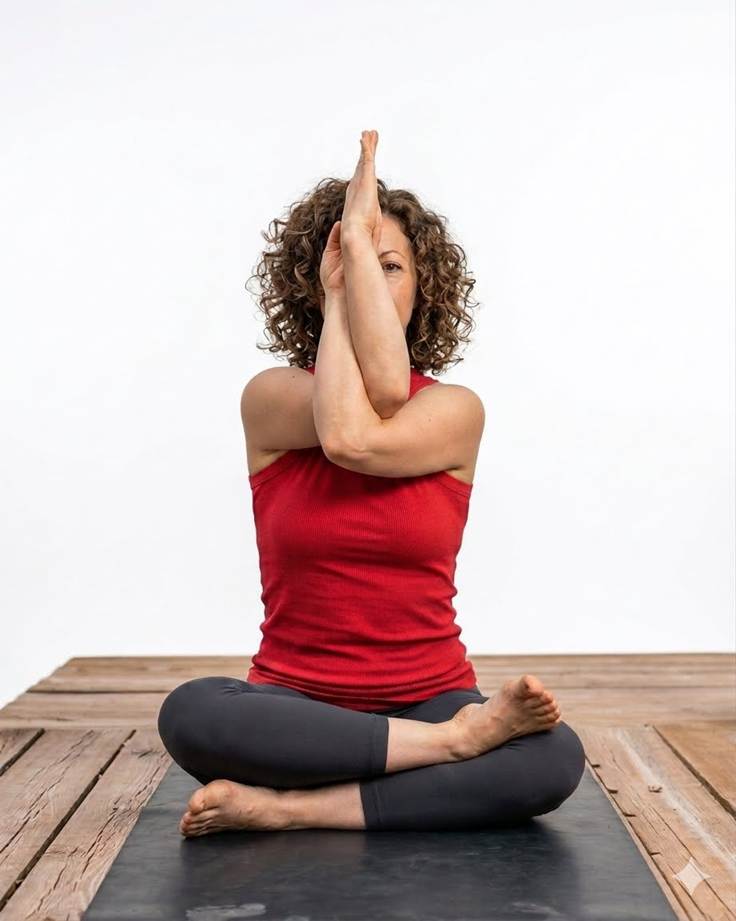
Eagle Arms (Garudasana Arms) – Instructions
- Sit comfortably in a cross-legged position or stand tall with your spine straight and shoulders relaxed.
- Extend both arms forward at shoulder height.
- Cross your right arm underneath your left arm, bringing your elbows together.
- Bend your elbows and wrap your forearms so that your palms face each other (or place the back of your hands together if the palms do not meet).
- Gently lift your elbows slightly upward while keeping your shoulders relaxed and away from your ears.
- Take slow, deep breaths and feel the stretch spreading across your upper back and between your shoulder blades.
- Hold for 20–30 seconds, then slowly release and repeat on the opposite side.
Focus: Keep the neck relaxed, chest open, and avoid forcing the arms into position. Breathe deeply to allow the shoulders and upper back to soften.
Benefits:
- Creates space between the shoulder blades
- Releases upper back and shoulder tension
- Improves shoulder mobility
- Relieves stiffness from prolonged sitting or computer work
- Encourages better posture and relaxation
Cow Face Arms (Gomukhasana Arms)
Cow Face Arms is one of the most effective yoga stretches for releasing tension in the shoulders, chest, and upper back. It helps improve shoulder mobility, counteracts the effects of poor posture, and creates space across the front of the body.
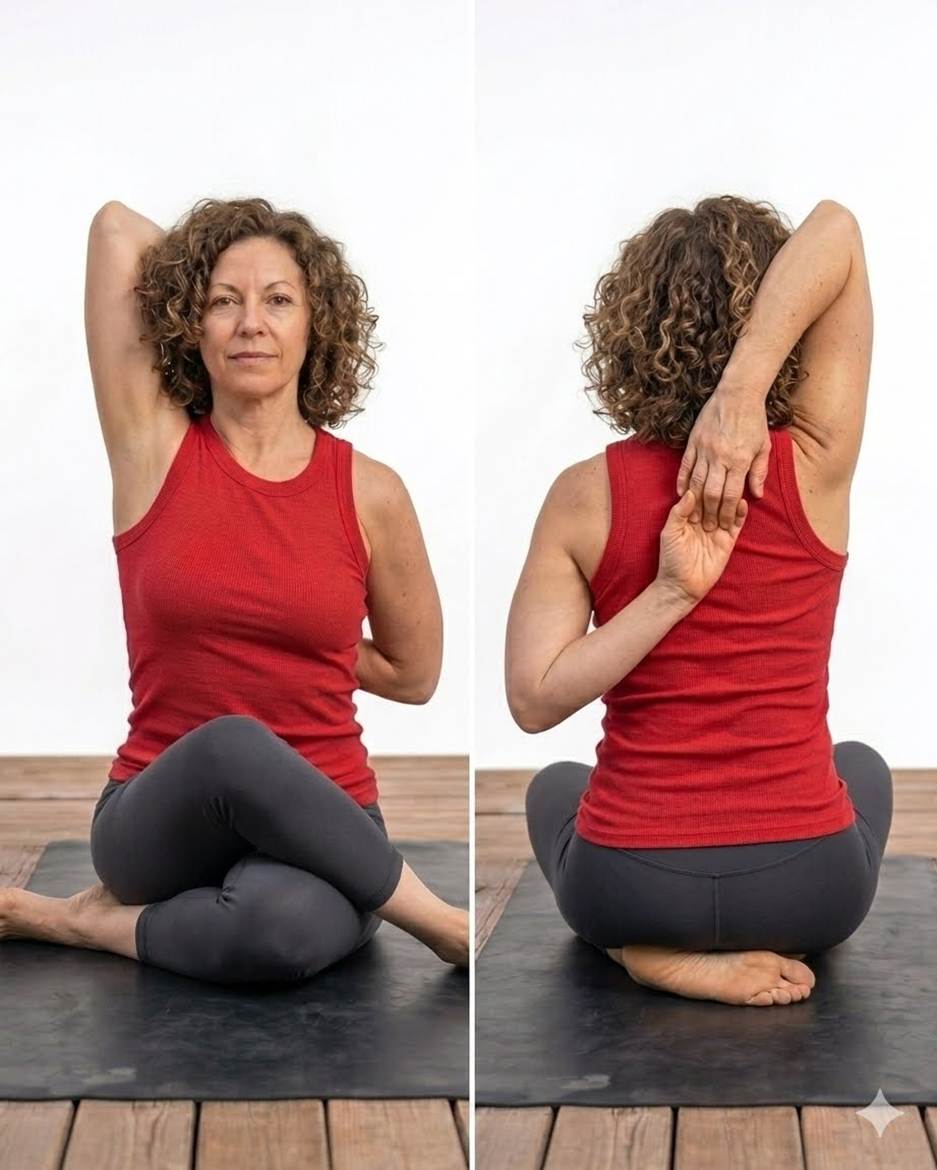
Instructions:
- Sit comfortably in a cross-legged position or any seated posture that keeps your spine tall.
- Extend your right arm overhead and bend the elbow, bringing your right hand down towards the upper back.
- Take your left arm behind your back and bend the elbow, reaching your left hand upward.
- Try to clasp your fingers together gently (or use a yoga strap if your hands do not meet).
- Keep your chest open, spine upright, and shoulders relaxed.
- Avoid pulling or forcing the arms; allow the stretch to develop gradually.
- Hold for 5–8 breaths, then release slowly.
- Repeat on the opposite side.
Benefits:
✔ Releases tightness in the shoulders and upper back
✔ Improves shoulder mobility and flexibility
✔ Stretches the chest and arms
✔ Helps correct rounded shoulder posture
✔ Relieves tension caused by prolonged sitting and computer use
✔ Encourages better posture and upper body awareness
Gentle Flow Seated Sequence
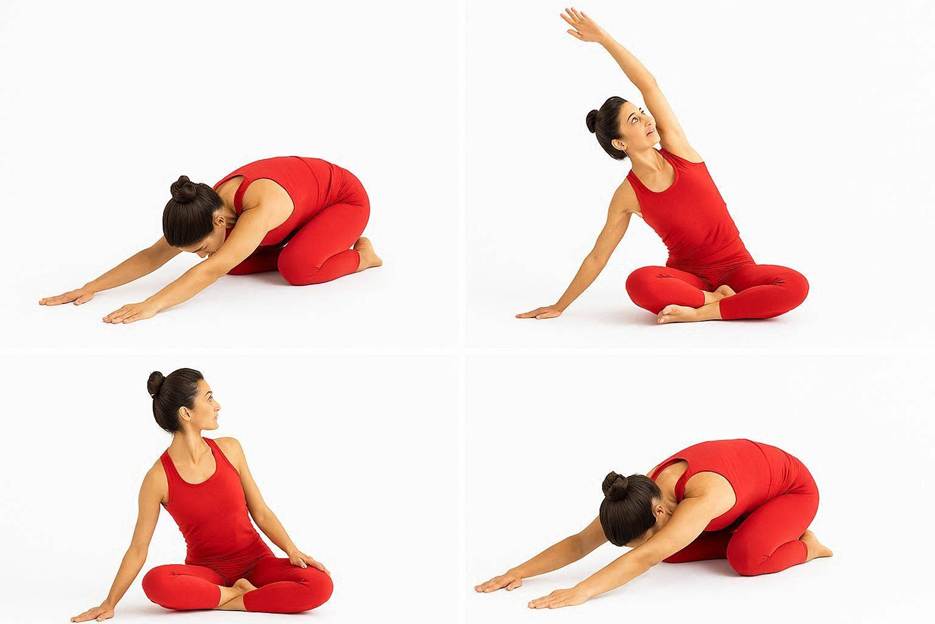
Gentle Flow Seated Sequence
1. Extended Child’s Pose (Balasana Variation)
Instructions:
- Begin in a kneeling position with your hips resting back towards your heels.
- Extend both arms forward on the floor, keeping your palms relaxed.
- Gently lower your forehead towards the mat.
- Allow your shoulders, neck, and upper back to soften.
- Breathe slowly and hold for 5–10 breaths.
Focus: Releases tension in the upper back, shoulders, and neck.
2. Seated Side Stretch (Parsva Sukhasana variation )
Instructions:
- Sit comfortably with your legs crossed and spine tall.
- Place your right hand on the floor beside your hip.
- Inhale and lift your left arm overhead.
- Slowly bend towards the right side, creating length along the left side of your body.
- Keep your shoulders relaxed and avoid collapsing into the stretch.
- Hold for 5 breaths, then repeat on the opposite side.
Focus: Opens the side body, shoulders, and improves spinal mobility.
3. Seated Spinal Twist (Ardha Matsyendrasana Variation)
Instructions:
- Sit comfortably with your legs crossed.
- Place your left hand on your right knee and your right hand behind your body.
- Inhale, lengthen your spine upward.
- Exhale and gently twist your torso towards the right.
- Keep your shoulders relaxed and avoid forcing the twist.
- Hold for 5 breaths, then repeat on the other side.
Focus: Improves spinal flexibility and releases stiffness around the upper back and neck.
4. Extended Child’s Pose with Side Reach
Instructions:
- From a kneeling position, sit your hips back towards your heels.
- Stretch both arms forward on the mat.
- Walk your hands slightly towards one side to feel a stretch along the opposite side of your upper back.
- Keep your forehead supported and breathe deeply.
- Hold for 5 breaths, then switch sides.
Focus: Targets tight muscles around the shoulders, upper back, and side ribs.
Benefits of This Sequence:
✔ Relieves neck and shoulder tension
✔ Improves upper back mobility
✔ Reduces stiffness from sitting or screen use
✔ Encourages relaxation and deep breathing
✔ Promotes better posture
0 Comments