
Introduction
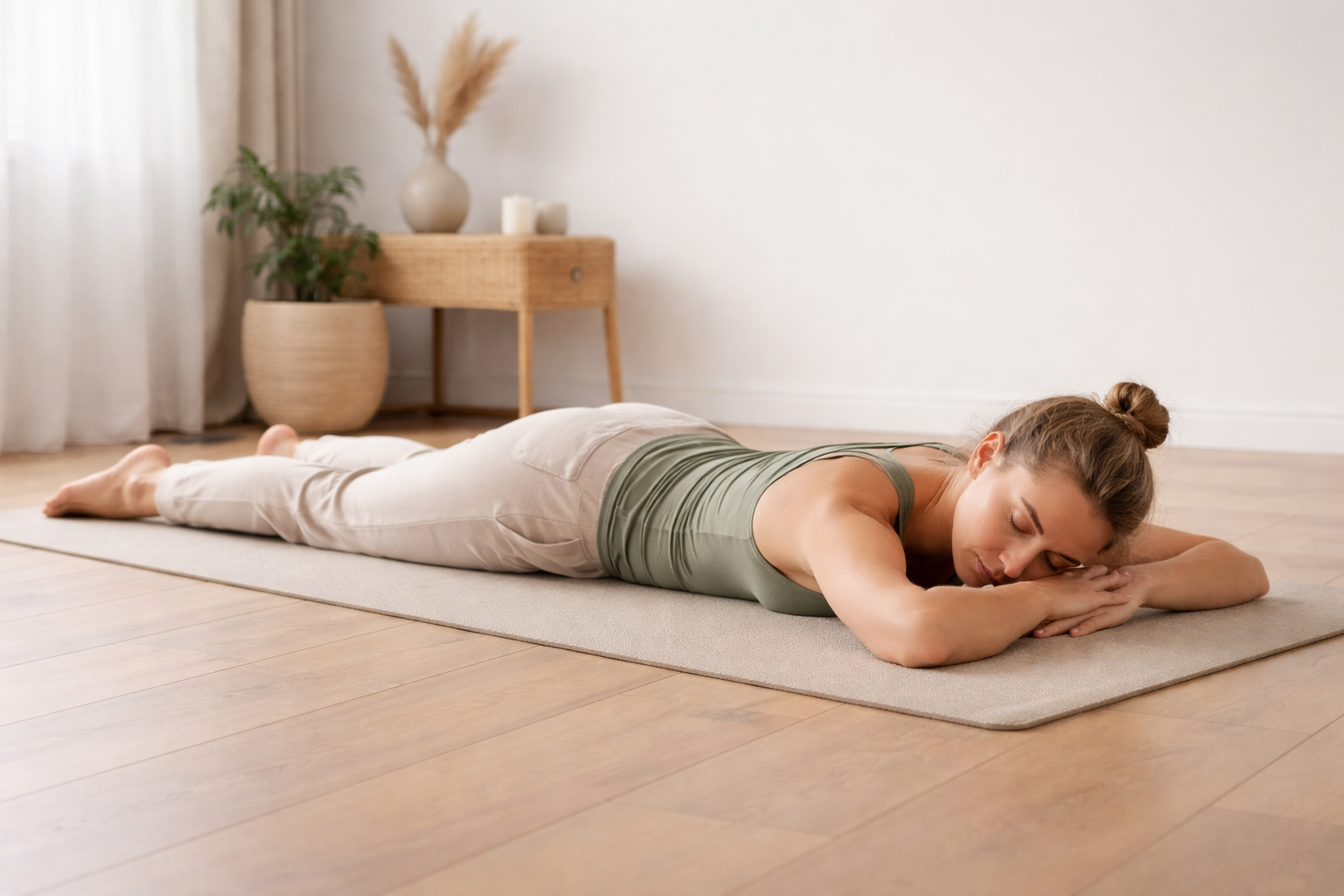
Crocodile Pose, also known as Makarasana, is a gentle restorative yoga posture designed to relax the entire body and calm the nervous system. Unlike active yoga poses that build strength or flexibility, Makarasana focuses on stillness, effortless breathing, and releasing physical tension.
The pose resembles a crocodile resting peacefully in water, with the body fully supported and the breath naturally expanding through the abdomen and back. It is especially beneficial after a yoga practice, during relaxation sessions, or whenever the body needs a moment of rest.
Crocodile Pose is suitable for beginners, seniors, and anyone seeking a calming practice to reduce stress, release fatigue, and reconnect with their breath.
How to Practice Crocodile Pose (Makarasana)
- Lie comfortably on your stomach
- Lie face down on a yoga mat with your legs extended behind you.
- Keep your feet relaxed and allow your heels to gently fall outward.
- Position your arms for support
- Bend your elbows and place your forearms in front of you.
- Rest one hand over the other and gently place your forehead on your hands.
- Adjust your body
- Allow your shoulders to soften away from your ears.
- Relax your jaw, face, and entire body.
- Focus on your breathing
- Bring awareness to your natural breath.
- Notice the gentle movement of your abdomen and ribs as you inhale and exhale.
- Release and relax
- Stay in the pose for 3–10 minutes.
- Allow each breath to create a feeling of calm and relaxation.
Modification:
- Place a folded blanket or cushion under your chest or forehead for extra comfort.
- Turn your head gently to one side if resting on your forehead feels uncomfortable.
- Place a bolster under your upper body for a more supported restorative variation.
Benefits of Crocodile Pose
1. Promotes Deep Relaxation
Makarasana encourages the body to enter a restful state, helping release physical and mental tension.
2. Calms the Nervous System
The slow breathing and supported position may help reduce stress and encourage a sense of inner calm.
3. Supports Healthy Breathing Patterns
The prone position naturally encourages awareness of diaphragmatic breathing and expansion of the back body.
4. Releases Lower Back Tension
By allowing the spine and surrounding muscles to relax, Crocodile Pose may help ease stiffness after prolonged sitting or activity.
5. Reduces Fatigue
This gentle resting pose provides an opportunity for the body to pause, recover, and restore energy.
6. Encourages Mindfulness
The stillness of Makarasana helps bring attention to the present moment through breath awareness.
7. Supports Relaxation After Practice
It is often used between backbends or at the end of a yoga session to allow the body to settle.
8. Improves Body Awareness
The pose helps develop awareness of breathing, posture, and areas where the body holds tension.
Contraindications & Precautions
Avoid or modify Crocodile Pose if you have:
- Recent abdominal surgery
- Difficulty breathing comfortably while lying on the stomach
- Severe neck or shoulder discomfort
- Pregnancy (especially later stages, unless modified with guidance)
- Conditions where lying on the abdomen is uncomfortable
Safety Tips:
- Do not force your neck to turn or hold an uncomfortable position.
- Use cushions or blankets to create support.
- Keep the breath slow and comfortable.
- Come out of the pose gently by rolling to one side before sitting up.
0 Comments