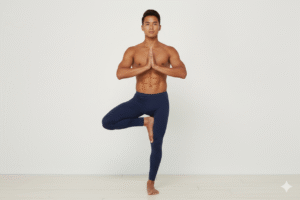
Garudasana, also known as Eagle Pose, is a standing balancing yoga posture that combines strength, flexibility, and concentration. The pose involves wrapping the arms and legs together while maintaining balance on one foot.
The name comes from Garuda, a mythical eagle-like bird in Indian tradition, symbolising strength, focus, and freedom. Garudasana helps create awareness of the body, improves coordination, and encourages a calm and focused mind.
How to Practice Garudasana (Instructions)
• Stand tall in Tadasana (Mountain Pose) with your feet together and shoulders relaxed.
• Bend your knees slightly and shift your weight onto your left foot.
• Lift your right foot and slowly cross your right thigh over your left thigh.
• If possible, wrap your right foot behind your left calf. If this is difficult, keep your toes lightly touching the floor for support.
• Extend your arms forward at shoulder height.
• Cross your left arm over your right arm and bend your elbows.
• Bring your palms together (or place the backs of your hands together if needed).
• Keep your spine upright, shoulders relaxed, and gaze focused on one point.
• Hold the pose for 15–30 seconds while breathing steadily.
• Slowly release and repeat on the opposite side.
Benefits of Garudasana
Improves balance and coordination
Strengthens legs, ankles, and hips
Improves flexibility in shoulders and upper back
Releases tension from the neck, shoulders, and upper back
Enhances focus and concentration
Improves body awareness
Supports better posture
Encourages calmness and mental stability
Contraindications (Who Should Avoid or Modify)
Avoid or practice with guidance if you have:
• Knee, ankle, or hip injuries
• Shoulder or wrist injuries
• Balance difficulties or a risk of falling
• Severe joint pain
• Uncontrolled high blood pressure
Pregnant individuals should practise a modified version with support and avoid deep balancing poses unless guided by a qualified yoga teacher.
Tips for Practicing Garudasana
• Practice near a wall or chair if you are new to balancing poses.
• Keep your standing knee slightly bent and avoid locking it.
• Focus your eyes on one steady point to improve balance.
• Breathe slowly and avoid holding your breath.
• Start with a shorter hold and gradually increase the duration.
• If wrapping the arms or legs is difficult, practise a simpler variation.
Beginner Tip: You can practise only the arm position while seated, or keep the lifted foot lightly touching the floor until your balance improves.