
Introduction
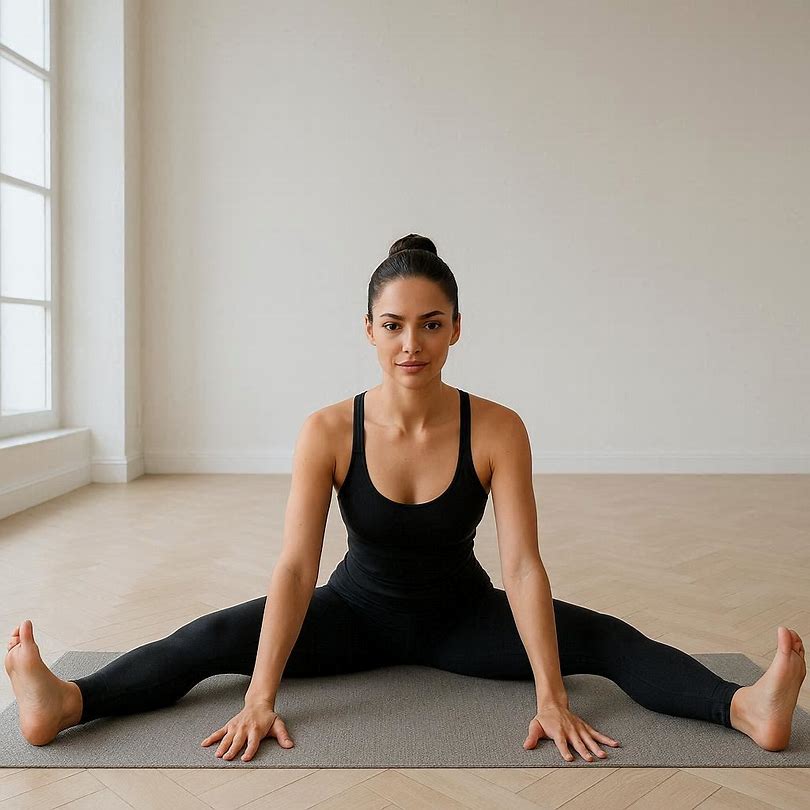
Upavistha Konasana, also known as Wide-Angle Seated Forward Bend, is a seated yoga posture that focuses on opening the hips, stretching the inner thighs, and improving flexibility in the lower body. The pose encourages a sense of grounding, patience, and mindful connection with the body.
This gentle forward fold allows the spine to lengthen while the legs extend wide, creating space through the hips, pelvis, and back body. It is often included in flexibility practices, restorative yoga, and calming sequences.
With appropriate support, Upavistha Konasana can be adapted for beginners, seniors, and anyone wanting to gently improve mobility and relaxation.
How to Practice Upavistha Konasana (Wide-Angle Seated Forward Bend)
- Begin seated
- Sit on the floor with your legs extended forward.
- Keep your spine tall and shoulders relaxed.
- Open your legs wide
- Slowly separate your legs into a comfortable wide position.
- Keep your kneecaps and toes pointing upward.
- Ground your sitting bones
- Press your sitting bones gently into the mat.
- If your lower back rounds, sit on a folded blanket for support.
- Lengthen your spine
- Place your hands on the floor beside your hips.
- Lift through the chest and create length through the spine.
- Move into the forward fold
- Slowly walk your hands forward between your legs.
- Keep your spine long and avoid forcing the stretch.
- Relax and breathe
- Allow your body to soften with each exhalation.
- Stay for 30 seconds to 2 minutes with comfortable breathing.
Modification:
- Sit on a cushion or folded blanket to lift the hips and reduce strain on the lower back.
- Place yoga blocks or cushions under your hands for support.
- Keep the forward bend shallow if your hamstrings or hips feel tight.
- Bend your knees slightly if needed.
Benefits of Upavistha Konasana
1. Improves Hip Flexibility
This pose gently opens the hips and stretches the inner thighs, helping improve lower-body mobility.
2. Stretches the Hamstrings and Inner Legs
The wide-legged position creates a gentle stretch through the back of the legs and groin area.
3. Supports Lower Back Release
By creating space through the pelvis and spine, this pose may help reduce stiffness caused by prolonged sitting.
4. Encourages Better Posture Awareness
Practicing with a lengthened spine helps develop awareness of alignment and body positioning.
5. Promotes Relaxation
The forward fold has a calming quality that may help quiet the mind and release stress.
6. Supports Pelvic Mobility
The pose encourages gentle movement and openness around the pelvic region.
7. Improves Body Awareness
Upavistha Konasana invites mindful attention to breathing, flexibility, and physical sensations.
8. Helps Prepare the Body for Meditation
Its grounding seated position can support relaxation and a deeper connection with breath awareness.
Contraindications & Precautions
Avoid or modify Upavistha Konasana if you have:
- Recent hip, knee, or groin injury
- Severe lower back pain
- Hamstring injury or overstretching concerns
- Hip replacement or major hip surgery (practice only with professional guidance)
- Pain while sitting with legs wide apart
Safety Tips:
- Never force the legs wider than your comfortable range.
- Avoid rounding or collapsing the lower back.
- Move slowly and stay within a pain-free stretch.
- Use props such as blankets, blocks, or bolsters for support.
- Focus on relaxation rather than achieving a deeper stretch.



0 Comments