
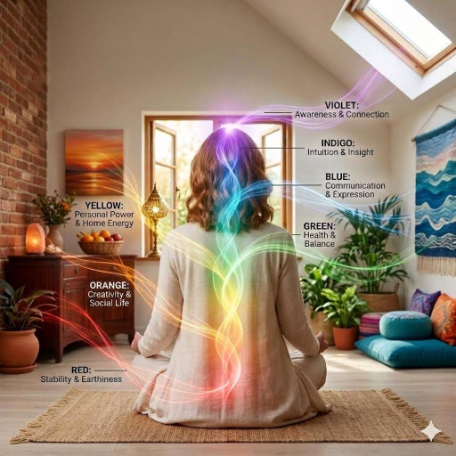
Color is one of the easiest, most cost-effective tools available for self-care. By moving from accidental color choices to intentional, health-oriented color applications, you can take control of how you feel, think, and heal every single day.
A soft blue room may feel peaceful. Green can remind us of nature and renewal. Warm orange may feel energizing, while earthy brown can create a sense of grounding.
Can Color Really Affect How You Feel?
Color is a visual stimulus, and our response to it can involve both psychological associations and physiological processes.
Research into environments, lighting and color has explored connections with attention, mood, stress and wellbeing. At the same time, some uses of colored light have very specific medical applications.
Light as Medicine: How Color Physically Heals the Body
If color can shift your mood in seconds, can it actually heal? Modern medicine says yes — and has been using color as treatment for decades.
Blue light saves newborn lives. When babies are born with dangerously high bilirubin levels (newborn jaundice), doctors place them under blue light at a precise wavelength around 450 nanometers. That light breaks the toxin down so the infant’s body can safely clear it. No drugs, no surgery — just the right frequency of light.
Red light repairs damaged cells. Red and near-infrared light penetrate deep beneath the skin, reaching muscles, nerves, and joints. When cells absorb this light, their mitochondria — the tiny engines that power every cell — produce more energy. The payoff: faster tissue repair, reduced inflammation, and quicker recovery. It’s why dermatologists use red light for skin healing and physical therapists use it on injured athletes.
Green light quiets chronic pain. For migraine sufferers, green may be the most surprising medicine of all. Clinical trials at the University of Arizona found that exposure to a narrow band of green light reduced migraine frequency and intensity by up to 60% likely by triggering the brain’s natural pain-relief chemistry.
An Ancient Perspective
Thousands of years before phototherapy or MRI scans, yogic tradition had already mapped the human body according to color. In yogic philosophy, the body is animated by prana, or life-force energy, which flows through seven major centers called chakras, each aligned with a color running from the base of the spine to the crown of the head.
Red: The Foundation & Circulation
Associated Body Parts: Base of the spine, legs, feet, bones, blood,and adrenal glands.
Physical Connection: Red has the longest wavelength and highest.
physical stimulation. It stimulates blood circulation, raises heart rate, increases body temperature, and boosts adrenaline.
When to Use It: Use red when you feel lethargic, cold, physically exhausted, or ungrounded.
Orange: Creativity & Digestion
Associated Body Parts: Lower abdomen, kidneys, bladder,reproductive organs, and hips.
Physical Connection: Orange is a warm, invigorating color associated with vitality, fluid dynamics in the body, and
reproductive health. It helps stimulate the appetite, aids digestion, and releases muscular tension.
When to Use It: Reach for orange when you are feeling creatively blocked, emotionally stifled, or dealing with sluggish digestion.
Yellow: Metabolism & Mental Clarity
Associated Body Parts: Stomach, liver, gallbladder, pancreas, and central nervous system.
Physical Connection: Yellow aligns with the “fire in the belly.” It directly impacts the digestive system and liver, helping body
detoxification. Yellow also stimulates the left side of the brain,boosting memory, focus, and mental clarity.
When to Use It: Turn to yellow if you are suffering from brain fog, digestive issues, or low self-confidence.
Green: Heart Health & Balance
Associated Body Parts: Heart, lungs, chest, circulatory system, and immune system (thymus gland).
Physical Connection: Positioned right in the middle of the spectrum, green represents balance and harmony. It lowers blood
pressure, relaxes the nervous system, and supports immune recovery. Green regulates heart rhythms and breathing.
When to Use It: Use green when dealing with high stress, emotional heartbreak, high blood pressure, or physical fatigue.
Blue: Throat & Relaxation
Associated Body Parts: Throat, vocal cords, neck, thyroid gland, ears, and lungs.
Physical Connection: Blue is naturally cooling, soothing, and anti-inflammatory. It slows down respiration, reduces fever, cools
inflammation, and helps regulate the thyroid, which controls metabolism and vocal expression.
When to use it : Use blue when dealing with speaking anxiety, a fear of sharing your opinion, chronic neck and jaw tightness, or when navigating a stressful conflict that requires calm, clear dialogue..
Indigo : Intuition & Inner Awareness
Indigo is traditionally associated with intuition, insight, reflection, and inner awareness. In chakra symbolism, it is connected with the Ajna (Third Eye) and is often linked with perception and clarity.
Associated Body Parts: Forehead, brow, brain, eyes, sinuses, and the pituitary gland (Third Eye area).
Physical Connection: Positioned as a deep, high-frequency shade between blue and violet, indigo acts as a powerful sedative for the nervous system. It purifies the blood, cools physical overstimulation, and supports the body’s natural sleep cycles. Indigo sharpens the physical senses, particularly sight and hearing, and helps relieve pressure headaches.
When to Use It: Use indigo when dealing with mental fatigue, insomnia, sinus congestion, eye strain, or when you need to access deep intuition and objective clarity to make a difficult life decision.
Violet : Spirituality & Reflection
Violet is traditionally associated with spirituality, contemplation,imagination, and a sense of connection. In chakra symbolism, it is linked with the Sahasrara (Crown).
Associated Body Parts: Crown of the head, nervous system, cerebral cortex, and the pineal gland.
Physical Connection: Positioned at the very top of the visible light spectrum, violet possesses the highest frequency and shortest wavelength. It stimulates cellular purification, balances brain chemistry,and relaxes the entire central nervous system. Violet promotes deep tissue healing, helps suppress appetite, and eases neuromuscular tension.
When to Use It: Use violet when experiencing intense mental burnout, neurological stress, a lack of life purpose, or when you want to induce a state of deep meditation and cellular recovery.
Everyday Color Toolkit
Color is one of the simplest, most accessible tools for shaping a day.
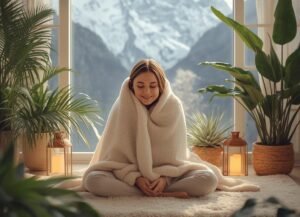
It can be strategically used across different spaces in a home to achieve specific wellness goals and enhance a daily routine. In a home office, adding blue or teal near a workspace helps boost focus and creativity. To ensure better sleep in a bedroom, cutting blue light an hour before bed and switching to warm amber or soft red lamps works best. In a living room, calming the nervous system is achievable by bringing in green plants or introducing sage-toned walls. When opening a closet on low-energy days, lifting the spirit is possible by trying “dopamine dressing” with vibrant colors like yellow, coral, or orange. Finally, during meditation, emotional balance can be achieved by visualizing blue or green light when feeling anxious or switching to red or yellow visualization when in need of drive.
Solarized Water (Hydro-Chromotherapy)
An old alternative practice involves charging water with solar energy using colored glass containers . Identify the Need: Choose your glass color based on your specific symptoms: Red for low vitality and poor circulation, Orange for reproductive issues and creative blocks, Yellow for indigestion and mental fog, Green for high blood pressure and emotional heartbreak, Blue for a sore throat and thyroid imbalance, Indigo for insomnia and sinus pressure, or Violet for nervous system overload and mental
burnout.
Pour filtered water into a clean, colored glass bottle (or a clear bottle wrapped in colored cellophane),
Place the bottle in direct sunlight for 2 to 4 hours to allow the water to absorb the color’s specific vibrational frequency,
Drink the water throughout the day to introduce that specific energy profile internally.
Approach to Color
The same color can produce different responses in different people. Blue may feel peaceful to one person and evoke sadness in another. Orange may feel energizing to one person and overwhelming to another. Therefore, instead of assuming that a particular color should create a specific emotional response, see the color and notice the response. The goal is to become more attentive to our own reactions.
Ultimately, the most meaningful use of color is the one that resonates with you. Your intuition naturally seeks the exact frequency your body needs to heal. Trusting the shade that draws you into your personal connection is the fundamental catalyst for your balance and wellbeing.
0 Comments