
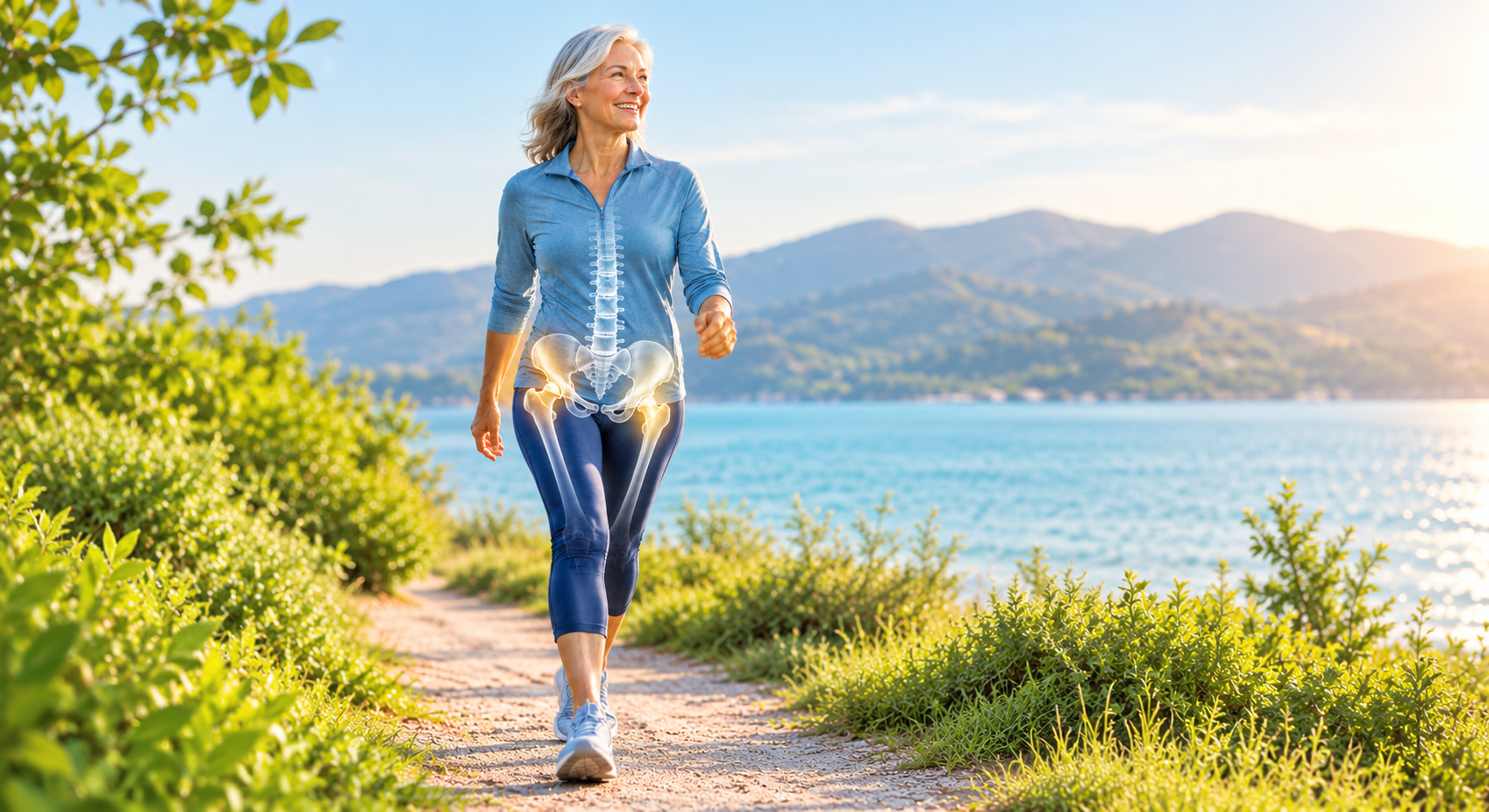
Our bones are much more than a framework that holds our body together. They are living tissues that constantly change throughout our lives and provide the foundation for movement, strength and stability. Every time we stand, walk, climb stairs, bend down or carry something, our bones work together with our muscles and joints to support us. Our skeleton also protects important organs—for example, the skull protects the brain and the rib cage helps protect the heart and lungs. Healthy bones therefore play an important role in helping us stay active and independent.
As we get older, maintaining bone health becomes increasingly important. Bone naturally undergoes a continuous process of breakdown and rebuilding. With ageing, this balance can change, and we may gradually lose bone density. For some people, this can eventually lead to osteoporosis, a condition in which bones become weaker and more susceptible to fractures. Bone loss can occur without obvious symptoms, so a person may feel completely well while their bone strength is gradually changing. This is one reason why looking after our bones should not be something we think about only after a fracture or after reaching a certain age.
Bone health is particularly important for maintaining mobility and independence later in life. A fracture, especially around the hip, spine or wrist, can affect a person’s ability to walk, exercise and perform everyday activities. Recovery may also take longer as we age. Supporting bone health is therefore not simply about having “strong bones”; it is about preserving the ability to move confidently, participate in daily life and continue doing the things we enjoy.
Our bones also respond to how we use our bodies Walking, climbing stairs, dancing, strength exercises and yoga movements can all form part of an active lifestyle. At the same time, maintaining muscle strength and balance is important because stronger muscles and better stability can help us move safely and reduce the likelihood of falls.
Bones and Areas Particularly Important for Bone Health
Every bone in our body has a role to play, but some areas deserve particular attention as we age. The hips, spine, wrists and arms can be particularly important because fractures in these areas can affect movement, independence and everyday activities. Gentle yoga and mobility movements can be incorporated into a healthy routine to support strength, flexibility, posture, balance and body awareness.
1. Hips and Pelvis
The hips and pelvis provide important support during standing, walking and everyday movement. As we age, maintaining strength around the hips and legs, together with good balance, can help support mobility and stability.
Butterfly Pose (Baddha Konasana) – A seated movement that gently opens the hips and encourages mobility around the inner thighs and pelvis. Keep the movement comfortable and avoid forcing the knees toward the floor.
Bridge Pose (Setu Bandhasana) – Practised lying on the back, Bridge Pose engages the glutes and muscles around the hips and pelvis. Lift only as far as feels comfortable and lower slowly.
2. Spine and Vertebrae
The vertebrae form the spine, which supports the body and allows us to bend, rotate and move. With osteoporosis, the vertebrae can become weaker and more vulnerable to fractures. Supporting the spine through appropriate strength, posture and safe movement is therefore important.
Seated Gentle Twist – A comfortable seated rotation can encourage spinal mobility and body awareness. Keep the spine long and rotate gently without forcing the movement.
Supine Spinal Twist – Lying on your back, gently allow the knees to move to one side while keeping the movement within a comfortable range. This can be a relaxing way to explore spinal mobility.
Cat-Cow – A slow movement between gentle spinal flexion and extension can encourage mobility through the spine. Move with your breath and stay within a comfortable range.
Important: If you have osteoporosis or a history of vertebral fractures, twisting and spinal flexion movements may need to be modified. Individual guidance from a healthcare or qualified exercise professional is recommended.
3. Wrists and Forearms
Keeping the wrists and forearms flexible and strong can support comfortable, confident movement in everyday life. Gentle mobility exercises and appropriate upper-body strengthening can help maintain ease with activities such as reaching, carrying, lifting and using our hands.
Wrist Circles – Slowly rotate the wrists in one direction and then the other. Keep the movement gentle and controlled.
Forearm Rotation – With the elbows comfortably by your sides, slowly turn the palms upward and then downward. This helps maintain comfortable movement through the forearms and wrists.
4. Legs
The thigh bone (femur) and lower-leg bones carry much of our body weight during everyday activities. Strong leg muscles also help us walk, climb stairs, rise from a chair and maintain balance.
Warrior II (Virabhadrasana II) – This standing posture places weight through the legs while working the thighs, hips and surrounding muscles. It can also encourage stability and body awareness.
You can make the posture gentler by shortening your stance or practising near a wall for support.
Simple movement: Heel Raises – Stand behind a sturdy chair and slowly lift your heels before lowering them with control. This simple movement helps work the calf muscles and challenges ankle stability.
5. Upper Body, Arms and Shoulders
Keeping the upper arms, shoulders and neck comfortably mobile can support strength, flexibility and ease in everyday movement.
Shoulder Circles & Arm Circles – Gently roll your shoulders in slow circles, then gradually extend the movement through your arms. Move in both directions within a comfortable range, keeping the movement relaxed and smooth.
Neck Rotation – Slowly turn the head from one side to the other without forcing the movement. Keep the shoulders relaxed and the movement gentle.
Along, Nutrition also plays an important role. Bones require a range of nutrients to remain healthy, including calcium, protein and vitamin D. A varied diet containing foods such as dairy or calcium-fortified alternatives, tofu, beans and lentils, nuts, seeds, vegetables and other whole foods can help provide the nutrients the body needs. Vitamin D also helps the body absorb calcium, and sunlight is one way the body produces vitamin D, although individual needs vary.
Healthy bones are something we can nurture throughout life. By making simple, consistent choices—staying active, strengthening our muscles, nourishing ourselves well and maintaining balance—we can support our bones while continuing to move, explore and enjoy life with confidence.



0 Comments